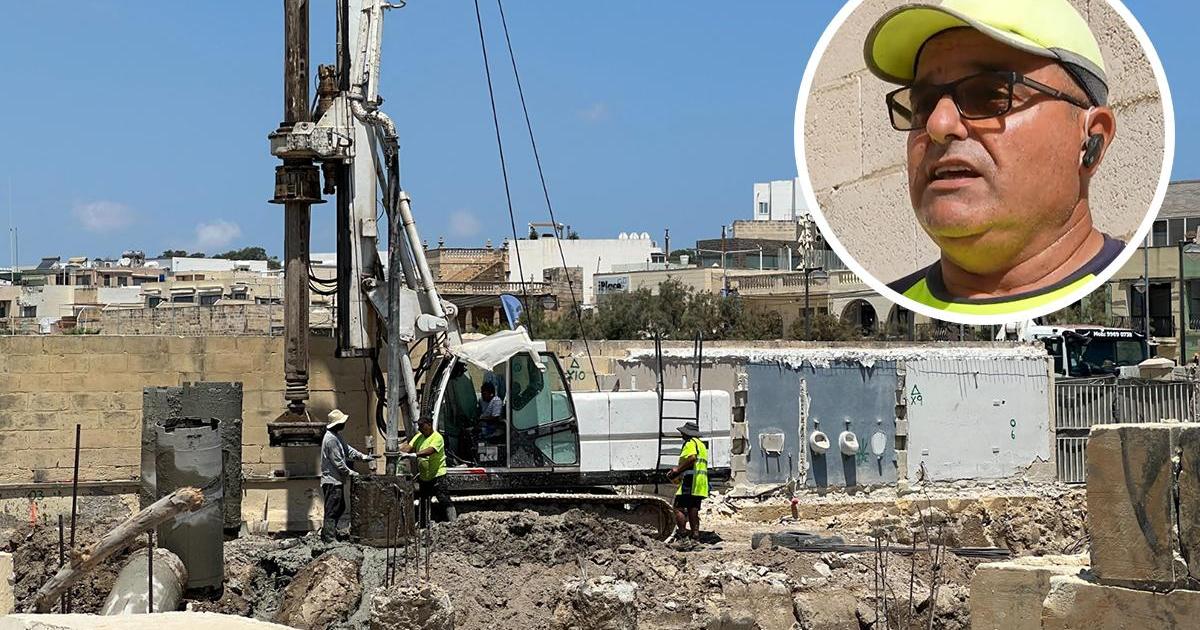
Restrictive road closure rules are forcing construction workers to start late and work through the hottest part of the day, contractors say.
Veteran contractor Albert Tanti, who has been in the building business for nearly four decades, criticised current Transport Malta regulations, telling Times of Malta that “animals are treated better than construction workers” because while horses are banned from working during peak hours, protections for construction workers are much weaker.
The Association for Builders and Contractors (ABK) supports him and shares his concerns.
A spokesperson for the association told Times of Malta that while they do not expect authorities to allow main road closures during rush hours, the rules for side and residential streets are too restrictive, forcing hundreds of workers to work outside during the hottest hours of the day.
Transport Malta does not allow contractors to close roads for construction work before 9.30am. They can start work on construction sites earlier – at 7am – but any work that necessitates a road closure must be pushed to after 9.30am.
Tanti said he is currently working on a site in a side street. Since the street is too narrow for trucks to unload materials while allowing cars to pass, he has no choice but to close the road to work. This means he is forced to wait until 9.30am to begin, pushing their workday into the hottest part of the afternoon.
“The worst part is that while we’re out here working in the sun, the Health Ministry sends us text messages warning us to stay out of the sun. How can we avoid the sun if we need to unload concrete and bricks off trucks?” he said.
“One government authority warns us to avoid the sun while another forces us to work in the sun.”
Health Ministry warns us to stay out of the sun but another government authority forces us to work in the sun
Transport Malta sticks to its guns
Transport Malta has no intention of changing the regulations. In a reply to questions, a spokesperson defended the authority’s policy, arguing the 9.30am restriction is essential to reduce traffic congestion “during peak morning hours when thousands commute to work, school or to obtain other services”.
“Closing residential streets earlier would risk significant disruption to traffic flow and limit emergency access,” he said.
He said the authority does, however, consider exceptions on a case-by-case basis. In areas where a closure wouldn’t affect schools or traffic flow, a permit might be granted for an earlier start.
He said the authority is open to discussing specific cases with contractors to find practical solutions.
“Where possible, Transport Malta seeks to assist works through measures such as temporary permits, phased closures or coordination with local councils to balance community needs and workers’ safety,” he said.
But Tanti and the building contractors’ association argue that due to the policy, workers often do not begin work until 11am – the hottest part of the day – due to the time it takes to set up and get materials on site.
He said starting work later also means they must finish later. Working at night would hardly solve the problem and would create even more inconveniences for residents, he added.
Allowing contractors to close side streets at 7am would be in everyone’s best interest, including the neighbours, he insisted, because the site would be completed earlier. And even with an earlier permit, they would not be able to start the actual work before 8am anyway, giving commuters a clear window before they leave for work, he said.