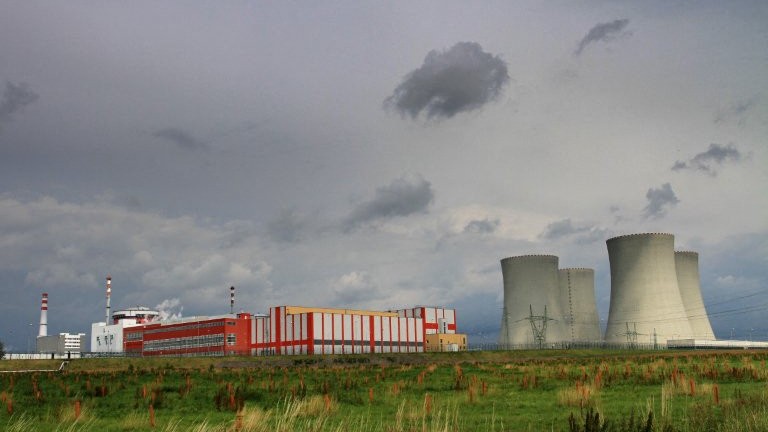
Should the latest round of EU sanctions against Russia be adopted according to what Kyiv has proposed, the energy mix of the Czech Republic, of which a large proportion is nuclear, would face a serious threat. Prague is still reliant on Russian nuclear fuel for its plants and has not yet found a reliable alternative.
“The West is still trading with Russia, buying Russian oil, of course, this does not contribute to ending this war,” complained Yevhen Perebyjnis, Deputy Foreign Minister of Ukraine and former Ukrainian ambassador to the Czech Republic, in an interview with Czech public television.
“We need to be more decisive in planning these sanctions, we need to impose sanctions on Russian nuclear energy because it brings a lot of money to Russia,” Perebyjnis said.
Speculation about new energy-sector sanctions continues, but nuclear has so far remained exempt. The Czech Republic has been making efforts to pivot away from Russian supply for its energy needs, but the process is complex. The first drafts of the new sanctions list could appear in the coming days, with Prague also pushing to restrict the movement of Russian diplomats in the Schengen area, a proposal that has struggled to gain support so far.
Doubts also remain about the effectiveness of sanctions already in place. According to Tomáš Kopečný, the government’s representative for the reconstruction of Ukraine, the current sanctions are only “superficial wounds, they are definitely not clogging the arteries, blood vessels, let alone the aorta of the Russian economy.”
“European countries are of course still buying Russian oil, it’s just that the barrels are labeled differently,” he added.
Kopečný avoided a direct question about whether banning Russian nuclear fuel was undr discussion, stressing instead the need to focus on curbing sanction circumvention.
Unlike other European countries that are phasing out nuclear power, the Czech Republic is doubling down on nuclear and renewables to meet its climate goals. Six nuclear reactors currently provide more than one-third of the country’s electricity.
As the Czech Republic prepares for parliamentary elections on October 3–4, energy policy has emerged as a defining issue. Opposition leader Andrej Babiš and his ANO movement are campaigning on promises of cheaper energy, lower taxes, and stronger social protections. Babiš has vowed to resist the European Union’s Green Deal, which his platform labels a “dead project,” and instead secure affordable energy by increasing the state’s stake in ČEZ—one of the country’s largest utility and energy companies—to 100%, keeping coal plants in operation until new nuclear and gas sources are ready, and accelerating investment in reliable infrastructure.
ANO currently leads with 32% in the polls, positioning itself as the frontrunner.