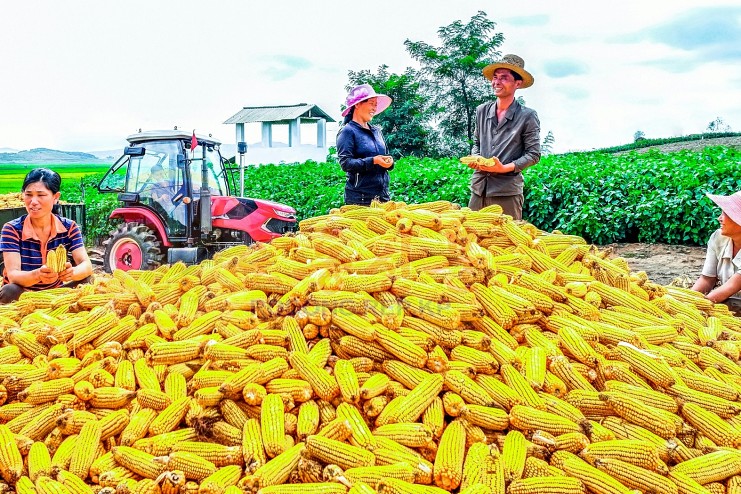
 The Rodong Sinmun newspaper reported on Sept. 16, 2024, that officials and farm workers in Taedong county, South Pyongan province, had “completed the corn harvest a full two weeks earlier than in the past.” The newspaper added that “workers have a different attitude in this new era of promoting agricultural regions.” (Rodong Sinmun, News 1)
Extreme weather is damaging North Korea’s agricultural production, with stunted corn crops in key provinces raising concerns about food security for a population that depends heavily on annual harvests.
A source in South Pyongan province told Daily NK recently that as farmers begin harvesting corn in Sukchon county, locals have been dismayed to see dramatically smaller ears of corn.
Corn ears, which averaged 13 centimeters in length last year, are less than half that size this year—raising concerns that the actual harvest may be half the expected volume.
“The corn crop situation is roughly the same throughout Sukchon county. We’re always short of grain even when the harvest is good, and this year many are afraid we’ll end up with half a crop,” the source said.
The situation appears better in the Hwanghae region, considered North Korea’s breadbasket. A source in South Hwanghae province said corn farmers there expect this year’s harvest will be roughly comparable to previous years and are satisfied with their current crop development.
Even so, farmers remain nervous about potential disasters before the fall rice harvest—extreme weather events or serious pest infestations.
Military reserves vs. public need
“While it’s great that farms are doing well down in Hwanghae, that won’t be much help for ordinary North Koreans because most of that corn is earmarked for the military’s grain reserves,” said a source in South Pyongan province. “Farms have been suffering from heat in South Pyongan province and from heavy rains in North Pyongan and Chagang provinces. That’s probably going to create serious problems for the people’s food supply.”
The U.S. Department of Agriculture predicted in its Sept. 2 Commodity Intelligence Report that North Korea would have typical rice and corn crops nationwide, based on satellite imagery analysis. But the USDA’s assessment conflicts with reports from North Korean farmers in South Pyongan province.
“There are serious concerns that the food situation will deteriorate before the fall harvest even begins, and there’s a growing tendency to normalize rising grain prices at marketplaces,” the source said.
“People long ago stopped counting on rations from the state. For people who depend on the markets, higher grain prices are sure to strain budgets. That’s why we’re closely watching this year’s harvest.”