Been reading Thomas Dingley's The Account of the Official Progress of His Grace Henry, the First Duke of Beaufort through Wales in 1684. Because I'm just that cool.
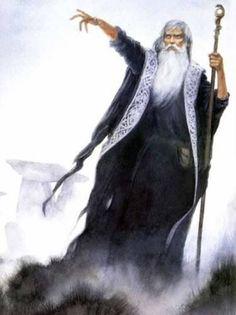
In it, Dingley states that the Welsh language is the same as the language spoken by Merlin and Taliesin 1,100 years before his own time. But he states that this is especially true in North Wales.
Is that right? I've often heard it said that a modern Welsh speaker could converse with a 6th century Welsh speaker with more ease than modern English speakers could with an Anglo-Saxon. But I have never heard that a Cymro/Cymraes Gwyndodeg would find it easier than someone who spoke Y Wenhwyseg or Dyfedeg.
Presumably there's more to this than saying "Sumae!" to Taliesin and asking Merlin if he wants llefrith instead of llaeth in his te.
by Logical_Positive_522
9 comments
Apparently true and I believe welsh is one of the oldest languages of Britannia.. and when Merlin visited Caernarfon, they all shouted “ Iawn Cont “
https://www.historic-uk.com/HistoryUK/HistoryofWales/Welsh-Language/
Old Welsh is far more similar to modern than even middle English is to modern English, let alone old English. You could probably muddle through middle Welsh easily enough, but old Welsh would be a little trickier
By north Wales for the mean modern day Gwynedd/Clwyd or do they mean “yr hen ogledd” (the old north) – modern day Cumbria and south west Scotland? Because from my understanding Myrddin and Taliesin were both from yr hen ogledd (or at least spent time in that area) – where eventually Cumbric would be spoken, but both Cumbric and modern Welsh share and ancestor in old Welsh.
Certainly it is possible to understand Old Welsh and the structures and forms (especially poetry) in the language of the earliest attested writings suggest a language that was already fairly stable and sophisticated. Compare this with the development of English, especially as the Norman French forms were taken into more use displacing the Germanic forms, or how the writings of Shakespeare are very erratic in terms of grammar, spelling etc.
Words like “te” … certainly wouldn’t be understood – “tea/cha/chai” dated from late 1500s in English. Shw mae is a colloquialism.
Dingley’s account is fanciful in certain respects – especially with the hindsight of modern linguistics.
I don’t think this is true at all. I just quickly grabbed some old Welsh from a Google search and it’s completely incomprehensible to me (south wales native speaker). This is from the 6th-8th century sometime, it contains some Latin words. I can’t see how a northern native speaker would find this understandable.
surexit tutbulc filius liuit hagener tutri dierchi tir telih haioid ilau elcu filius gelhig haluidt iuguret amgucant pel amtanndi ho diued diprotant gener tutri o guir imguodant ir degion guragon tagc rodesit elcu guetig equs tres uache, tres uache nouidligi namin ir ni be cas igridu dimedichat guetig hit did braut grefiat guetig nis minn tutbulc hai cenetl in ois oisau
https://en.m.wikipedia.org/wiki/Old_Welsh
1,100 years before 1684 is even earlier than Old Welsh! We’re talking about the Brittonic language at that point I think. There’s really no way a modern Welsh speaker would be able have much of a conversation with someone speaking Brittonic, regardless of if they’re speaking modern North Welsh or South Welsh. It even seems pretty unlikely that it was true that a 1684 Welsh speaker would be able to understand someone speaking Brittonic, but I defer to someone more learned on the topic.
There’s no reason to limit this question to people who speak Welsh.
In terms of phonology, the closest dialect of modern Welsh to Old Welsh, according to my esteemed late Professor D. Simon Evans, is the Wenhwyseg of the south-east.
Sadly, the Wenhwyseg has lost most of its ground, although strong throughout the south-east as recently as 100 years ago (when one commentator of the time mistakenly forecast it would become the 20th century’s literary standard in Wales). It’s westernmost remnants can still be heard in west Glamorgan, often referred to as ‘Acen Cwm Tawe’.
No, it’s not true.
Comments are closed.