CEO of aircraft maintenance firm Magnetic MRO and board member at the Estonian Chamber of Commerce and Industry Risto Mäeots said investments also need more conscious policy.
“Industry’s contribution to GDP falls below the European average. Major steps have been taken, but on the other hand we are taking several steps back, where a much-talked-about stable situation is missing in Estonia, a tax peace. Attracting large investors here still requires some cherry on the cake, but today our location on the map is not that cherry on the cake,” Mäeots said.
Success could be found in smart industry, Mäeots added.
Swedbank’s head of corporate banking, Mihkel Utt, said, however, while investment activity in the economy is currently low, Estonian capital is coming to the fore.
“If we look at the energy sector, then we can see major activity there. If we look at real estate, foreign investors are leaving somewhat there, but then Estonian capital takes over foreign capital. And in industry it is rather more Estonian capital that is investing here. Plus it is very good news that foreign capital has also made large investments here,” Utt said.
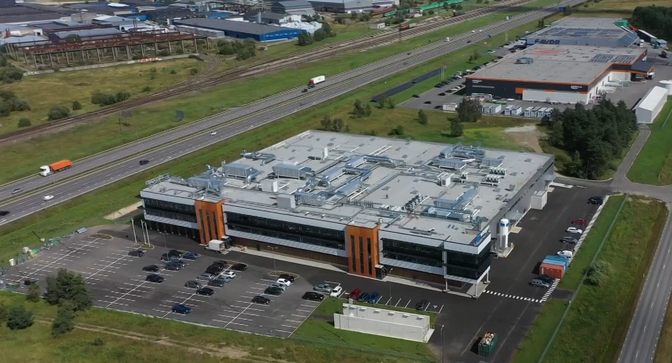
One concrete example of inward investment bearing fruit is the new €50 million fuel cell production unit Elcogen just opened at the Loovälja technology park near Tallinn.
Elcogen, a clean energy tech firm, was founded by Estonian scientists a couple of decades ago and has been growing since then.
The current project was financed by Elcogen’s shareholders, including one of South Korea’s largest industrial conglomerates, HD Hyundai.
Elcogen’s fuel cells allow for the efficient conversion of gas or hydrogen into electricity. The 14,000-square-meter factory will boost annual production capacity from 10MW to 360MW, making the company one of Europe’s largest producers of fuel cell and electrolysis technology.
—
Source:
‘Aktuaalne kaamera,’ reporter Toomas Pott.