
When I wrote last week about how immigration raids are targeting far more laborers than criminals, and whacking the California economy at a cost to all of us, I was surprised by the number of readers who wrote to say it’s high time for immigration reform.
The cynic in me had an immediate response, which essentially was, yeah, sure.
Bipartisan attempts failed in 2006 and 2014, so there’s a fat chance of getting anywhere in this political climate.
But the more I thought about it, nobody has done more to make clear how badly we need to rewrite federal immigration law than guess who.
President Trump.
Raids, the threat of more raids, and the promise to deport 3,000 people a day, are sabotaging Trump’s economic agenda and eroding his support among Latinos. Restaurants have suffered, construction has slowed and fruit has rotted on vines as the promised crackdown on violent offenders — which would have had much more public support — instead turned into a heartless, destructive and costly eradication.
I wouldn’t bet a nickel on Trump or his congressional lackeys to publicly admit to any of that. But there have been signs that the emperor is beginning to soften hard-line positions on deportations of working immigrants and student visas, sending his MAGA posse into convulsions.
“His heart isn’t in the nativist purge the way the rest of his administration’s heart is into it,” the Cato Institute’s director of immigration studies, David J. Bier, told the New York Times. Despite the tough talk, Bier said, Trump has “always had a soft spot for the economic needs from a business perspective.”
So too, apparently, do some California GOP legislators.
In June, six Republican lawmakers led by state Sen. Suzette Martinez Valladares (R-Santa Clarita) sent Trump a letter urging him to ease up on the raids and get to work on immigration reform.
“Focus deportations on criminals,” Martinez Valladares wrote, “and support legal immigration and visa policies that will build a strong economy, secure our borders and protect our communities.”
Then in July, a bipartisan group of California lawmakers led by State Sen. Rosilicie Ochoa Bogh (R-Yucaipa), followed suit.
Ochoa Bogh urged “immediate federal action … to issue expedited work permits to the millions of undocumented immigrants who are considered essential workers, such as farmworkers who provide critical services. These workers support many industries that keep our country afloat and, regardless of immigration status, we must not overlook the value of their economic, academic, and cultural contributions to the United States.”
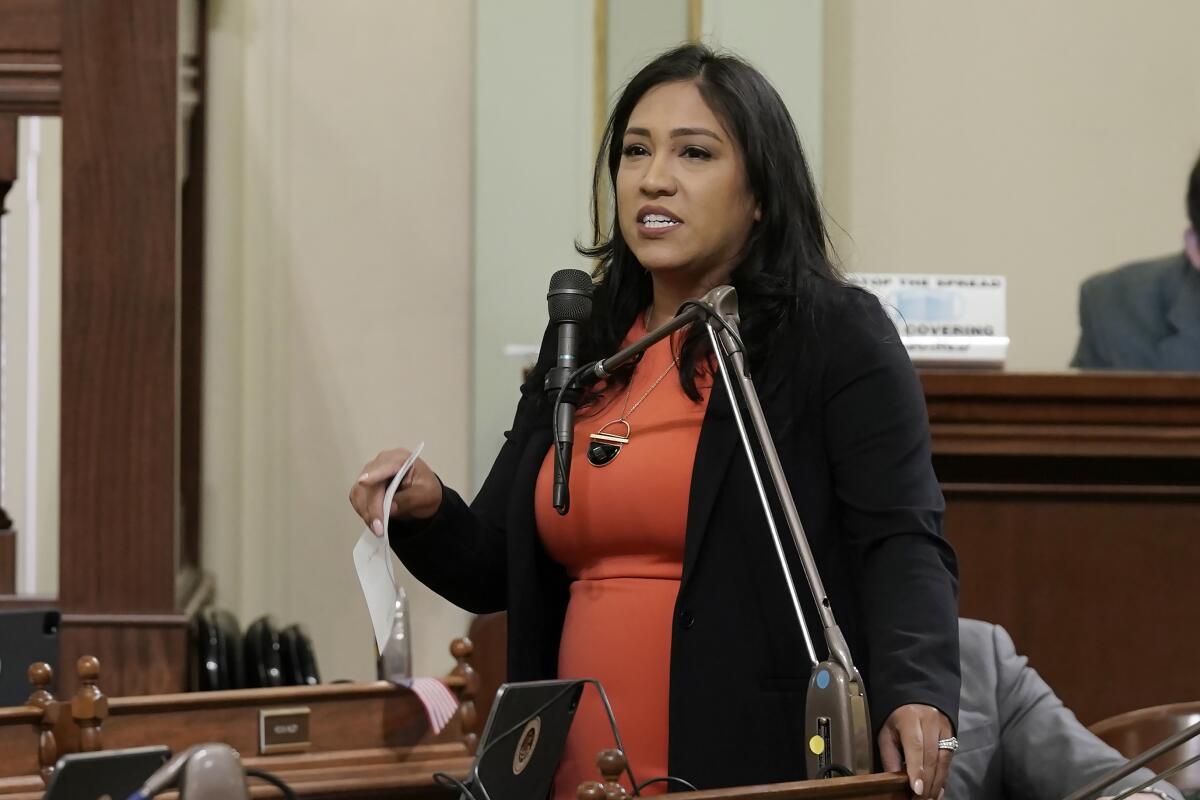
State Sen. Suzette Martinez Valladares (R-Santa Clarita) sent President Trump a letter urging him to ease up on raids and focus on immigration reform.
(Rich Pedroncelli / Associated Press)
Ochoa Bogh told me she heard from constituents in agriculture and hospitality who complained about the impact of raids. She said her aunt, a citizen, “is afraid to go out and carries a passport with her now because she’s afraid they might stop her.”
The senator said she blames both Democrats and Republicans for the failure to deliver sensible immigration reform over the years, and she told me her own family experience guides her thinking on what could be a way forward.
Her grandfather was a Mexican guest worker in the Bracero Program of the 1940s, ‘50s and ‘60s, ended up being sponsored for legal status, and eventually moved his entire family north. Since then, children and grandchildren have gone to school, worked, prospered and contributed.
If Trump were to respond to her letter and visit her district, Ochoa Bogh said, “I would absolutely have him visit my family.”
Her relatives include restaurateurs, the owners of a tailoring business, a county employee and a priest.
“We don’t want undocumented people in our country. … But we need a work permit process” that serves the needs of employers and workers, Ochoa Bogh said.
Public opinion polls reflect similar attitudes. Views are mixed, largely along party lines, but a Pew study in June found 42% approval and 47% disapproval of Trump’s overall approach on immigration.
A July Gallup poll found increasing support for immigration in general, with 85% in favor of a pathway to citizenship for immigrants brought to the U.S. as minors, and 60% support among Republicans for legal status of all undocumented people if certain requirements are met.
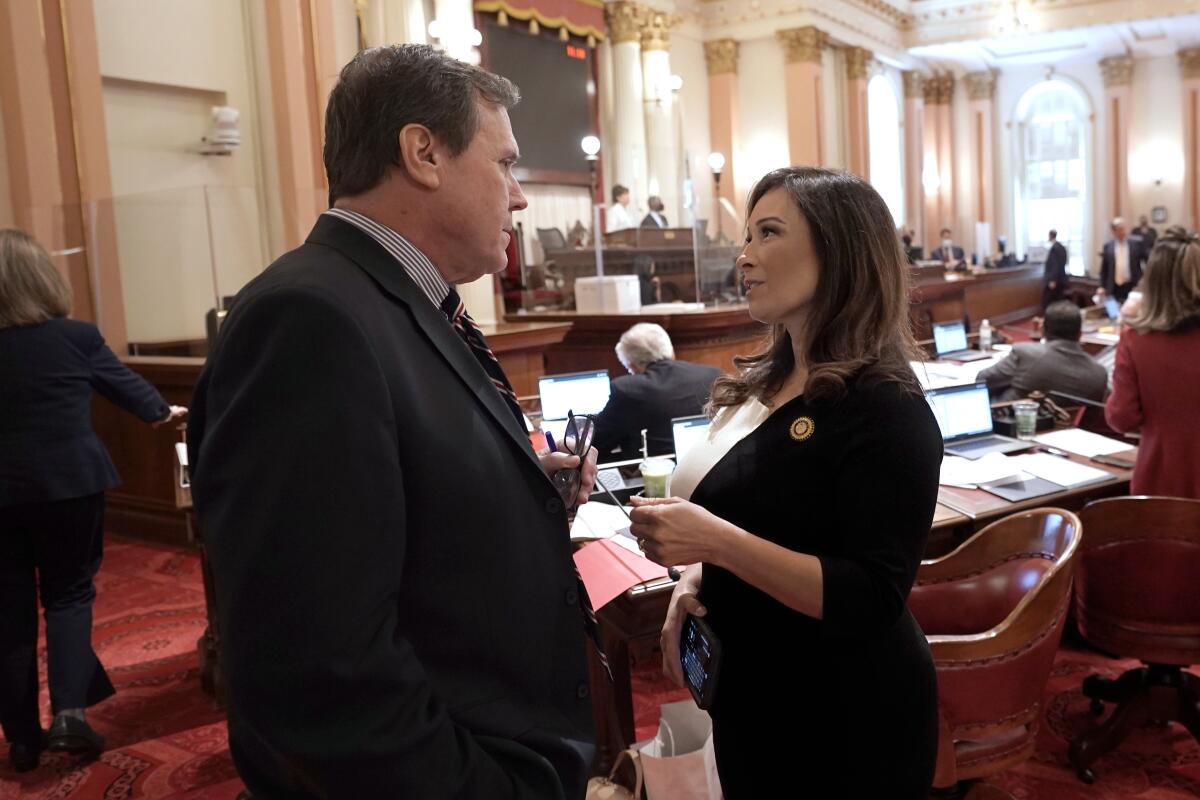
State Sen. Rosilicie Ochoa Bogh, shown with Senate Republican Leader Scott Wilk in 2022, says constituents in agriculture and hospitality have complained about the impact of raids.
(Rich Pedroncelli / Associated Press)
So it’s not entirely surprising that a bipartisan congressional immigration reform bill, the Dignity Act of 2025, was introduced in July by a Florida Republican and a Texas Democrat. It would allow legal status for those who have lived in the U.S. for five years, are working and paying taxes, and have no criminal record.
Victor Narro, project director at the UCLA Labor Center, isn’t optimistic, given political realities. But he’s been advocating for immigration reform for decades and said “we need to continue the fight because there will be a time of reckoning” in which the U.S. will “have to rely on immigrant workers to assure economic survival.”
“Germany had to resort to guest worker programs when birth rates declined,” said Kevin Johnson, a former UC Davis law school dean. “We may be begging for workers from other nations in the not too distant future.”
“No side wants to give the other a victory, but there have got to be ways to close that gap,” said Hiroshi Motomura, a UCLA immigration scholar whose new book, “Borders and Belonging: Toward A Fair Immigration Policy,” examines the history and causes of immigration, as well as the complexities of arguments for and against.
“Practically and politically, there’s potential” for reform, Motomura said, and he sees a better chance for rational conversations at the local level than in the heat of national debate. “You’re more likely to hear stories of mixed families … and that kind of thing humanizes the situation instead of turning it into a lot of abstract statistics.”
Ochoa Bogh told me that when she wrote her letter to Trump, the feedback from constituents included both support and criticism. She said she met with her critics, who told her she should be focused on jobs for citizens rather than for undocumented immigrants.
She said she told them she is all for “American people doing American jobs.” But “we have a workforce shortage in the state in various industries,” and a U.S.-born population that is not stepping up to do certain kinds of work.
“I said to them, ‘You can’t keep your eyes closed and say this is what it should be, when there are certain realities we have to navigate.”
So what are the chances of progress on immigration reform?
Not great at the moment.
But as readers suggested, a better question is this:
Why not?
Steve.lopez@latimes.com