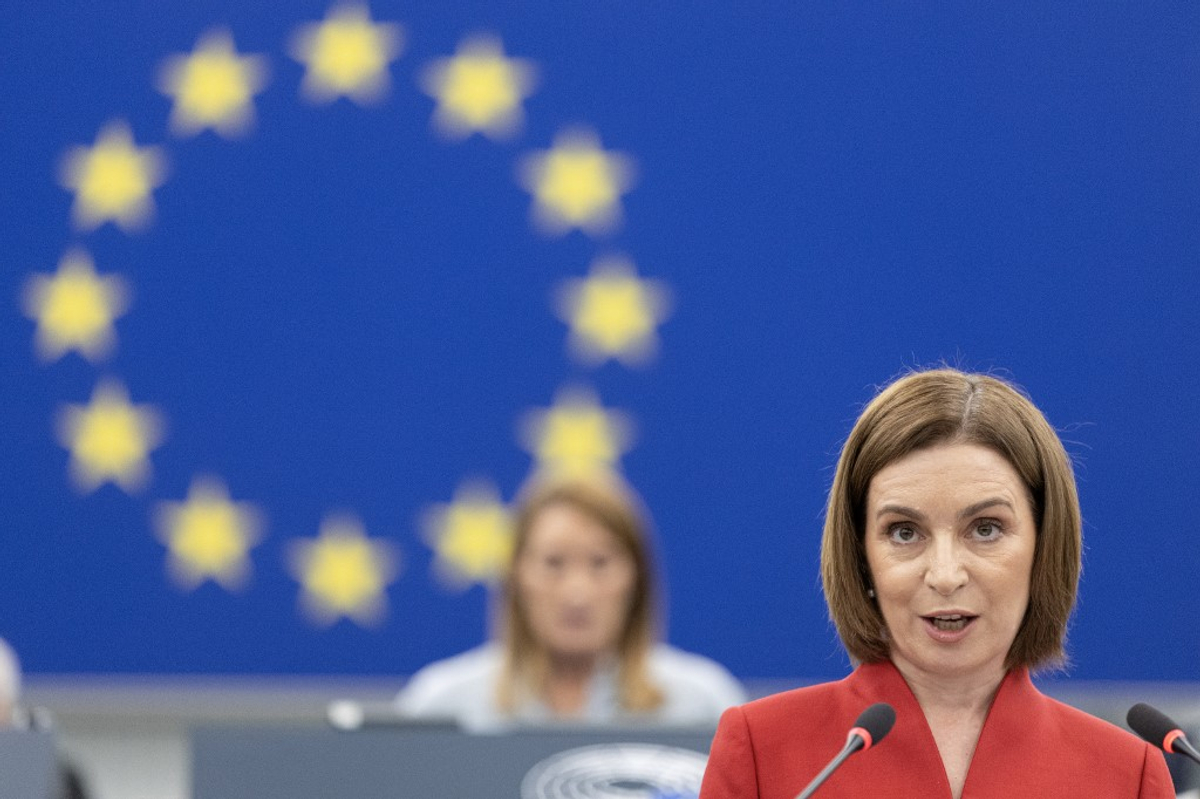
Moldovan authorities detained over 70 people in roughly 250 raids targeting suspected Russian-backed attempts to destabilize the country ahead of Sunday’s crucial parliamentary elections.
Press agency Moldpres reported that Moldovan police had carried out around 250 searches zeroing in on more than 100 suspects across the country.
Follow our coverage of the war on the @Kyivpost_official.
The raids led to arrests of 74 men “trained in Serbia in techniques for mass disorder” and weapons were seized, according to a later report by the agency citing the chief prosecutor from the Office for Combating Organized Crime and Special Cases Victor Furtună.
National police said in a statement that the searches were “related to a criminal case into the preparation of mass riots and destabilization, which were coordinated from the Russian Federation through criminal elements,” according to Reuters.
Moldovan authorities previously claimed that hundreds of Moldovan citizens had been trained in Russia, Serbia, and Bosnia and Herzegovina, where they were taught tactics to destabilize the country including provoking riots and resisting police.
Chișinău said that some of these individuals had been trained by foreign instructors linked to Russia’s former Wagner paramilitary group.
Speaking in a video address on Monday, Moldovan President Maia Sandu, who leads the EU-allied Party of Action and Solidarity (PAS), warned that her country’s sovereignty was “in danger” from Russian interference.
Other Topics of Interest
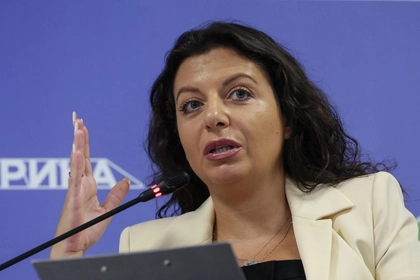
Kremlin Mouthpiece Simonyan Has Cancer
The editor-in-chief of Russia Today (RT), a pro-Kremlin propaganda outlet banned in the EU, recently announced that she was suffering from a “severe illness.”
“The Kremlin is pouring hundreds of millions of euros to buy hundreds of thousands of votes on both banks of the Nistru river and abroad,” she said.
“People are intoxicated daily with lies. Hundreds of individuals are paid to provoke disorder, violence and spread fear,” she added in remarks reported by Reuters.
“If Russia gains control over Moldova, the consequences will be immediate and dangerous for our country and for the entire region.”
Meanwhile, former President and leader of the anti-EU Party of Socialists Igor Dodon hit back at the government and protested the police searches, saying some colleagues had been targeted by raids.
“Maia Sandu and PAS are now looking for reasons to cancel the elections, because they know they will get a bad result on September 28,” he wrote on Facebook.
“They know that their political end is near… Dear citizens, we only have to hold out for one more week,” Dodon added.
On Sunday, Moldovans will vote to elect a new 101-seat legislature in a pivotal election which many see as a choice between deeper integration with the European Union or strengthening ties with Russia.
The country’s democratic processes have long been marred by suggestions of malign Russian influence.
Sandu was re-elected in last November’s presidential vote despite widespread allegations of a Russian-backed campaign aimed at ousting her.
In a separate referendum held that October, Moldovans voted by a razor-thin margin in favor of pursuing EU membership amid allegations that Moscow had orchestrated a large-scale influence operation aimed at stoking fears about a direct conflict with Russia.
Tensions have been equally high in the lead-up to this month’s vote. On Aug. 29, three Moldovan nationals were arrested for allegedly training in Russian-run subversion camps in Bosnia, Kyiv Post reported.
On Sept. 9, Moldovan President Maia Sandu said that her country’s democracy was facing a “race against time” from Russian interference amid analysts’ warnings that the Kremlin had launched a large-scale online disinformation campaign against her pro-western government.
“The Kremlin’s goal is clear: to capture Moldova through the ballot box, to use us against Ukraine, and to turn us into a launchpad for hybrid attacks on the European Union,” Sandu warned.
Moscow has denied any involvement in Moldova’s internal affairs and has accused Sandu’s government of intentionally inflaming anti-Russian sentiment to strengthen its electoral position, despite evidence collated by independent observers.