Luxembourg Times film critic Tomas Einarsson was a member of the Critic’s Jury at this year’s British & Irish Film Festival Autumn Edition. Here he takes us through the movies watched and the ones that left a lasting impression.
As a fully-fledged, card-carrying member of the Association luxembourgeoise de la presse cinématographique (ALPC), I was lucky enough to sit on the Critic’s Jury for this year’s Autumn Edition of the British & Irish Film Festival Luxembourg.
My jury duty, if you will, consisted of viewing every film on the festival’s programme, taking note of particular stand-outs, and discussing my takes with my co-juror Raúl Reis – a co-founder of the ALPC, film critic for Contacto and director of Bom Dia Luxembourg.
The following is a diary of this week-long quest, detailing the cinematic routine, films on offer, and the jury’s final verdict.
Opening screening and emotional roller coaster rides
Festival president Geoff Thompson welcomed a full house to the opening screening of the British & Irish Film Festival’s Autumn Edition on 16 September.
Following an overview of the festival’s guests and audience voting system, we were treated to the intense (and constantly intensifying) film Brides, following two young British women as they leave home to join the Islamic State.
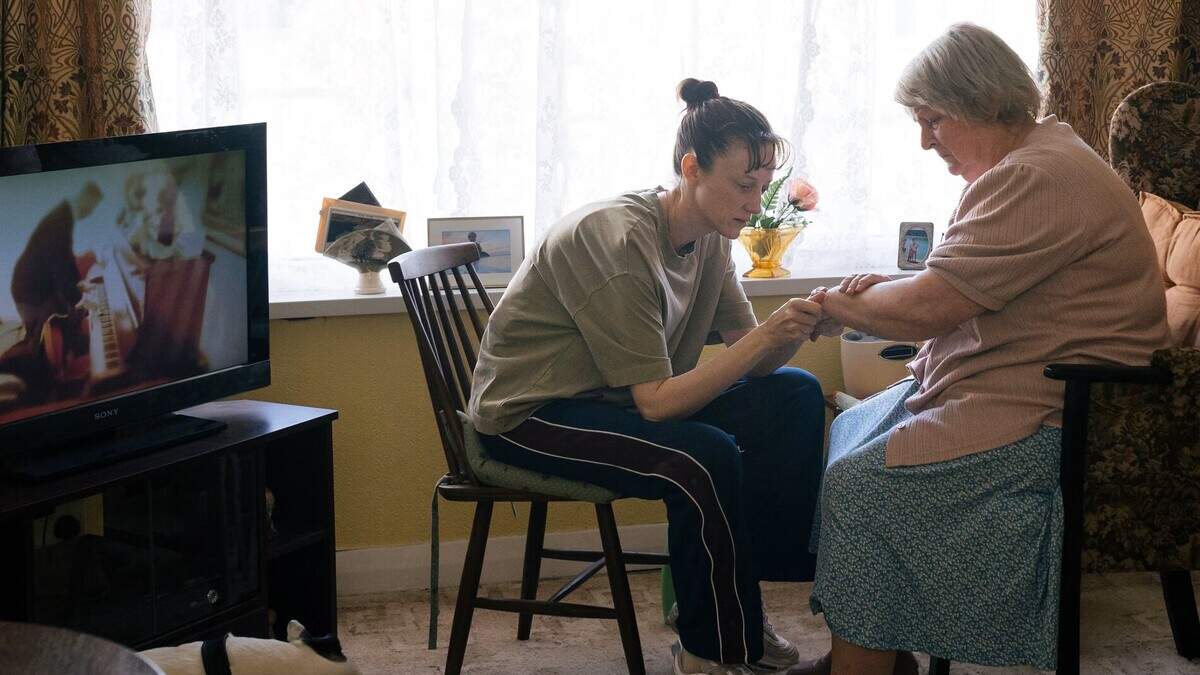
Monday evening, too, was gripping. At 19:00, we sat down for Dragonfly – starring Andrea Riseborough and Brenda Blethyn – as neighbours in a bleak, post-industrial Britain.
The film is certainly a slow-burn, until it certainly takes a brutal, shocking turn that left both Raúl and me reeling. Signs of Life, shown at 21:15, was milder in that respect, and thankfully ended its lonely divorce narrative on quite a sweet note.
Shorts and documentaries
The BIFFL’s Shorts Evening came next on Tuesday evening, and once again served as a launchpad for its Young Filmmakers Competition.
Later that night, we viewed the documentary A Sip of Irish about all of Ireland’s most famous drinks, their production processes, and histories. It was here that we met the first of the festival’s guests: Frank Mannion, the director, held a post-screening Q&A to discuss the ins and outs of documentary filmmaking and the intricacies of pouring a perfect pint of Guinness.
Wednesday night was, admittedly, something of a highlight in my juror’s book. Fran the Man, shown at 19:00, is an uproariously funny mockumentary about a football coach whose team has just qualified for the FAI Cup. The experience was made so much better in the company of Irish Luxembourgers who couldn’t get enough of it. Just good craic all around.
Later we saw We Only Want the Earth, a historical documentary about union activist and Irish independence fighter James Connolly. The hopeful and pertinent tone left many in the crowd inspired.
A String of Strong Guests
Another highlight, it must be said, were the numerous guests on BIFFL’s list. On Thursday evening, we first saw The Negotiator, a biographical documentary about American senator George Mitchell, who helped broker the Good Friday Agreement.
Later, following the screening of the Sky documentary Flight 149 : Hostage of War, the audience got a chance to speak to one of the ordeal’s survivors, Charles Kristiansson. It made the harrowing nature of the story – about the British Airways flight 149 that was grounded by the Iraqi Army in Kuwait in 1990 – all the more real.
A film and post-film Q&A that left us jurors dazzled was Spilt Milk, a lively drama set in 1980s Dublin. Shown on Friday evening, it concerns a young detective (played by Cillian Sullivan) must hunt for his lost brother – and navigate a gritty underworld of poverty and drug abuse.
Not only was Sullivan’s performance fantastic, but Raúl and I agreed after his Q&A: he’s got it. We’ll see a lot more of him on the big screen in the coming years.
Of bank robbers, former presidents and widows
At 21:30 on Friday, we were treated to a totally unique film on this autumn’s programme. Aontas, a film entirely in the Irish language, is told in a backwards chronology: we start at the point of a bank robbery and work our way back through its planning, recruitment and reason.
Saturday (the last day of the programme) saw the screening of the biographical documentary Mrs. Robinson at 19:00, concerning the life and achievements of Ireland’s first female president.
Thereafter, we saw Sunphlowers, a remarkably tender (and low-budget) drama about an Irish widow dealing with the complicated legacy her late husband has left her with. Special guest, director Dave Byrne, had some great stories to tell about the film’s production.
Our choice for the Critic’s Award
Ahead of the closing ceremony, Raúl and I agreed: we knew which film we’d like to see win. We did, however, want to make a special mention, too, on account of its lead actor’s talent and potential.
Thus, when it was time to give a short speech announcing our winner, I first made special mention of Spilt Milk. Raúl and I felt that its deft handling of difficult social issues – and portrayed so well by its lead, Cillian Sullivan – deserved it.
The audience seems to have agreed with us, as Spilt Milk won the Audience Award.
But the Critic’s Award this year went to Dragonfly, which we saw all the way back on Monday night. Its slow-burn atmosphere, its grimy kitchen-sink realism suddenly, and with such fury, takes a turn that it left our heads spinning.
I quipped at the end of my speech that it was a great film, even if it did leave me sick to my stomach afterwards.