 7 min read
Introducing The Mane Event, a series where we explore how hair loss (and hair regrowth) has become part of the culture at large.
Ahead of turning 25 this year, many people told me what to expect. “Your frontal lobe develops and you’ll see everything clearly.” “25 is no nonsense, this is the year where everything changes.” But at the top of the year, my only New Year’s resolution was for change.
One Friday night in March, I scheduled a haircut. The following day, I left my local barbershop looking like someone I barely recognized, with a short, jet-black pixie cut.
I’ve had long hair for as long as I could remember. As a teen, I’d spend hours catering to my hair daily, doing everything I could to add and retain length, from hot oil treatments to DIY mayonnaise and egg conditioning treatments. At one point, I’d grown my hair almost to the middle of my back. My family members and friends marveled at my length, asking me constantly for hair growth tips and hacks. The idea of a big chop wouldn’t even have come close to crossing my mind back then.
Unlike I had hoped, there was no immediate reclamation of control, no sense of freedom after my big chop. Instead, there was a pit in my stomach and the voices of everyone who had ever ridiculed me flooding my mind: kids at school who would pull at my hair, strangers asking to touch my curls as if they were something foreign, or partners who threatened breakups if I dared to cut my hair. (Huge red flag. If this ever happens, run!) Now, with my pixie cut, I found myself literally unencumbered by the weight of my hair, but struggling to free myself of everything that my hair represented.
For Black women, hair is never just hair. It’s politics, storytelling, social currency, and resistance. The decision to chop it all off, or even to wear it short for a period of time, is an emotional one for reasons deeply rooted in history—from the time of the transatlantic slave trade, when slave owners would shave the heads of enslaved people as an act of dehumanization, to the modern idea of “good hair,” which says looser and longer is superior to tighter textures that appear shorter.
For Black women, hair length is closely intertwined with self-image and self-worth, according to psychologist and hairstylist Afiya Mbilishaka, Ph.D. “The length and texture of a Black woman’s hair can have an impact on her access to education, religious institutions, relationships, and employment opportunities,” Mbilishaka writes in the research essay, “PsychoHairapy: Using Hair as an Entry Point into Black Women’s Spiritual and Mental Health.” It was only in 2019 that the CROWN (Creating a Respectful and Open World for Natural Hair) Act was first passed in California to ban race-based hair discrimination in the workplace and schools. Today, only 27 states have followed suit.
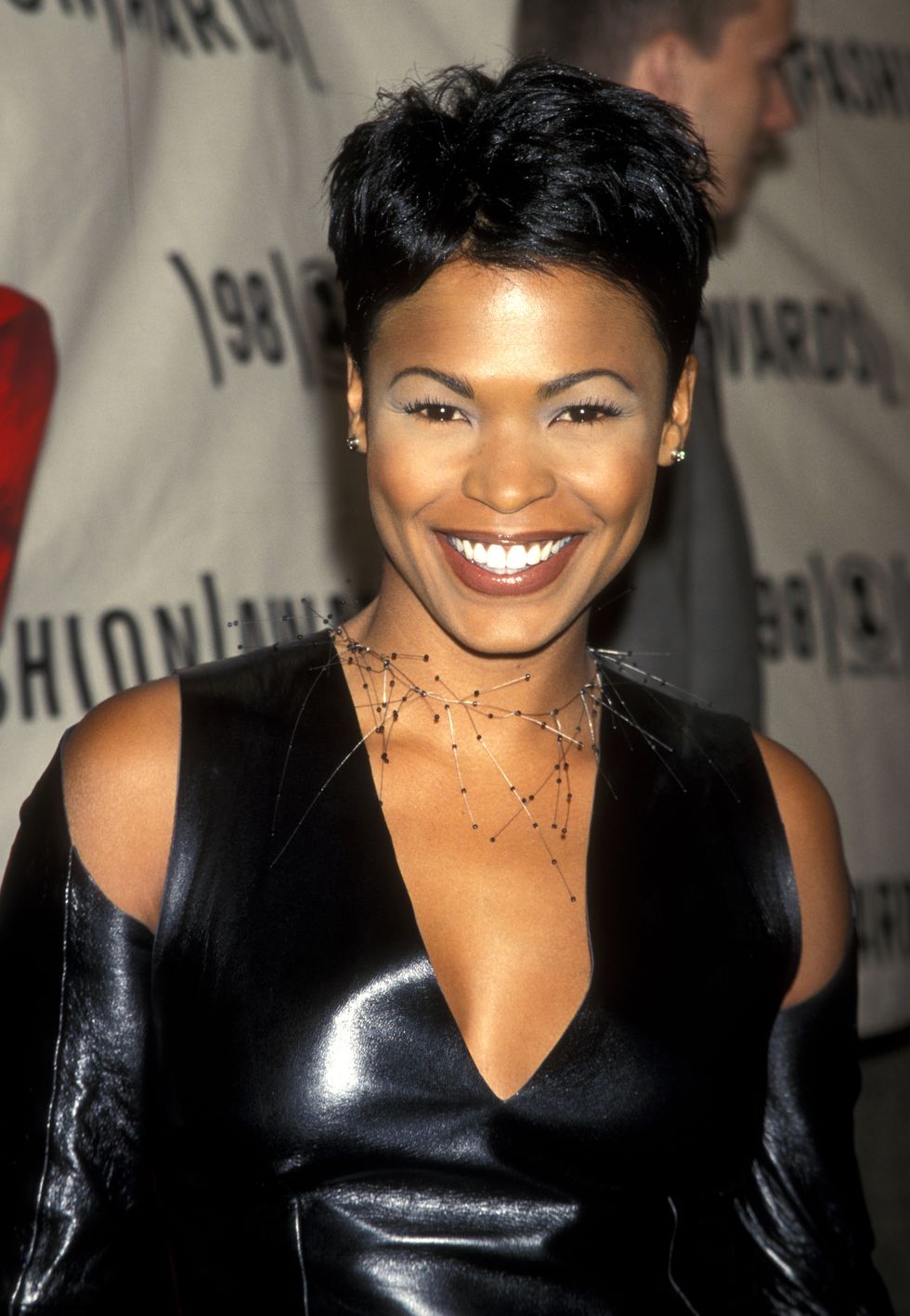
Nia Long attending the 1998 VH1 Fashion Awards.
Related Story
Hair length has also long been used as a measurement for desirability. This idea is reinforced by messages perpetuated in pop culture. Whether in film, music, or fashion, media tells us what length of hair is desirable—and it’s often not a pixie. It’s no coincidence that during fashion’s great return to girlhood, with the rise of ultrafeminine dress styles, that long, flowing hair was the prevailing style on runways like Collina Strada, Sandy Liang, and Blumarine. These trends often discount the time, effort, money, and manipulation it would take for Black women to achieve this same look. For many, growing long hair is also seen as an achievement, proof that you are the exception to false stereotypes that Black hair textures simply can’t grow past a certain length. In truth, regardless of texture, all hair grows, and everyone is capable of growing long hair. But because curly and coily textures grow out instead of down, it’s not as easy to see true length in Black hair without straightening or perming the strands.
Beyoncé herself has faced criticism over length. In an interview with Essence, she recalls her hairstylist’s shocked reaction to her pixie cut in 2013. “Neal Farinah, my hairstylist and friend, was freaking out because [my hair] was really long, thick, and healthy,” the singer said. But even after growing her hair back down to her waist and releasing her hair care line Cécred, skeptics claimed there was no way to know if her hair was actually as long as it looked, or if it was enhanced by extensions. (Beyoncé later showed her long hair in a Cécred hair tutorial, proving naysayers wrong.)
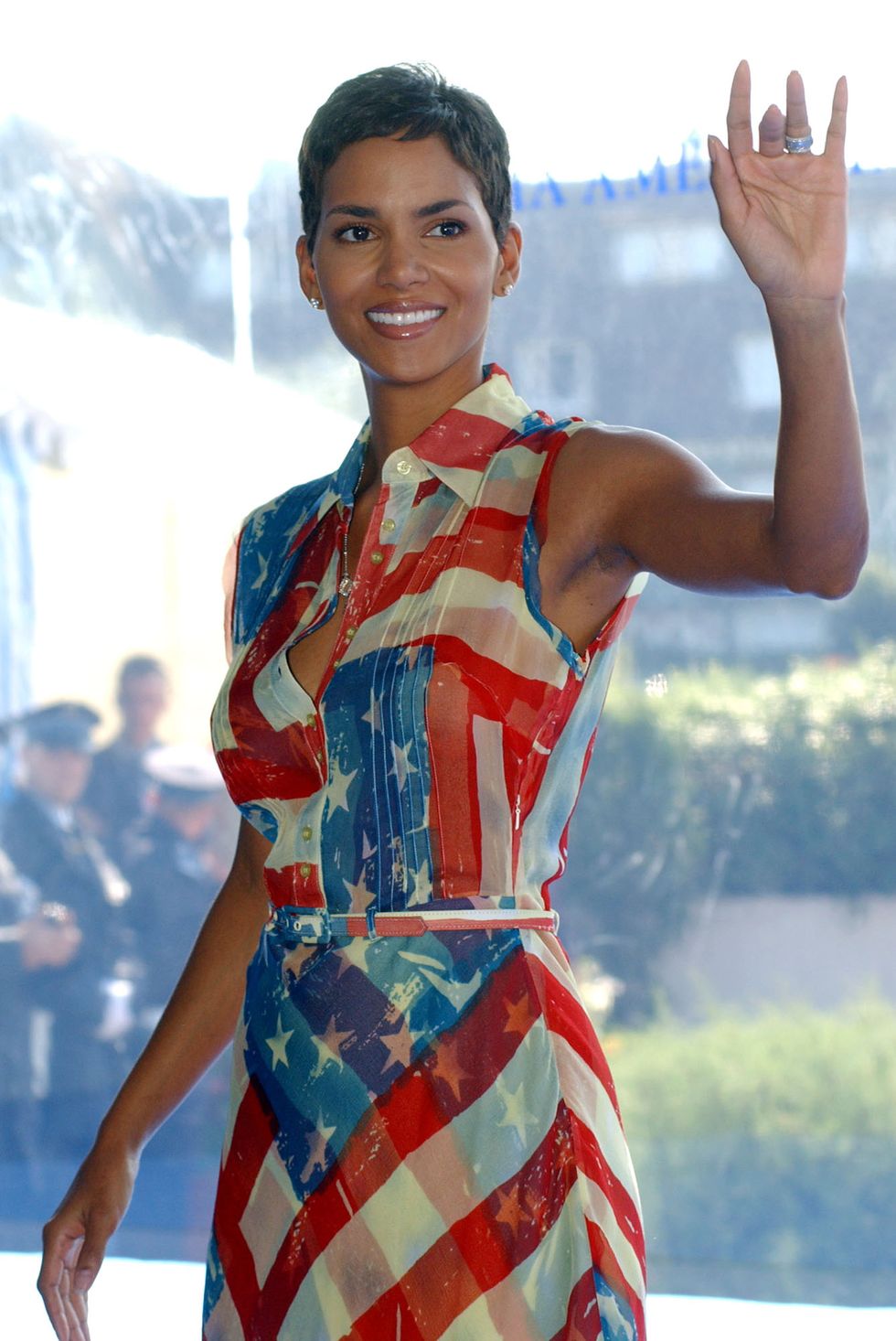
Halle Berry at the 2001 Deauville Film Festival for American Cinema.
Many other Black celebrities have dealt with backlash after cutting off their hair. Society often views short haircuts as rebellious, boyish, and edgy. “Short hair is bold,” says celebrity hairstylist Jacob Rozenberg. “Unexpected,” adds celebrity hairstylist Jerome Lordet. In the ’90s, when Winona Ryder cut her hair, the reaction was fairly positive—the actress noted that women would use her Reality Bites picture at the hair salon as inspiration. But Halle Berry recalled the negative feedback she received when she first cut her hair into a pixie in 1989. “My manager at the time told me I’d never work again,” Berry said in a 2022 interview with British Vogue. But contrary to what her manager said, she landed her first TV role in Living Dolls shortly after the cut and appeared with the pixie as a Bond girl in the 2002 film Die Another Day. Her short cut became emblematic of a form of Black beauty that was just as soft as it was powerful, similar to celebrities like Nia Long in the ’90s or Toni Braxton on her iconic self-titled album cover. “These divas had so much confidence and flair,” says celebrity hairstylist Lacy Redway. “Something about removing the attachment from hair must feel so freeing.” That feeling of freedom was what I yearned for when I got my own cut.
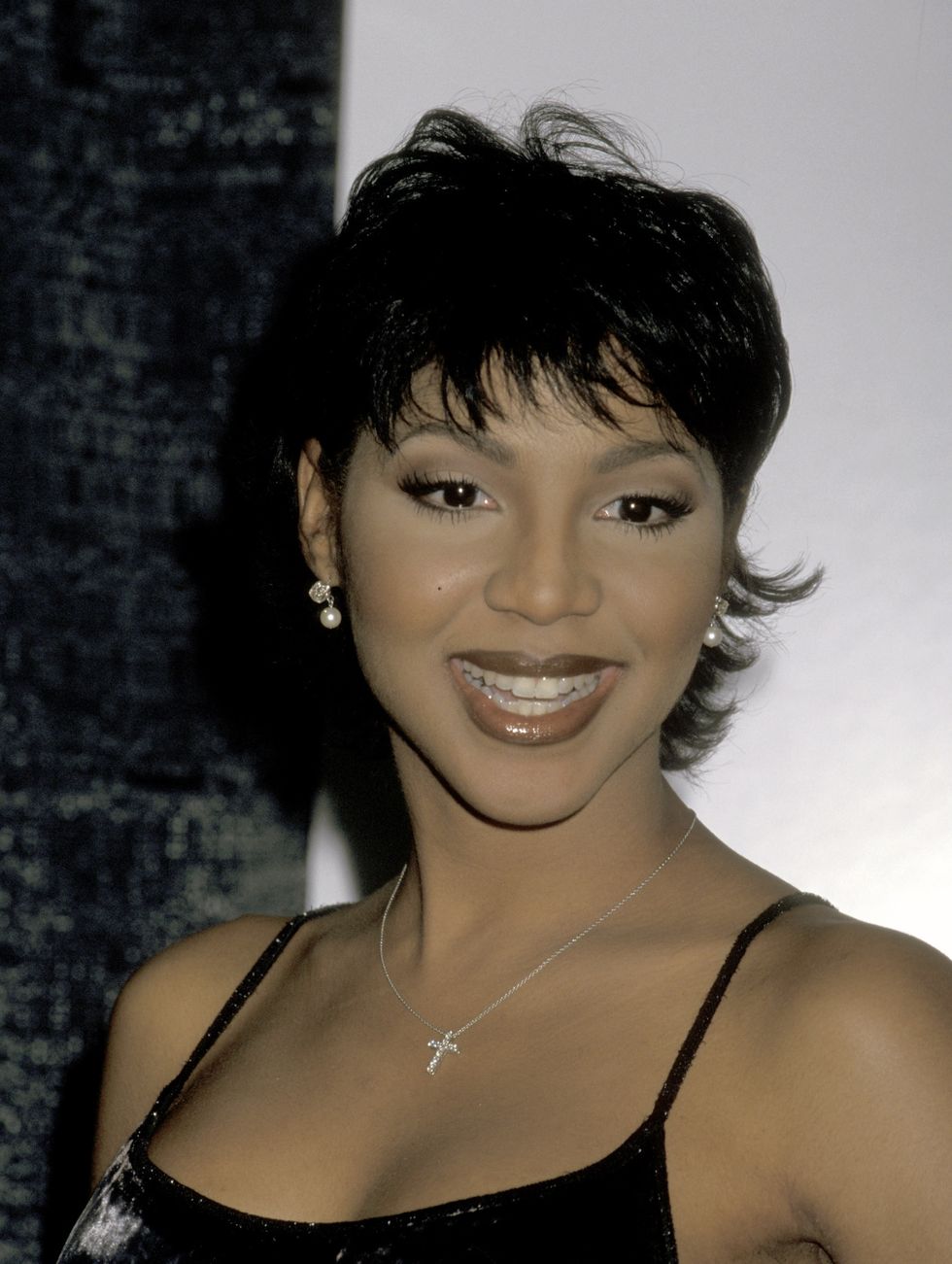
Toni Braxton at the 1995 Essence Awards.
As it turned out, cutting my hair wasn’t an instant breath of fresh air. It was one of the most terrifying and pivotal moments in my life and the ultimate test of my self-confidence. Returning home from the barbershop that day, I faced myself in the mirror and burst into tears. Intrusive thoughts ran through my mind: What have I done? I’m ugly. I look like a boy. Who would find me beautiful now? Without my shield of hair—24 inches of armor where I’d once found so much comfort—I almost allowed myself to fall prey to the classic falsehoods. It was thanks to the Black women in my life that those thoughts did not take root.
Related Story
Sitting beside me on my bedroom floor, my two roommates pulled out every iconic celebrity pixie cut reference they could think of to cheer me up. “Do you think Halle Berry is sitting around crying about her hair?” “Girl, it’s giving Nia Long!” “It’s ’90s fine, they don’t make ‘em like that anymore,” they said. They forced me to try on sunglasses and do model poses in the mirror, pulling out all the stops until they could get me to smile. Now as I write this, months after the initial cut and just a few days after my 25th birthday, my pixie cut remains.
Looking in the mirror now, I still notice that I’m missing the “protection” that my hair once gave me. There’s nothing to play with when I’m feeling anxious. There’s nothing to coyly tuck behind my ears when I’m shy—it’s just me, exposed and untethered. “There is so much confidence that comes with wearing your hair short, because there’s really nothing to hide behind,” says Brooklyn-based hairstylist Mackenzie Bailey, who recently went viral on TikTok for her sew-in pixie cut technique. “A short cut screams a new chapter! ‘Let’s go, there is no turning back now,’” adds celebrity hairstylist Ursula Stephen.
I hadn’t realized before how much my hair factored into my confidence until I was without it. But once it was gone, I was forced to stand firmly in my authentic self, to recognize that my beauty is not conditional or dependent on the length or texture of my hair. It pushed me to show up wholly and unapologetically, and to release anything or anyone who couldn’t accept that. It unleashed a bravery and audaciousness that had previously lain dormant. To me, that is the true measurement of femininity. That’s the freedom that I wanted, and in a roundabout way, I finally got it.
My short hair may not last forever. The beauty of Black hair is that I have the power to change it on a whim. I could grow my hair to my ribs in the next few years or have braids to my tailbone by tomorrow, if I wanted. But for right now, cutting my hair has been the best decision I could have made for myself and my self-esteem.
So yes, 25 is looking like it will be the change I wanted: bolder, sexier, stronger, and more self-assured. It isn’t all thanks to my pixie cut—but I’m almost certain that has something to do with it.
Related Stories