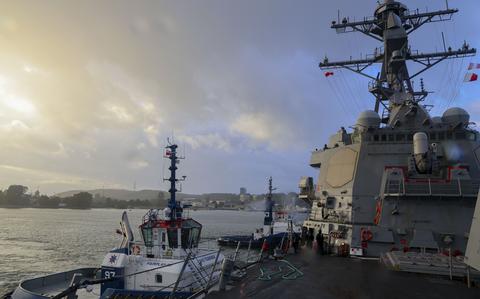
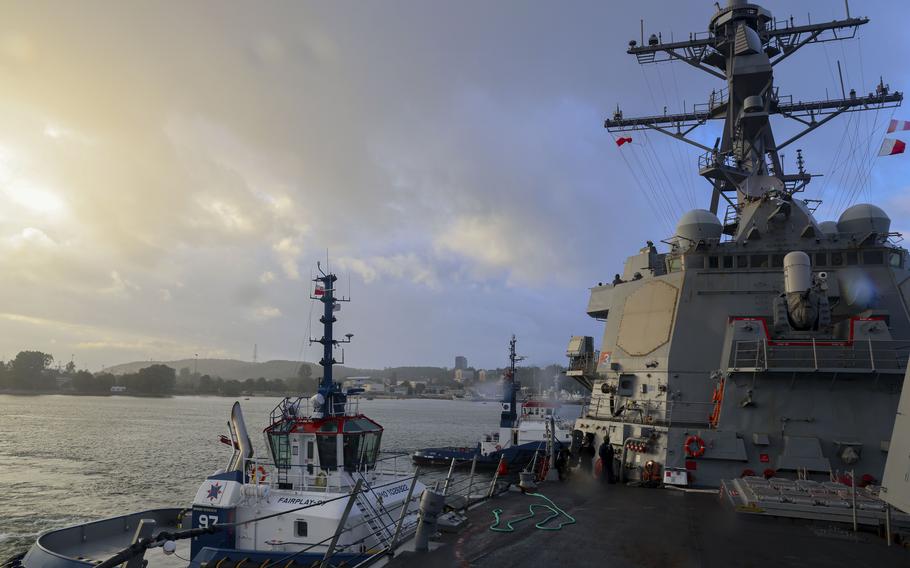
The destroyer USS Bulkeley is helped out of the port at Gdynia, Poland, by two tug boats Sept. 17, 2025. Bulkeley joined Baltic Sentry on Sept. 30, 2025, the first deployment of a U.S. ship to the NATO mission. (Jonathan Nye/U.S. Navy)
NAPLES, Italy — A U.S. Navy destroyer is operating in the Baltic Sea as part of a NATO mission that is adding air defense to its underwater focus as the alliance confronts repeated unidentified drone incursions into northern European countries.
USS Bulkeley joined Baltic Sentry on Tuesday, the first deployment of a U.S. ship to the mission, an unidentified Defense Department official said Tuesday, speaking on background because they were not authorized to talk publicly about the matter.
A Navy P-8 Poseidon patrol and reconnaissance plane deployed to Baltic Sentry last week. The Navy has previously supported the mission with P-8 aircraft, the DOD official said.
NATO formed Baltic Sentry in January following a rash of telecommunication cable cuttings and pipeline disruptions thought to be sabotage. The mission largely comprises Baltic countries, including Germany and Finland.
The beefing up of Baltic Sentry with a U.S. destroyer capable of simultaneously tracking and neutralizing multiple aerial targets along with the P-8 and other assets is a visible sign of allied solidarity, James Holmes, chair of the maritime strategy program at the Naval War College in Newport, R.I., said in an email.
It also is the use of deterrence, “issuing a clear threat — in this case, putting Russia on notice to stay out of NATO airspace,” he said. “If successful, this effort should deter further Russian mischief. That assumes Moscow believes in NATO capability and resolve, of course.”
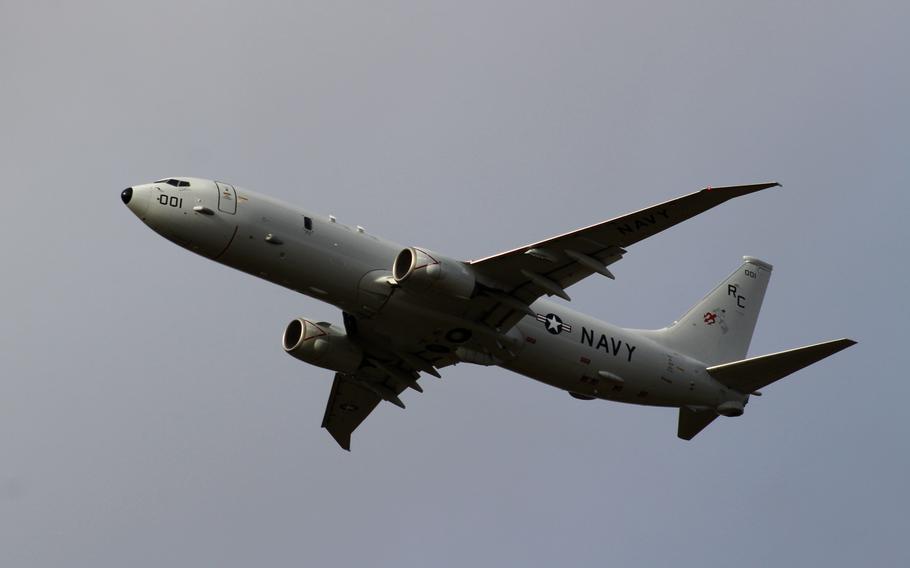
A P-8A Poseidon aircraft performs a touch and go during a training flight at Keflavík Air Base, Iceland, Sept. 25, 2025. A P-8A deployed to the NATO operation Baltic Sentry last week. (Sara Wedemeyer/U.S. Navy)
The uptick in U.S. participation in Baltic Sentry comes as NATO grapples with repeated incursions of its airspace by unidentified drones in Norway and Denmark, among other northern European countries. Those incursions have caused the temporary shutdown of airports and raised concerns about protecting NATO’s eastern flank.
Russia has strongly denied any involvement in drone incidents in Norway and Denmark.
But on Monday Ukrainian President Volodymyr Zelensky fingered Moscow, saying the drones were being launched from Russian oil tankers, The Kyiv Independent reported the same day.
“There is growing evidence that Russia may have used tankers in the Baltic Sea to launch drones — the drones that caused major disruption in northern Europe,” Zelensky said at the Warsaw Security Forum.
Those incidents follow incursions by Russian drones in Poland and Romania as well as a breach of Estonian airspace by Kremlin fighter jets in September that NATO officials have characterized as probes of the alliance’s defenses.
The violation of Polish airspace prompted NATO to create Eastern Sentry, a new mission designed to shore up defenses there.
The arrival of intelligence, surveillance and reconnaissance assets along with air defense frigates demonstrates the “flexibility and agility” of Baltic Sentry to broaden the mission beyond solely the protection of critical undersea infrastructure, U.S. Navy Cmdr. Arlo Abrahamson, a spokesman for Allied Maritime Command, said in an email on Tuesday.
The force increase also is a tangible example of alliance members’ resolve to act decisively to protect and defend each other, Abrahamson said. He added that the German frigate FGS Hamburg, assigned to NATO’s Standing Maritime Group 1, made a port call in Copenhagen on Sunday and will support Baltic Sentry activities.
The NATO show of strength coincides with the anniversary of another demonstration of U.S. resolve — also in the Baltic — 40 years ago this month. In October 1985, the U.S. sent a destroyer squadron, including the battleship USS Iowa, into the sea as part of the annual BALTOPS military exercise.
That demonstration included the Iowa firing its 16-inch guns during maneuvers. The ship also drew crowds of visitors during stops in Scandinavian ports and the attention of Russian and East German spy ships while operating in open water, Stars and Stripes reported in 2021.
At the time, U.S. officials wouldn’t openly characterize the exercise as a message to the Russians but “Danish Defense Minister Hans Engell said it ‘lets them know that the Baltic Sea is not a Soviet lake,’” according to the report.
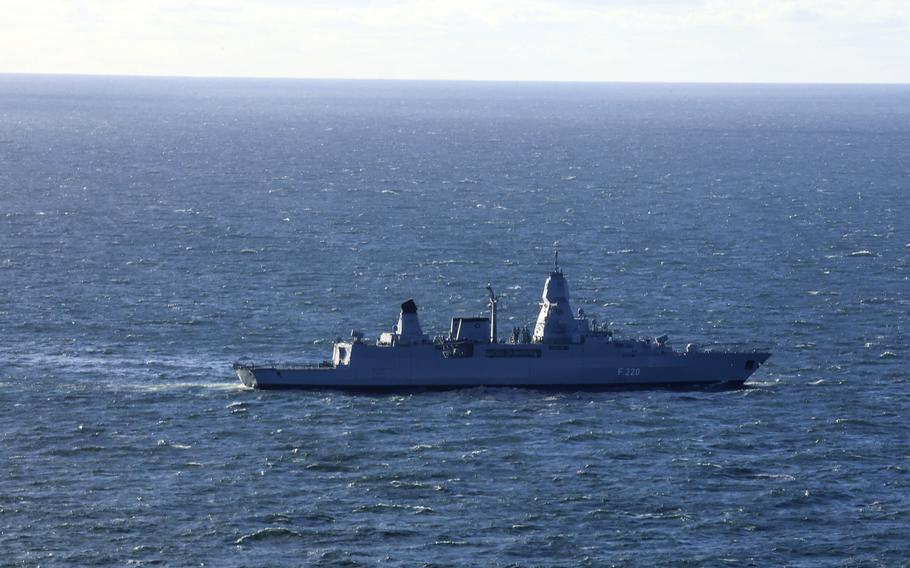
The German navy frigate FGS Hamburg conducts live-fire gunnery training in the Baltic Sea, Sept. 23, 2025. The ship will be supporting NATO’s Baltic Sentry mission. (Cesar Licona/U.S. Navy)