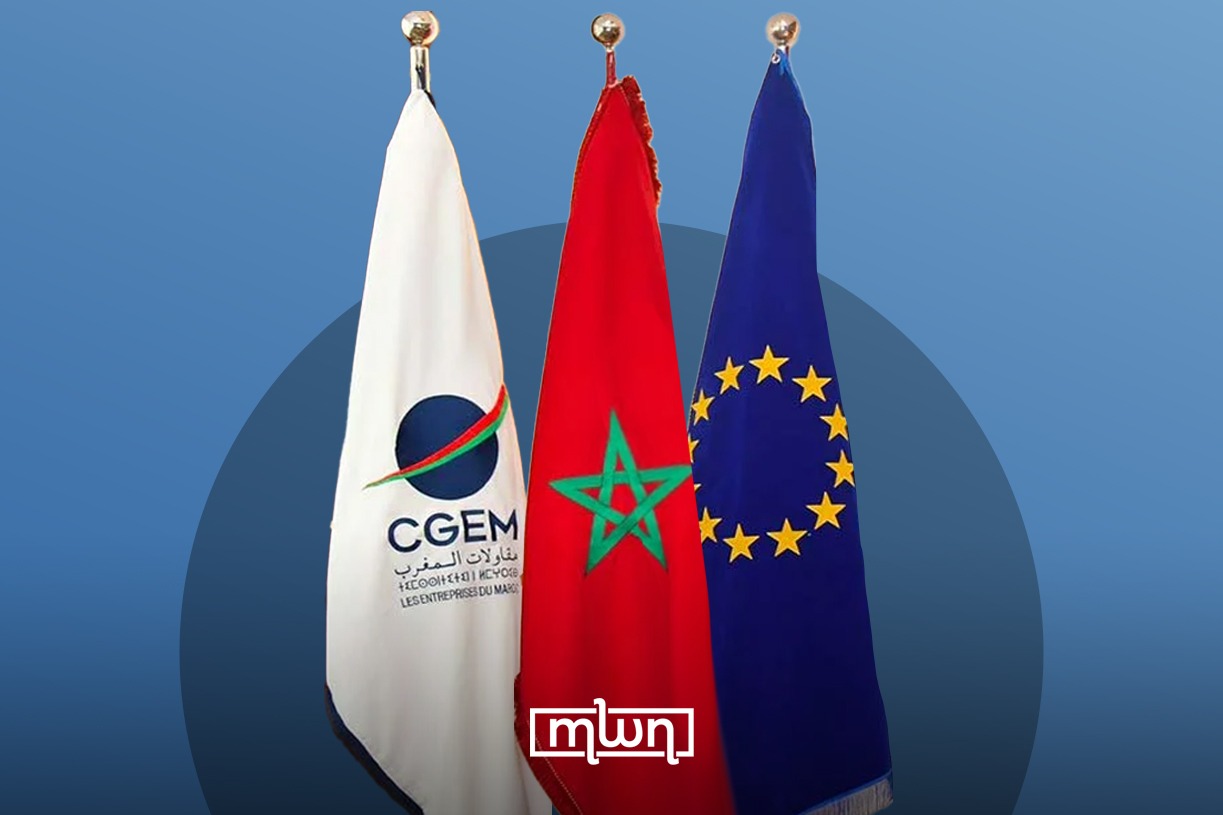
Dakhla — Morocco’s business confederation has welcomed the new trade agreement with the European Union, marking what officials describe as a significant diplomatic advancement that reflects the strategic importance of the country’s southern provinces.
The Moroccan General Confederation of Enterprises (CGEM) commended the accord, which reinforces economic cooperation between the two parties and is expected to maintain the momentum of Moroccan exports flowing into European markets.
“This accord positions the Southern Provinces as a premier investment destination for European and international investors,” the CGEM said in a statement.
It also noted that the agreement creates a favorable framework for investment, value creation, and sustainable job development across multiple economic sectors.
Among the most significant provisions, the deal ensures that agricultural and fishing products from Morocco’s southern Sahara region will continue to receive preferential market access in Europe on equal terms with products from other parts of the North African country.
The agreement also features strategic sectors – including renewable energy – which recognizes the expertise and competitiveness of companies operating in these regions.
The economic impact
The scale of the agreement’s reach is substantial, as Morocco currently serves as the EU’s leading commercial partner across Africa and the Arab world, with bilateral trade estimated at over MAD 640 billion ($63.3 billion) annually.
The CGEM expects the figures to grow significantly in the coming years, following the agreement.
For the southern provinces specifically, the EU agreement encompasses more than 200,000 tonnes of exported products valued at MAD 6.41 billion ($686 million) destined for European markets.
The sectors involved employ approximately 140,000 people, according to the confederation.
A strategic partnership
The CGEM indicated that the agreement capitalizes on Morocco’s existing economic strengths and geographic advantages.
The confederation pledged to support the deal’s implementation through its connections within the EU and its direct assistance to both Moroccan and foreign companies operating in or conducting business with Morocco.
“We are committed to leveraging this new agreement as a catalyst for growth and mutually beneficial economic integration,” the confederation noted in its statement.
It also stresses business leaders’ optimism about the agreement’s potential to accelerate development in Morocco’s southern provinces, the CGEM added.
The agreement reflects the broader economic relationship between Morocco and Europe, which has deepened considerably over recent years despite periodic negotiations and adjustments to trade terms.