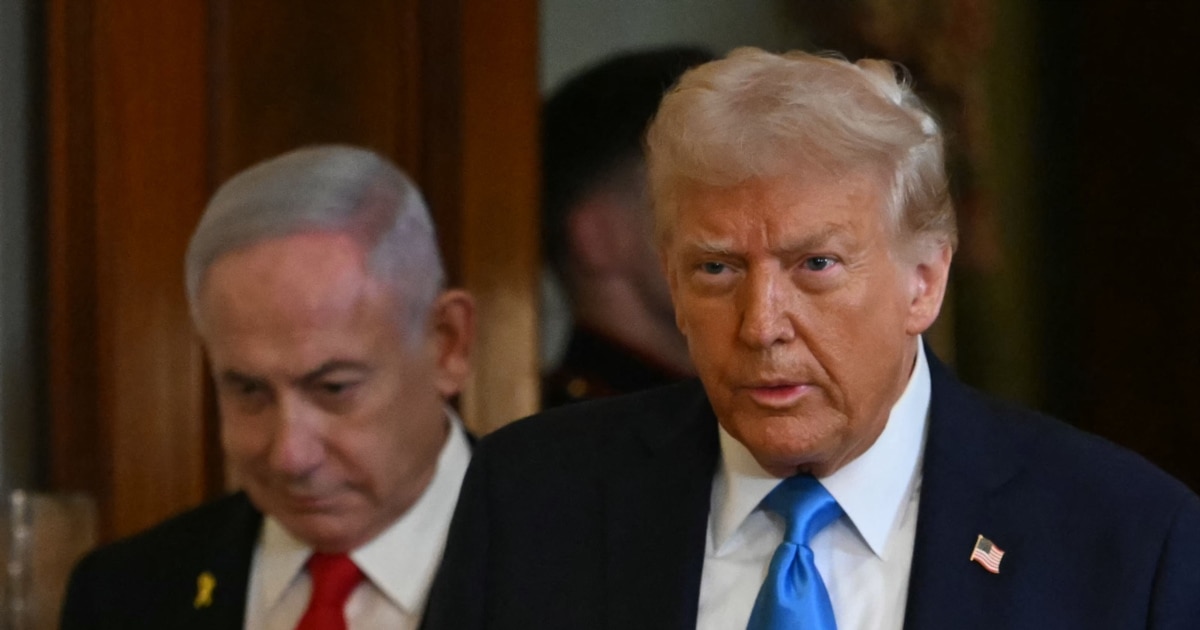
When US President Donald Trump unveiled his peace plan for the Gaza Strip, it was first met with official silence in Iran, then state media condemnation, and finally cautious acceptance.
Iran’s posture, experts say, is a calculated effort to avoid being seen as a spoiler while allowing Tehran to preserve its influence over Hamas, the US-designated Palestinian terrorist group.
Iran’s restrained endorsement of the US peace plan also reflects Tehran’s waning clout in the region as well as its shifting priorities after a costly 12-day war with Israel in June, experts say.
Israel and Hamas agreed to a first phase of the plan that includes a cease-fire and hostage release. Other thorny issues in Trump’s peace plan unveiled last month have been left for later negotiations.
‘Keeping Ties With Hamas Alive’
“Iran is trying to avoid being branded as a spoiler, seeing the negotiations and possibility of a cease-fire as beneficial for keeping ties with Hamas alive,” said Sanam Vakil, director of the Middle East and North Africa Program at Chatham House.
Iran has for years provided financial and military support to Hamas. But Tehran’s leverage over Hamas has diminished as Israel has degraded the armed group’s military capabilities during two years of war in Gaza.
Tehran’s ability to shape outcomes in Gaza, too, has been reduced.
Iran’s so-called axis of resistance, its loose regional network of proxies, and armed groups against Israel, has been severely weakened over the past year. The alliance includes Hamas, Lebanon’s Hezbollah, Yemen’s Huthi rebels, and Shi’ite militias in Iraq.
During the brief war in June, Israel and the United States carried out a bombing campaign that degraded Iran’s nuclear and military capabilities.
The debris at Iran’s notorious Evin prison after Israeli air strikes in June.
“Even if it wanted to spoil the plan, [Iran] understands very, very clearly that it doesn’t really have the ability to do that,” said Raz Zimmt, director at the Israeli-based Institute for National Security Studies.
Iran is preoccupied with rebuilding its military capabilities, including missiles and air defense systems, and restoring its strategic footprint in the region, Zimmt said.
The Future Of Hamas
Trump’s peace plan requires Hamas, the governing authority in Gaza, to fully disarm and surrender power. Control of the territory would then pass to a transitional Palestinian administration.
When Iran expressed support for the plan, it commended Hamas’s “smart” response to Trump, noting that the group had agreed to the hostage release but rejected disarmament and its surrender of power.
“Israel would like to disarm Hamas, to disarm the Gaza Strip, but I think it’s very realistic to assume that it’s not going to be that easy,” said Zimmt.
If a cease-fire holds in Gaza, Iran will just look for other opportunities to insert itself in Palestinian politics, most likely via the Israeli-occupied West Bank, experts say.
“Tehran will [shift] resistance support to the [Israeli-occupied] West Bank and also support civil society resistance,” said Vakil.
Iran could also use the “media and social platforms to promote” anti-Israeli narratives, she said.