Oct 11, 2025
IndexBox has just published a new report: Europe – Combined Reel Slitting And Re-Reeling Cutting Machines For Paper And Paperboard – Market Analysis, Forecast, Size, Trends And Insights.
The European market for combined reel slitting and re-reeling cutting machines for paper and paperboard is projected to grow steadily, with market volume expected to reach 67K units by 2035, driven by a CAGR of +1.3%, and market value to hit $787M with a CAGR of +2.1%. In 2024, consumption was approximately 58K units, with the UK, Finland, and Denmark as the top consumers. Production declined to 63K units, led by Germany, Finland, and the UK. Imports rose to 50K units, while exports fell to 55K units. Key trends include the Netherlands’ rapid growth in consumption and imports, and varying price dynamics across countries.
Key Findings
Market volume projected to grow at a CAGR of +1.3% to 67K units by 2035Market value expected to increase at a CAGR of +2.1% to $787M by 2035The UK, Finland, and Denmark are the top consuming countries by volumeThe Netherlands shows the fastest growth in consumption and import valueGermany, Italy, and Spain are the leading exporters by valueMarket Forecast
Driven by increasing demand for combined reel slitting and re-reeling cutting machines for paper and paperboard in Europe, the market is expected to continue an upward consumption trend over the next decade. Market performance is forecast to retain its current trend pattern, expanding with an anticipated CAGR of +1.3% for the period from 2024 to 2035, which is projected to bring the market volume to 67K units by the end of 2035.
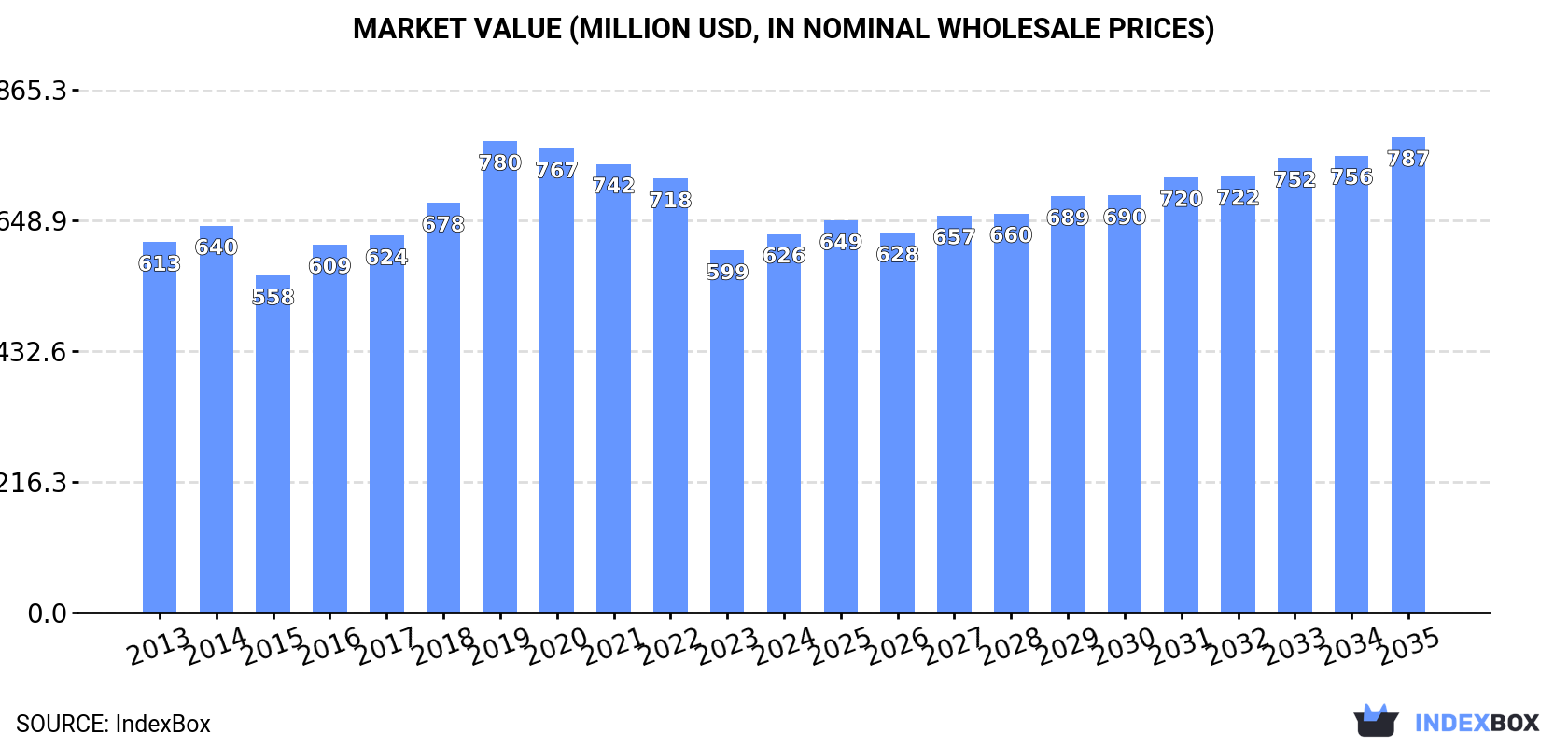
In value terms, the market is forecast to increase with an anticipated CAGR of +2.1% for the period from 2024 to 2035, which is projected to bring the market value to $787M (in nominal wholesale prices) by the end of 2035.
 ConsumptionEurope’s Consumption of Combined Reel Slitting And Re-Reeling Cutting Machines For Paper And Paperboard
In 2024, approx. 58K units of combined reel slitting and re-reeling cutting machines for paper and paperboard were consumed in Europe; standing approx. at 2023 figures. Over the period under review, consumption continues to indicate a relatively flat trend pattern. The volume of consumption peaked at 73K units in 2022; however, from 2023 to 2024, consumption failed to regain momentum.
The revenue of the reel cutting slitter market in Europe expanded slightly to $626M in 2024, with an increase of 4.6% against the previous year. This figure reflects the total revenues of producers and importers (excluding logistics costs, retail marketing costs, and retailers’ margins, which will be included in the final consumer price). Overall, consumption continues to indicate a relatively flat trend pattern. As a result, consumption attained the peak level of $780M. From 2020 to 2024, the growth of the market remained at a lower figure.
Consumption By Country
The countries with the highest volumes of consumption in 2024 were the UK (9.6K units), Finland (8.9K units) and Denmark (7.5K units), with a combined 45% share of total consumption. Russia, the Netherlands, Germany, Sweden, Ukraine and the Czech Republic lagged somewhat behind, together comprising a further 39%.
From 2013 to 2024, the biggest increases were recorded for the Netherlands (with a CAGR of +33.2%), while consumption for the other leaders experienced more modest paces of growth.
In value terms, Finland ($124M), the UK ($105M) and Denmark ($98M) were the countries with the highest levels of market value in 2024, with a combined 52% share of the total market. Russia, Sweden, the Netherlands, Germany, the Czech Republic and Ukraine lagged somewhat behind, together comprising a further 34%.
The Netherlands, with a CAGR of +35.0%, recorded the highest rates of growth with regard to market size in terms of the main consuming countries over the period under review, while market for the other leaders experienced more modest paces of growth.
The countries with the highest levels of reel cutting slitter per capita consumption in 2024 were Finland (1,601 units per million persons), Denmark (1,264 units per million persons) and Sweden (307 units per million persons).
From 2013 to 2024, the most notable rate of growth in terms of consumption, amongst the main consuming countries, was attained by the Netherlands (with a CAGR of +32.7%), while consumption for the other leaders experienced more modest paces of growth.
ProductionEurope’s Production of Combined Reel Slitting And Re-Reeling Cutting Machines For Paper And Paperboard
Reel cutting slitter production dropped to 63K units in 2024, with a decrease of -11.7% compared with the previous year. Over the period under review, production saw a perceptible contraction. The growth pace was the most rapid in 2022 when the production volume increased by 20%. As a result, production attained the peak volume of 99K units. From 2023 to 2024, production growth remained at a lower figure.
In value terms, reel cutting slitter production shrank to $933M in 2024 estimated in export price. In general, production continues to indicate a mild curtailment. The most prominent rate of growth was recorded in 2017 with an increase of 18%. The level of production peaked at $1.2B in 2022; however, from 2023 to 2024, production remained at a lower figure.
Production By Country
The countries with the highest volumes of production in 2024 were Germany (15K units), Finland (9.7K units) and the UK (9.2K units), together accounting for 53% of total production. Denmark, Italy, the Netherlands, Spain and Sweden lagged somewhat behind, together accounting for a further 40%.
From 2013 to 2024, the most notable rate of growth in terms of production, amongst the leading producing countries, was attained by the Netherlands (with a CAGR of +15.5%), while production for the other leaders experienced more modest paces of growth.
ImportsEurope’s Imports of Combined Reel Slitting And Re-Reeling Cutting Machines For Paper And Paperboard
In 2024, purchases abroad of combined reel slitting and re-reeling cutting machines for paper and paperboard was finally on the rise to reach 50K units after two years of decline. Total imports indicated a temperate expansion from 2013 to 2024: its volume increased at an average annual rate of +4.2% over the last eleven-year period. The trend pattern, however, indicated some noticeable fluctuations being recorded throughout the analyzed period. Based on 2024 figures, imports decreased by -3.8% against 2021 indices. The pace of growth appeared the most rapid in 2016 with an increase of 46%. The volume of import peaked at 52K units in 2021; however, from 2022 to 2024, imports failed to regain momentum.
In value terms, reel cutting slitter imports reduced to $476M in 2024. Total imports indicated a tangible increase from 2013 to 2024: its value increased at an average annual rate of +3.6% over the last eleven years. The trend pattern, however, indicated some noticeable fluctuations being recorded throughout the analyzed period. Based on 2024 figures, imports increased by +51.9% against 2016 indices. The most prominent rate of growth was recorded in 2021 when imports increased by 21%. The level of import peaked at $508M in 2023, and then shrank in the following year.
Imports By Country
The countries with the highest levels of reel cutting slitter imports in 2024 were Russia (7.1K units), the Netherlands (6.2K units), Germany (5.3K units), the UK (5K units), Spain (3.4K units), Ukraine (2.6K units), Poland (2.6K units), Italy (2.4K units) and France (2.2K units), together accounting for 74% of total import. Slovakia (1.5K units) took a relatively small share of total imports.
From 2013 to 2024, the biggest increases were recorded for Slovakia (with a CAGR of +22.6%), while purchases for the other leaders experienced more modest paces of growth.
In value terms, Germany ($57M), the UK ($55M) and the Netherlands ($54M) constituted the countries with the highest levels of imports in 2024, with a combined 35% share of total imports. Russia, France, Spain, Italy, Poland, Ukraine and Slovakia lagged somewhat behind, together comprising a further 39%.
Among the main importing countries, Slovakia, with a CAGR of +22.4%, recorded the highest growth rate of the value of imports, over the period under review, while purchases for the other leaders experienced more modest paces of growth.
Import Prices By Country
The import price in Europe stood at $9.6 thousand per unit in 2024, declining by -7.2% against the previous year. Over the period under review, the import price showed a relatively flat trend pattern. The pace of growth appeared the most rapid in 2017 an increase of 53% against the previous year. The level of import peaked at $10 thousand per unit in 2023, and then dropped in the following year.
There were significant differences in the average prices amongst the major importing countries. In 2024, amid the top importers, the country with the highest price was France ($15 thousand per unit), while Ukraine ($6.5 thousand per unit) was amongst the lowest.
From 2013 to 2024, the most notable rate of growth in terms of prices was attained by France (+3.0%), while the other leaders experienced more modest paces of growth.
ExportsEurope’s Exports of Combined Reel Slitting And Re-Reeling Cutting Machines For Paper And Paperboard
In 2024, shipments abroad of combined reel slitting and re-reeling cutting machines for paper and paperboard decreased by -13.6% to 55K units, falling for the second consecutive year after three years of growth. Over the period under review, exports recorded a mild setback. The pace of growth appeared the most rapid in 2020 with an increase of 16% against the previous year. Over the period under review, the exports reached the maximum at 76K units in 2022; however, from 2023 to 2024, the exports remained at a lower figure.
In value terms, reel cutting slitter exports shrank sharply to $828M in 2024. In general, exports, however, saw a relatively flat trend pattern. The most prominent rate of growth was recorded in 2021 with an increase of 24%. Over the period under review, the exports hit record highs at $983M in 2023, and then declined rapidly in the following year.
Exports By Country
In 2024, Germany (17K units), distantly followed by Italy (9K units), Spain (5.8K units), the Netherlands (5.1K units) and the UK (4.5K units) were the major exporters of combined reel slitting and re-reeling cutting machines for paper and paperboard, together making up 74% of total exports. Poland (2.4K units), France (1.7K units), the Czech Republic (1.4K units), Belgium (1.2K units) and Denmark (1.1K units) held a little share of total exports.
From 2013 to 2024, the most notable rate of growth in terms of shipments, amongst the main exporting countries, was attained by Poland (with a CAGR of +10.6%), while the other leaders experienced more modest paces of growth.
In value terms, the largest reel cutting slitter supplying countries in Europe were Germany ($278M), Italy ($144M) and Spain ($89M), with a combined 62% share of total exports. The Netherlands, the UK, Poland, Denmark, Belgium, the Czech Republic and France lagged somewhat behind, together accounting for a further 30%.
Poland, with a CAGR of +24.4%, recorded the highest rates of growth with regard to the value of exports, in terms of the main exporting countries over the period under review, while shipments for the other leaders experienced more modest paces of growth.
Export Prices By Country
The export price in Europe stood at $15 thousand per unit in 2024, which is down by -2.5% against the previous year. Export price indicated a slight expansion from 2013 to 2024: its price increased at an average annual rate of +1.7% over the last eleven years. The trend pattern, however, indicated some noticeable fluctuations being recorded throughout the analyzed period. Based on 2024 figures, reel cutting slitter export price increased by +85.5% against 2016 indices. The pace of growth was the most pronounced in 2023 an increase of 37% against the previous year. As a result, the export price attained the peak level of $15 thousand per unit, and then reduced modestly in the following year.
Prices varied noticeably by country of origin: amid the top suppliers, the country with the highest price was Denmark ($24 thousand per unit), while France ($8 thousand per unit) was amongst the lowest.
From 2013 to 2024, the most notable rate of growth in terms of prices was attained by Denmark (+18.9%), while the other leaders experienced more modest paces of growth.