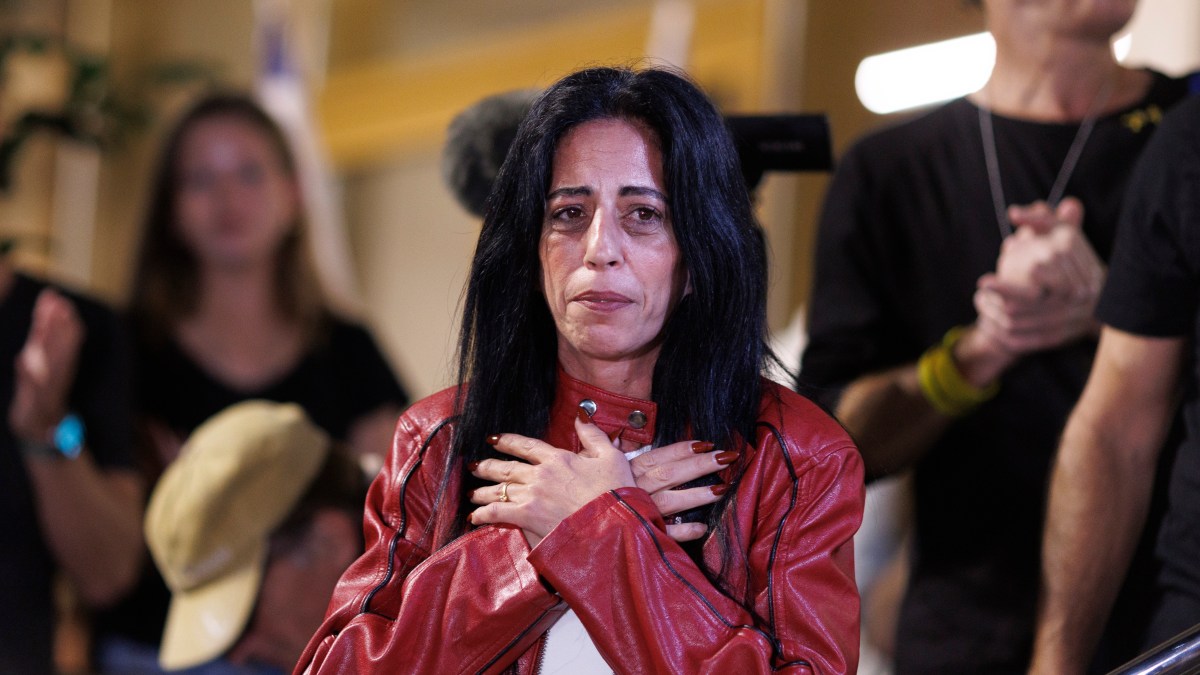
After 104 weeks of leaving an empty seat at the dinner table, Einav Zangauker addressed crowds in Hostage Square in Tel Aviv on Friday hoping it would be the last Shabbat dinner without her son.
For months, Zangauker, a former house cleaner and Likud voter from the city of Ofakim in southern Israel has spoken at rallies in the square. Each week her anger towards the prime minister, Binyamin Netanyahu, has hardened, begging that he prioritise the return of hostages including her 25-year-old son, Matan, who was kidnapped from the Nir Oz kibbutz on October 7, 2023.
Following the Israeli cabinet’s approval of President Trump’s peace plan early on Friday, for the first time she spoke with tangible hope that he would come home alive.
“We are experiencing a storm of emotion,” echoed her voice after the prayers to begin the Shabbat were read. “We are here to share with you, to be with you, and to remind you that our struggle is not over until all 48 hostages are brought home.”
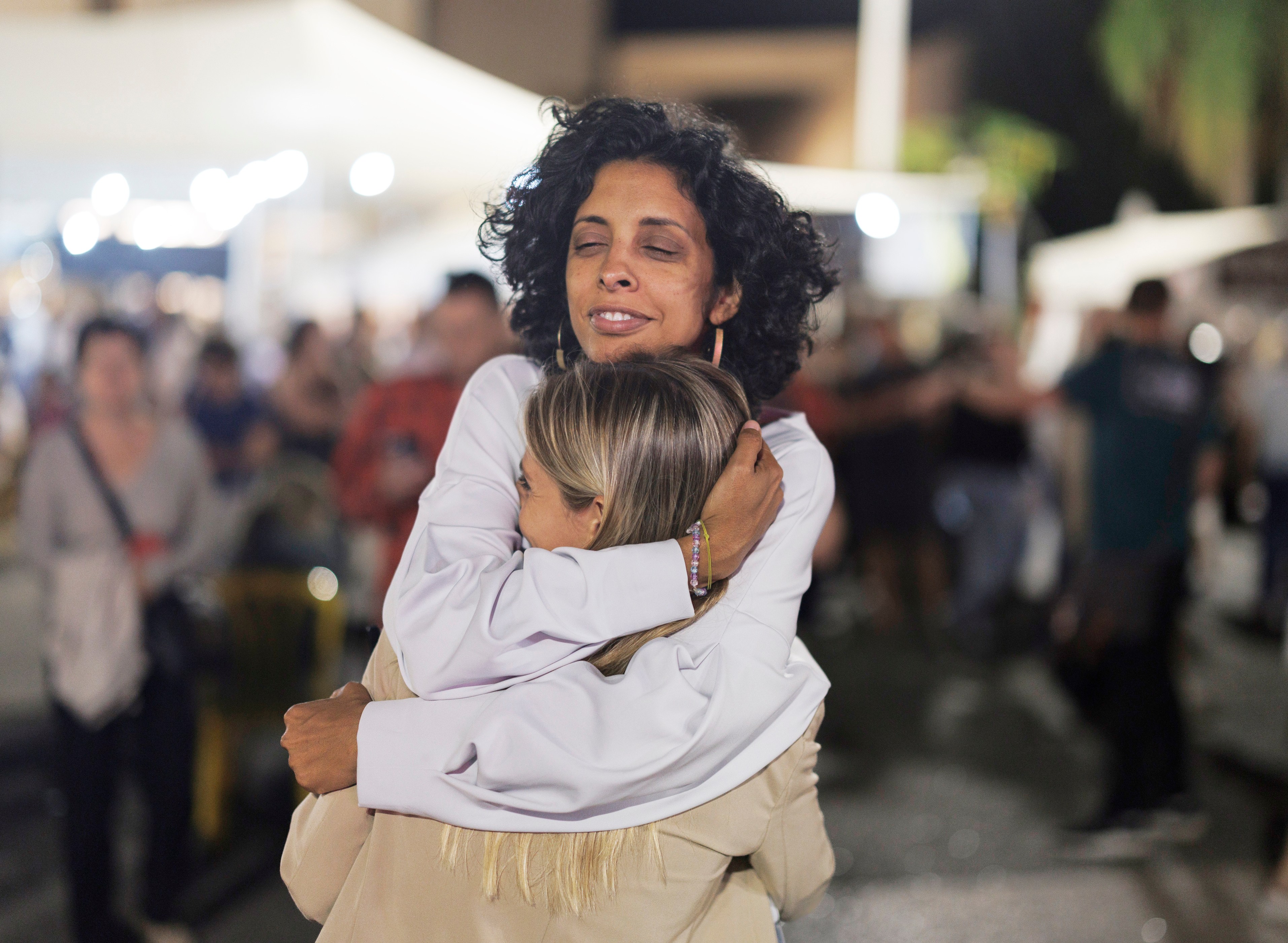
Israelis celebrate in Tel Aviv at the prospect of the release of the remaining captives by Hamas
KOBI WOLF FOR THE SUNDAY TIMES
Hostage Square has been the centre of the campaign to release the missing for two years and has borne witness to a kaleidoscope of emotions. This week it was transformed from a place of anguish to cautious celebration.
• Thousands return to north Gaza as ceasefire holds and Israel retreats
Pain turned to jubilation on Thursday when Trump announced that his peace plan had been agreed, with revellers dancing draped in Israeli and American flags, thanking the president for pressuring their leader into ending the war.

A Trump mask is paraded in Hostage Square on Thursday
KOBI WOLF/BLOOMBERG /GETTY IMAGES
Gili Levy, 27, an adviser to the mayor of Ramat Gan in the Tel Aviv district, was listening to Zangauker on the steps of the Tel Aviv Museum of Art. She wore a T-shirt printed with a photo of her neighbour and hostage Nimrod Cohen.
• Trump’s Gaza peace plan: what next, and where are the pitfalls?
Levy has joined protesters in the square every week, but said this was the first time she had come here happy. “We can finally smile because they’re coming back,” she said, overlooking families breaking bread and drinking wine, raising toasts as the moon rose.

Gili Levy sounded a note of caution
KOBI WOLF FOR THE SUNDAY TIMES
Levy’s optimism met her realism as her smile faltered. “But we are worried that not all the bodies will be returned. Hamas said they don’t know where they all are. The most important value that we Israelis grew up on is that we leave no one behind. It’s not over until we know it’s over.”
The uncertainty over the whereabouts of the dead and the conditions of the living continues to plague the families and friends of hostages despite the tentative joy.
• Peace deal could define — or derail — Netanyahu’s career
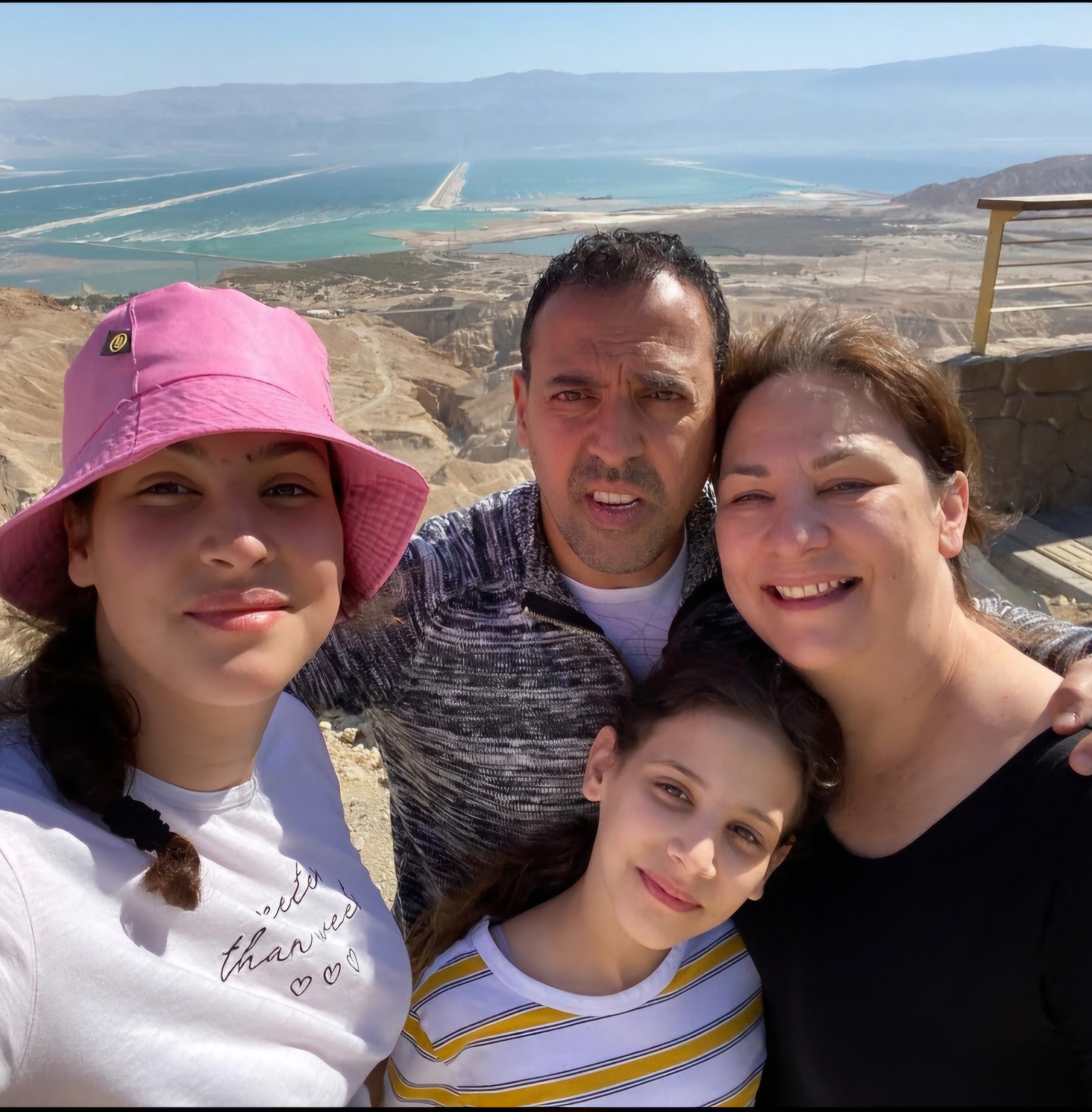
One man who knows this pain acutely is Eli Sharabi, a father from Kibbutz Be’eri in southern Israel who spent 491 days in Hamas captivity, returning emaciated to find his British wife, Lianne, and daughters, Noiya and Yahel, had been murdered by terrorists on October 7. He has written about his experience in his autobiography, Hostage.

Eli Sharabi was freed in February, not knowing his wife and daughters, below, had been murdered
ABDEL KAREEM HANA/AP
Sharabi told The Sunday Times he hoped the return of the body of his elder brother, Yossi, who was kidnapped and killed by Hamas after 100 days of war, would bring him the closure he needed to begin to heal. “It’s only with a grave that I can cry or speak to him when I need to, where I can share the hell we went through,” Sharabi said.
He spent 440 of his days in captivity with the 24-year-old pianist Alon Ohel, with whom he formed a father-son bond. “I am so happy that we have almost arrived at this moment where Alon will hug his family,” said Sharabi, who has been plagued by the memory of leaving him behind in the tunnels under Gaza.

A man plays the piano placed in Hostage Square for Alon Ohel
AMMAR AWAD/REUTERS

A sense of relief swept over much of Israel on Friday
KOBI WOLF FOR THE SUNDAY TIMES
His advice to the hostages set to be released next week is to avoid external noise and shelter with family for as long as is needed. “I didn’t watch television for eight months. Physical conditions can hopefully improve in a few months, but the mental process is much, much longer.”
As the large clock looming over Hostage Square counted the seconds since the missing were taken, musicians took turns to play on the piano awaiting Ohel’s return.