
The arc of politics in Silicon Valley has, since 2016, bent from blue to red. A decade ago the most important people in US tech were Democrats. They are now invariably Republicans. Jacob Silverman has set out to write the book that explains this phenomenon. It’s an important trend that helped to put Donald Trump back in the White House.
The tech elite found in Trump an amoral man who would give them much of what they wanted: praise, access, tax cuts and a pro-money, anti-woke cultural fightback after a years-long tech backlash led by the left. The tech revolution has reshaped the world’s discourse too. The British government, after all, launched an inquiry into the decades-long grooming gangs cover-up this year only once Elon Musk started tweeting about it.
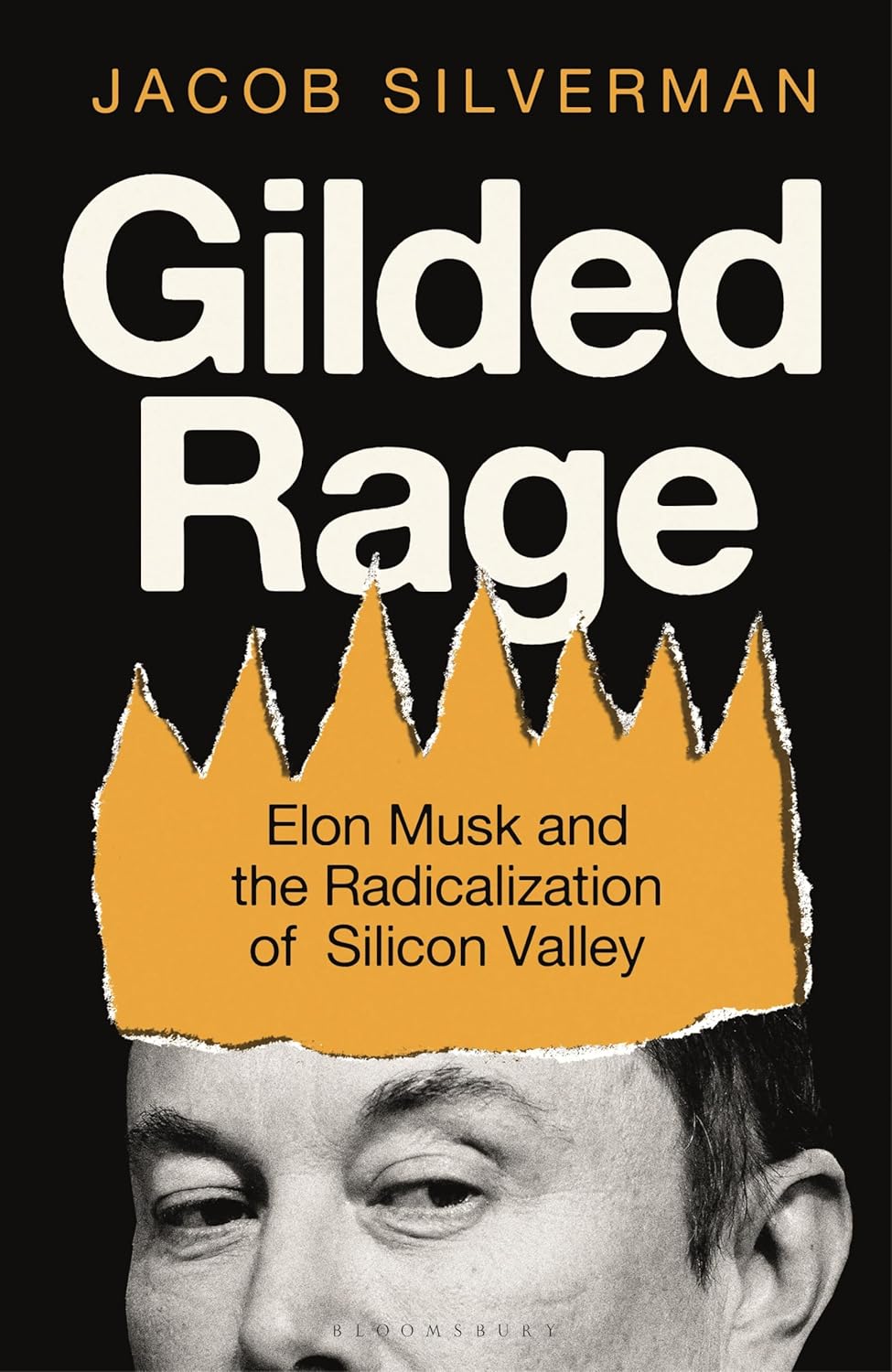
Musk is at the centre of Silverman’s book. But you will put down Gilded Rage in frustration if you hope for an account of Musk’s personal metamorphosis. This is a group portrait featuring the venture capitalist Marc Andreessen; Trump’s AI adviser David Sacks; that familiar billionaire bête noire of progressives, Peter Thiel; the reinvented JD Vance; the former Google chief executive and Obama ally Eric Schmidt; and lesser names — Garry Tan, Joe Lonsdale, Jacob Helberg, Shaun Maguire — known only to close followers of what Joe Biden described in his parting presidential message as the tech industrial complex.
There are intriguing nuggets throughout. Silverman explains the role of the American Legislative Exchange Council throughout the 2010s in providing conservative lawmakers across America with prefabricated legislative bills that advanced their causes. More than 600 such bills — which tended to be pro-corporate, anti-regulation and anti-consumer rights — were passed into law, providing a model for tech agitators when they sought political control.
The book is at its best when Silverman sketches a portrait of a specific, lesser-known character, such as Jan Sramek, who is trying to build a new city from scratch in California, and Jeff Yass, the richest man in Pennsylvania, whose company took an early stake in TikTok, worth $18 billion to him alone by 2024. Sramek’s California Forever has been bankrolled by much of the elite that Silverman fears and is so far no more than 65,000 acres of land, primarily agricultural. Sramek, who is Czech-born, English-educated and came to tech by way of a brief trading career at Goldman Sachs, hopes to make it a home of shipbuilding and manufacturing, and exemplify the tech mantra that “you can just do things”.
Local residents and Californian zoning restrictions are thus far disproving that. Yet Sramek’s story, like Yass’s, soon dwindles away. We don’t follow anyone for quite long enough to come to care for them or for those who oppose them.
• Mezcal, tech bros and rappers: Maga 2.0 takes Washington
That is one of the pitfalls of a group portrait. You can easily leave the reader unsure where they stand as you throw them from one person to the next or, in Silverman’s case, from one person to the next and back, time and again, over the course of 330 pages. His tendency to do so robs his work of narrative propulsion, a flaw compounded by Silverman’s other tendency: to break the fourth wall with moralistic asides, undermining what is otherwise a dogged work of reporting.
We read, accurately but gratuitously, of the “twitchy and sneering” Ron DeSantis, the former presidential candidate. “If you’re going to be a bitter right-wing demagogue, you have to say it with your chest. DeSantis said it with a wet smirk.”
Readers of Gilded Rage will find much to interest them if they enjoy scattershot tech criticisms, the sort of thing that goes down well on Bluesky, the liberal alternative to X. But Silverman, like many modern liberals, too often sees dark money and even darker elites behind every democratic decision he doesn’t like.
In 2022, over two thirds of voters in San Francisco chose to remove three school board members who had kept schools shut after Covid following a campaign funded in part by Sacks. A few months later they also chose to remove the city’s progressive district attorney. A year earlier 57 per cent of voters in Austin, Texas, chose to ban camping on public property in an attempt to stop the homeless from building camps, a campaign to which Lonsdale contributed $40,000.
Why have progressive ideas soured at the ballot box? For Silverman, the voters were led astray by reactionary tech, which sought to buy power with its deep wells of wealth. “Elite anger, properly channelled,” he writes in summary, “could decide elections.” It is self-evident that he overstates his case. Trump was outspent by 2:1 in 2016 and still won. Something more than money is at play.
• Read more book reviews and interviews — and see what’s top of the Sunday Times Bestsellers List
Silverman dutifully details the connections between the members of the tech elite and how they have contributed to each other’s causes. He argues that some have leveraged their public standing to advance their own ends, skewering Sacks and Jason Calacanis, who with Sacks is a host of the popular podcast All-In, over the way both men turned the insolvency of Silicon Valley Bank into a national problem in 2023.
“Where is Powell? Where is Yellen?” Sacks tweeted, referring to the chair of the Fed and the Treasury secretary. “Stop this crisis NOW. Announce that all depositors will be safe.” Calacanis claimed that a bank run was imminent. “THIS IS DEFCON 1,” he wrote in one of many all-cap tweets.
It was not, Silverman argues, but each man stoked sufficient fear online to get officials to act. Silverman is, however, left only with the implication of self-dealing. He has no smoking gun to prove either man actually had funds on account with the bank.
This sense, of Silverman adjudicating at a remove from the real action, pervades the book. There is a limit to how much of a story you can thread together from public records and freedom of information requests. The revelatory work to be done on these men and their aims will have to come from someone with access to them, or those around them. The wait for a literary executioner of tech’s gilded class goes on.
Gilded Rage: Elon Musk and the Radicalization of Silicon Valley by Jacob Silverman (Bloomsbury £20 pp336). To order a copy go to timesbookshop.co.uk. Free UK standard P&P on orders over £25. Special discount available for Times+ members