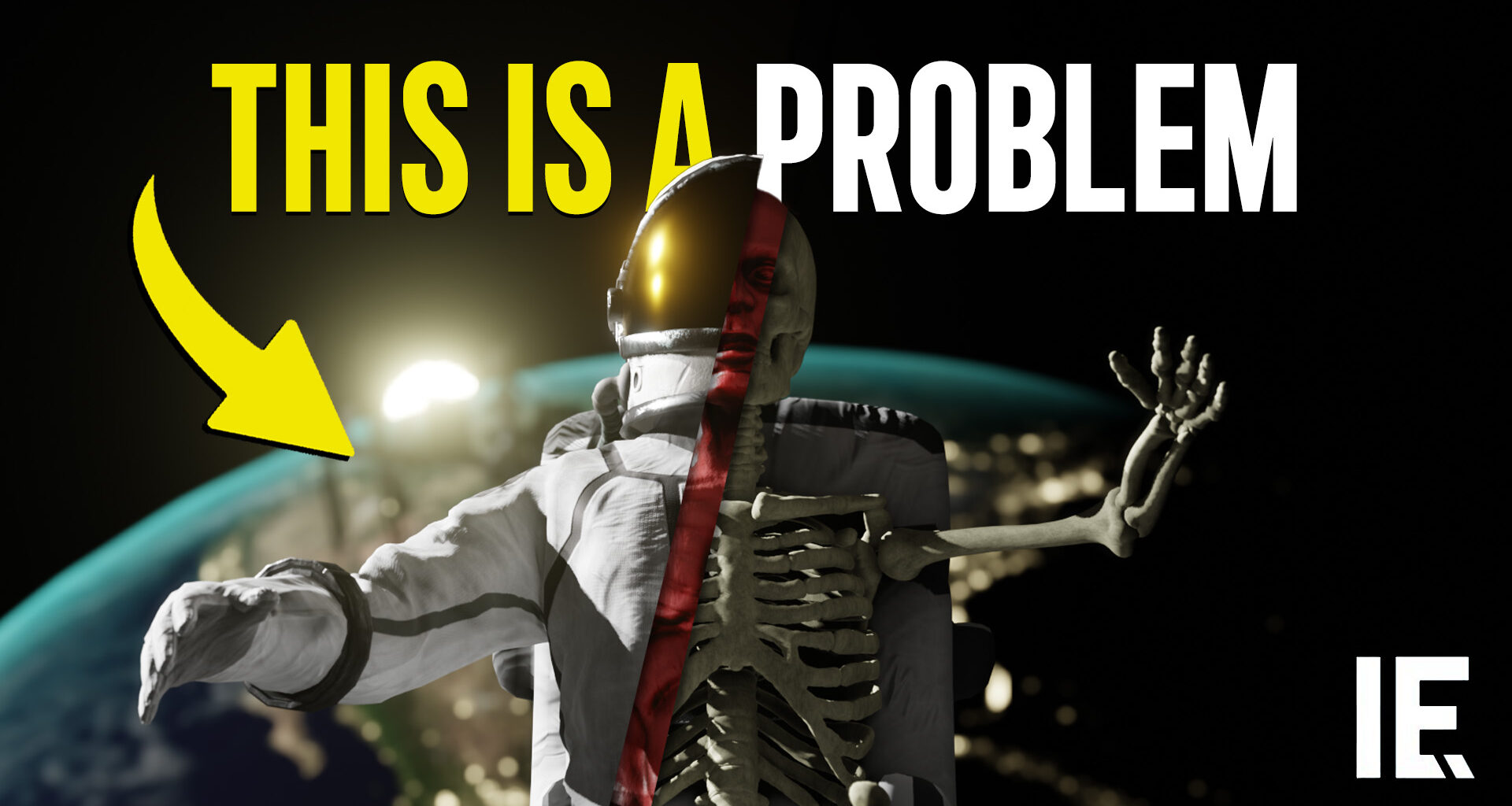
Space may be the final frontier, but it’s also one of the most dangerous places for the human body. Beyond the safety of Earth’s atmosphere, astronauts face a host of physical and psychological challenges — from exposure to cosmic radiation and the slow wasting of muscles and bones, to changes in vision and the ever-present strain of isolation.
While six-month missions aboard the International Space Station have shown that recovery on Earth is possible, a three-year round trip to Mars presents an entirely new level of risk. In the first part of this two-part series, NASA scientist Dr. Dorit Donoviel and astronaut physician Dr. Mike Barratt reveal what happens to the human body in space — and the breakthroughs needed before we can journey safely to the Red Planet.
Space is a hostile environment for humans. While we are able to survive in microgravity for extended periods, the longer we stay in space, the higher the likelihood of causing irreparable damage to the human body.
Humans in space suffer exposure to cosmic radiation, muscle and bone loss, and even things like their eyeballs changing shape! Psychological stress is also likely to be a major concern.
For stays of about 6 months on the ISS, there appears to be no long-term issues with proper rehabilitation, once back on earth. However, with trips to Mars looking to take about 3 years, we need some serious scientific development before humans are able to travel there safely.
In the first part of this 2-part video, we speak to NASA scientist, Dr Dorit Donoviel PhD and Astronaut Physician, Dr Mike Barratt , about the impact space has on a human body, to understand what we need to overcome before we can get to Mars.