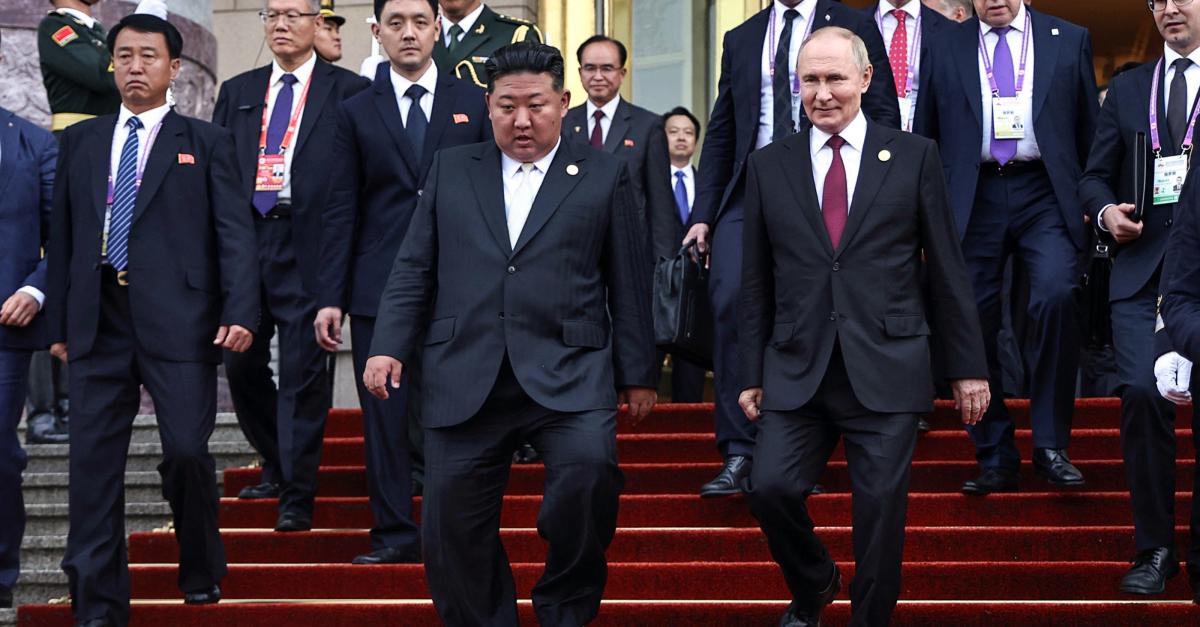
What is North Korea’s strategy? Kim Jong Un has spurned overtures for renewed dialogue with the United States and South Korea, denouncing them collectively as the “principal enemy.” Meanwhile, he has rekindled ties with Moscow, signing a comprehensive strategic partnership agreement in June 2024. North Korea has reportedly earned billions of dollars and revived its conventional arms industry by supplying munitions, and Pyongyang recently confirmed it has dispatched troops to support Russia’s war.
But there is an even greater concern: that Russian technology transfers will accelerate North Korea’s nuclear, missile, and advanced weapons programs. In August, Kim vowed to “rapidly expand” his nuclear arsenal, and in September he ordered officials to strengthen both the “nuclear shield and sword,” underscoring a doctrine of deterrence paired with offensive retaliation.
Kim has also moved to improve relations with China, North Korea’s economic lifeline. His September 2025 summit with Xi Jinping in Beijing ended a six-year-long absence of leader-to-leader contact, raising concerns that cooperation among the CRINK states (China, Russia, Iran, and North Korea) will continue to deepen.
Another dimension is Pyongyang’s cyber strategy: a global espionage campaign paired with world-leading cryptocurrency theft. These operations not only help the regime evade sanctions but also build prestige, generate vital resources, and prepare for future conflict.
What is driving North Korea’s closer cooperation with Russia and China, and how does Kim view cooperation among the CRINK states? What are Kim’s ultimate aims with his nuclear program? How has North Korea developed such vast cyber capabilities? Is North Korea preparing for war? And how should the US and its allies respond?
At Hudson, Patrick Cronin will host an expert panel to address these questions and more.