
Moldova’s leadership has escalated its warnings over what officials describe as a sustained Russian hybrid campaign to derail the country’s European trajectory, citing disinformation, illicit financing, cyberattacks and efforts to incite unrest in sensitive regions such as Transnistria and Gagauzia according to the Robert Lansing Institute on October 13 .
“Moldova’s democracy faces a ‘race against time’,â€� President Maia Sandu told the European Parliament, adding: “The Kremlin’s goal is clear: to capture Moldova through the ballot box, to use us against Ukraine, and to turn us into a launchpad for hybrid attacks on the European Union.â€�Â
Those claims build on earlier alerts from Moldova’s Intelligence and Security Service (SIS). In March 2024, SIS director Alexandru Musteață warned that Moscow would seek to “vilify and discredit� pro-European candidates, fuel social conflicts and manipulate voters ahead of national ballots and a referendum on EU integration.
The agency highlighted the “extensive use of social networksâ€� including Telegram and TikTok to amplify pro-Kremlin narratives and mobilize protests.Â
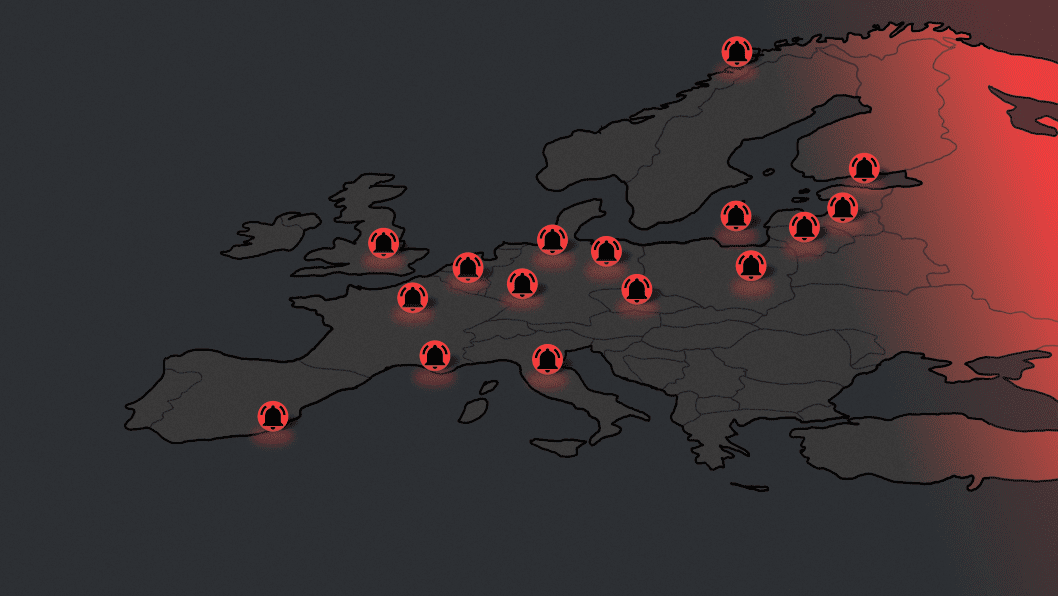
Brussels has framed the pressure on Chișinău as part of a wider European security challenge. European Commission President Ursula von der Leyen last week called for a “broad response� to hybrid threats, pointing to a coordinated effort to destabilize public opinion and weaken support for Ukraine—an assessment that aligns with Moldova’s allegations of Kremlin-backed interference.
The European Parliament in September adopted a resolution to strengthen Moldova’s resilience against “hybrid threats and malign interference.â€�Â
The toolbox described by officials and researchers spans false bomb threats, coordinated online influence operations, covert funding, and street-level disruption designed to project state fragility.
Media and watchdog analyses have documented Russia-linked efforts—including campaigns referred to by investigators as “Operation Overload/Matryoshkaâ€�—targeting Moldova’s information space ahead of the 2025 parliamentary vote.Â
Officials in Chișinău say the immediate priority is hardening election integrity and strategic communications, while European institutions expand technical, financial and cyber assistance.
As the next government is formed Sandu and allied lawmakers contend that sustained Western support will decide whether Moldova consolidates its EU course—or remains a frontline for hybrid confrontation.Â
Earlier, it was reported that Moldova’s president told lawmakers that Russia is conducting a full-spectrum hybrid campaign—including disinformation, cyberattacks, and election meddling—and argued EU membership is essential to withstand it.
-29ed98e0f248ee005bb84bfbf7f30adf.jpg)

We report from the front lines to show the reality of war. Your support helps us stay there and tell the stories that matter.
Related articles