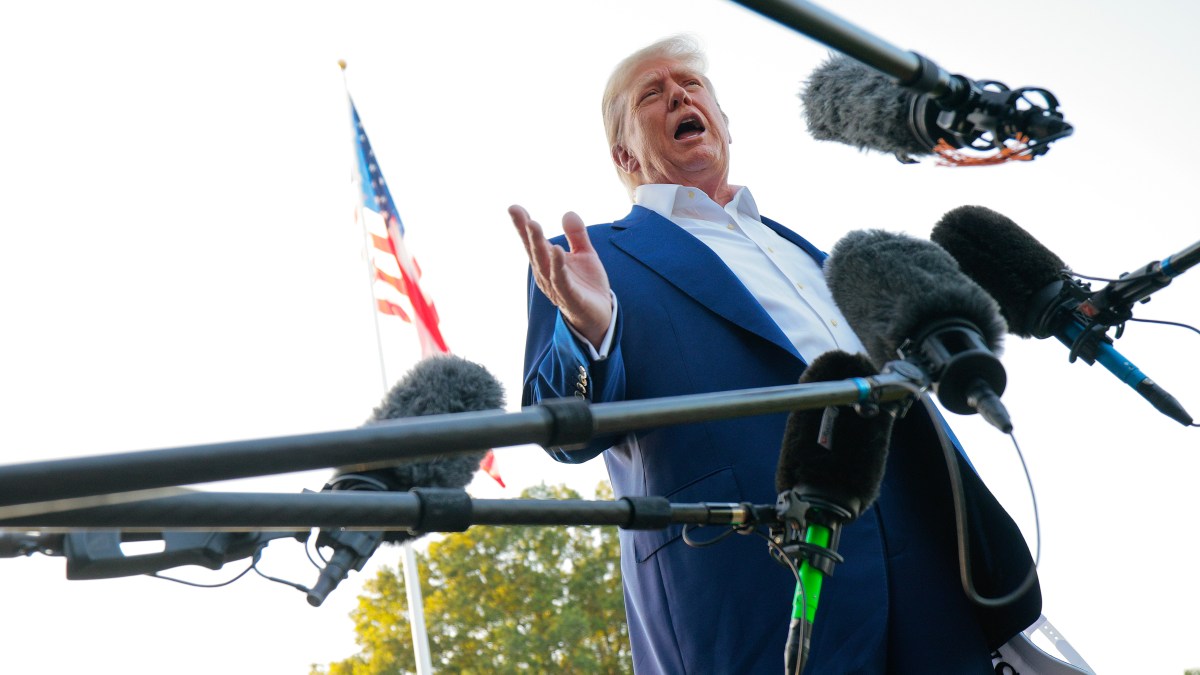
President Trump made clear on Monday that his ambitions went beyond the ceasefire in Gaza. Next, in his pursuit of a remade Middle East, would be peace with Iran.
But behind the defiant rhetoric, the Gaza ceasefire represents the latest defeat for the Iranian regime, which had long funded Hamas as a proxy in its shadow war with Israel before the conflict burst into the open.
• Trump’s plan for Gaza: the potential sticking points of the peace deal
“If it were up to Ayatollah Ali Khamenei [Iran’s supreme leader], Israel would stay stuck in the mud of Gaza forever and ever,� said Meir Javedanfar, professor of Iranian politics at Israel’s Reichman University. “He wanted to see Israel bleed daily in Gaza and he wanted to see Israel bleeding diplomatically for as long as possible and the war was fulfilling those wishes so the agreement is a setback for them.�

Ayatollah Ali Khamenei
ANADOLU/GETTY IMAGES
While US and Israeli attacks in June prompted a ‘rally around the flag’ response from the Iranian public, they did nothing for Khamenei, who was heavily criticised for hiding from public view during the conflict.
Rare signs of public dissent appeared on Monday, with attacks in the reformist media on Iran’s refusal to attend Trump’s peace summit in Sharm El-Sheikh. Anyone who truly cared about Gaza would have accepted, the argument went. “It gives us a small window, the tip emerging from the water of the iceberg of anger underneath,� Javedanfar said.
Many Iranians have tired of the endless Israel hate pumped out by state media: several reformist presidents, including the incumbent Masoud Pezeshkian, have suggested it is past its sell-by date.
In April Trump reopened negotiations with Tehran, holding five rounds of indirect nuclear talks that stalled over disputes about Iran’s uranium enrichment. Iran now views that process as a deception, even though few experts believe that Tehran was ever genuinely open to a new deal.
While Iran’s economy is teetering under reimposed sanctions, which Britain, Germany and France have rejoined, the clerical regime continues to profit from the closed economy and corrupt practices. “A lot of the core group around Khamenei will lose billions if sanctions are lifted,� said Javedanfar. That is why, he claimed, the regime is deaf to Trump’s suggestion that a peace deal would boost Iran’s trade with the region: liberalisation would only threaten their entrenched privileges. Khamenei appears paralysed by events, he added, unable to consider opening up the country but under corresponding pressure to do so. “Doing nothing is a choice, too.�
• After Gaza euphoria, what pitfalls lie ahead for peace process?
Trump’s “very, very bad decision� to withdraw from the 2015 nuclear deal with Iran contributed to chaos in the Middle East, said Javedanfar, because it removed restraints on Iran’s nuclear weapon ambitions. Trump believes that US strikes on Iranian nuclear facilities changed the calculus of the region and were decisive in persuading Arab states to pressure Hamas to agree a ceasefire.

An anti-US mural in Tehran
AFP/GETTY IMAGES
But most in the region see the turning point as Israel’s failed attempt to kill Hamas negotiators in Qatar, a US ally, last month. Qatar rallied neighbours in the Gulf to warn Trump that Israel was out of control, culminating in Trump forcing Netanyahu to make a grovelling apology to the Qatari emir.
Before Trump’s visit to Israel this week, the Iranian foreign minister Abbas Araghchi had opened the door to negotiations with the US, acknowledging that Tehran and Washington had exchanged messages through mediators since the strikes in June. But Trump’s desire for Iran to normalise relations with Israel was “wishful thinking�, Araghchi said. “Iran will never recognise an occupying regime that has committed genocide and killed children,� he warned.