Published on
October 19, 2025

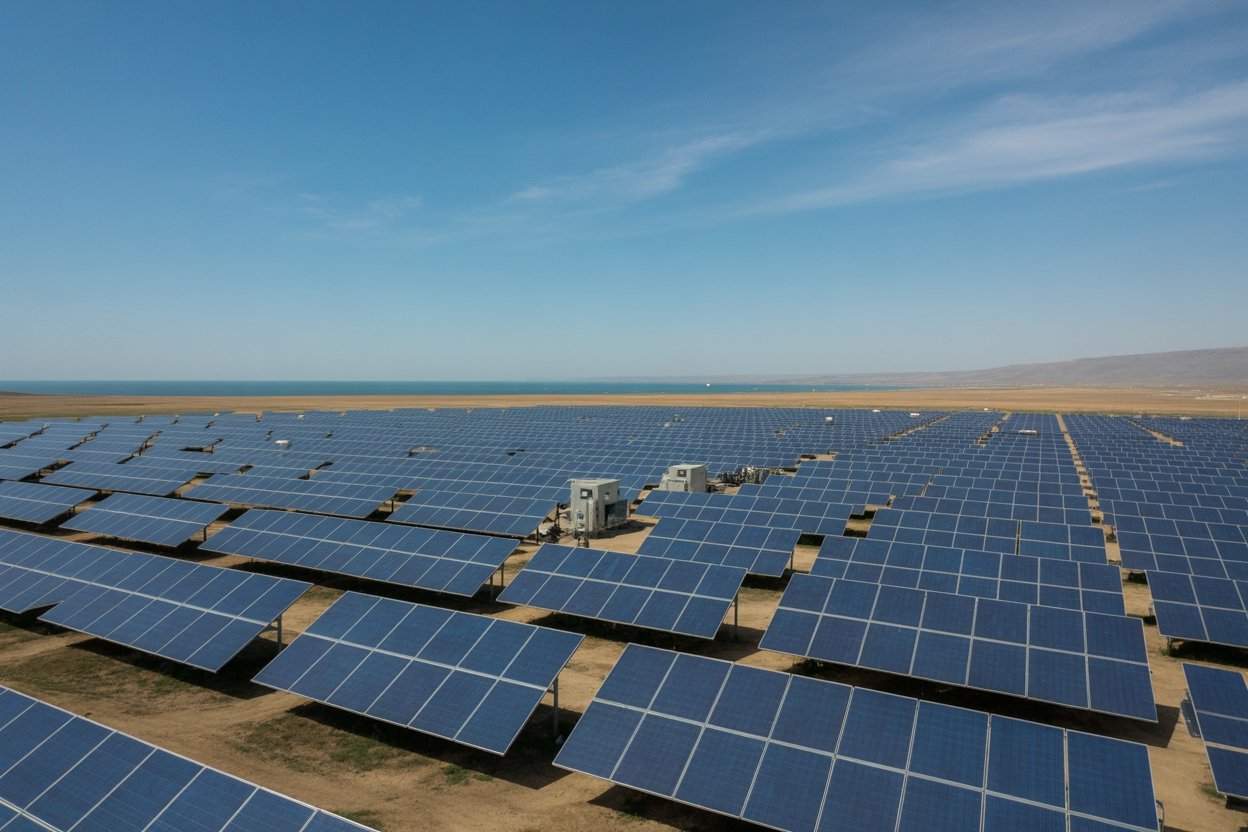
Azerbaijan’s renewable energy sector, specifically solar power, has witnessed a notable surge in output during the first nine months of two thousand twenty-five. Solar power generation increased by twelve percent compared to the same period in the previous year, producing four hundred eighty-four million kilowatt-hours (kWh) of electricity. This boost highlights the country’s ongoing commitment to expanding its renewable energy capabilities and diversifying its energy resources.
As part of Azerbaijan’s broader renewable energy strategy, solar power is proving to be a key contributor to the country’s evolving energy mix. This growth is not just limited to solar power, as the country continues to invest in various other renewable sources, including hydroelectric, wind, and biomass energy.
⚡ Overall Electricity Generation
Azerbaijan’s total electricity generation in the first three quarters of two thousand twenty-five reached approximately twenty billion five hundred three million kWh, marking a modest increase of zero point one percent when compared to the same period in the previous year. Of this total, over nineteen billion eight hundred seventeen million kWh was commercial electricity, which remained stable from the previous year.
While the increase in overall electricity generation was relatively small, the data reflect that Azerbaijan’s energy sector is in a period of gradual but steady growth. The country continues to rely heavily on its thermal power plants and hydroelectric facilities, while also embracing newer, cleaner technologies such as solar and wind power.
🔋 Energy Source BreakdownHydroelectric Power Plants (HPPs): Hydroelectric plants contributed more than two billion three hundred eighty-two million kWh of electricity, reflecting a year-on-year increase of one point five percent. Hydroelectric power continues to play a dominant role in Azerbaijan’s energy mix, with the country’s vast rivers and mountainous terrain providing ample potential for hydroelectric generation.Thermal Power Plants (TPPs): Thermal power plants generated over sixteen billion nine hundred nineteen million kWh, showing a slight decline of zero point four percent. Although thermal power generation remains the largest contributor to the country’s total electricity generation, the small decline reflects Azerbaijan’s ongoing transition towards cleaner and more sustainable energy sources.Wind Power Plants (WPPs): Wind power contributed thirty-one million kWh, which represents a decrease of twenty-six point four percent compared to the same period in the previous year. While wind power has the potential to become a key player in Azerbaijan’s energy sector, it still faces challenges in terms of efficiency and output.Waste Incineration: Waste-to-energy plants produced one hundred fifty-nine million kWh, reflecting a decline of one point three percent. Although waste incineration is a smaller component of Azerbaijan’s energy mix, it plays a crucial role in reducing landfill waste while generating power.🌱 Renewable Energy Initiatives
Azerbaijan’s renewable energy capacity continues to grow steadily. By the end of two thousand twenty-four, the country had an installed renewable energy capacity of one thousand eight hundred twenty-nine point six megawatts (MW), accounting for approximately eighteen point eight percent of the total installed capacity. This renewable capacity includes sixty-five hydroelectric power plants, five wind power plants, nine solar power plants, and three hybrid power plants.
Azerbaijan has been actively pursuing policies that support the expansion of renewable energy sources. The country has set ambitious goals for the future, aiming for a thirty percent share of renewable energy in its total electricity generation by the year two thousand thirty. This commitment aligns with global trends towards cleaner, more sustainable energy solutions, as well as Azerbaijan’s desire to reduce its dependence on fossil fuels.
Azerbaijan’s focus on renewable energy also reflects its broader efforts to diversify its economy, particularly in response to the fluctuations in global oil prices. By investing in renewable energy, Azerbaijan is positioning itself as a leader in sustainable energy within the region.
🏗️ Ongoing and Upcoming Projects
Azerbaijan is currently implementing several large-scale renewable energy projects that are expected to further boost the country’s renewable energy capacity in the coming years. These projects include:
Garadagh Solar Power Plant: The Garadagh Solar Power Plant, a two-hundred-thirty-MW facility, is being developed in partnership with Masdar, a company based in the United Arab Emirates. Once completed, the plant is expected to generate five hundred million kWh of electricity annually. This plant represents one of the largest solar energy investments in Azerbaijan and highlights the country’s commitment to expanding its solar energy capabilities.Khizi-Absheron Wind Power Plant: Another major renewable energy project is the Khizi-Absheron Wind Power Plant, a two-hundred-forty-MW wind facility being developed in collaboration with ACWA Power, a Saudi Arabian energy company. This plant is expected to generate one billion kWh of electricity per year and will contribute significantly to Azerbaijan’s wind energy capacity.Shafag Solar Power Plant: The Shafag Solar Power Plant, located in the Jabrayil region, is another significant project developed in collaboration with BP. The facility will have a two-hundred-forty MW capacity and is expected to generate five hundred million kWh annually. This project is part of Azerbaijan’s broader efforts to increase its solar energy generation.Mega Renewable Energy Project: The Mega Renewable Energy Project includes several large-scale solar and wind power plants, such as the Bilasuvar Solar Power Plant (four hundred forty-five MW), the Neftchala Solar Power Plant (three hundred fifteen MW), and the Absheron-Garadagh Wind Power Plant (two hundred forty MW). Together, these projects will generate a significant amount of renewable energy, helping Azerbaijan to meet its renewable energy targets.Gobustan Solar Power Plant: The Gobustan Solar Power Plant, a one-hundred-MW project being developed by Universal International Holdings Limited from China, is expected to generate two hundred sixty million kWh annually. This plant is part of Azerbaijan’s efforts to harness its abundant solar resources.Ufug and Shams Solar Power Plants: These two solar power plants, each with a fifty MW capacity, are planned for the Jabrayil district and are being developed by Nobel Energy. These projects will contribute to Azerbaijan’s growing solar energy capacity, generating electricity to meet both domestic and regional demand.Floating Solar Panels Project: A groundbreaking one hundred kW pilot project is being implemented on Boyukshor Lake, marking the first floating solar panels project in Azerbaijan. This innovative project is expected to serve as a model for future floating solar energy projects in the country.🌍 Strategic Goals and International Cooperation
Azerbaijan’s renewable energy strategy also involves increasing cooperation with neighboring countries and international partners. The country is working to integrate its energy infrastructure with that of Türkiye and Europe, enabling the export of renewable energy to these regions. This will not only help Azerbaijan to meet its energy needs but will also establish the country as a regional energy hub.
The country’s renewable energy strategy also reflects its broader geopolitical goals of reducing its dependence on fossil fuels and diversifying its energy sources. By investing in renewable energy, Azerbaijan aims to reduce its carbon footprint and contribute to global efforts to combat climate change.
In addition to its national efforts, Azerbaijan is also involved in various regional and international energy initiatives. The country is participating in the Southern Gas Corridor project, which is aimed at transporting Caspian gas to Europe, and is also involved in the development of regional energy infrastructure that will allow for greater integration of renewable energy into the regional grid.
📈 Conclusion
The twelve percent increase in solar energy generation in two thousand twenty-five demonstrates Azerbaijan’s ongoing commitment to diversifying its energy mix and investing in sustainable, renewable energy sources. With several large-scale renewable energy projects underway and ambitious goals for the future, the country is well on its way to meeting its renewable energy targets and positioning itself as a leader in the region’s green energy transition.
Azerbaijan’s shift towards cleaner, more sustainable energy solutions will not only benefit the environment but also contribute to the country’s economic growth and energy security. As the country continues to invest in solar, wind, and other renewable energy sources, it will play an increasingly important role in the global transition to cleaner energy.
