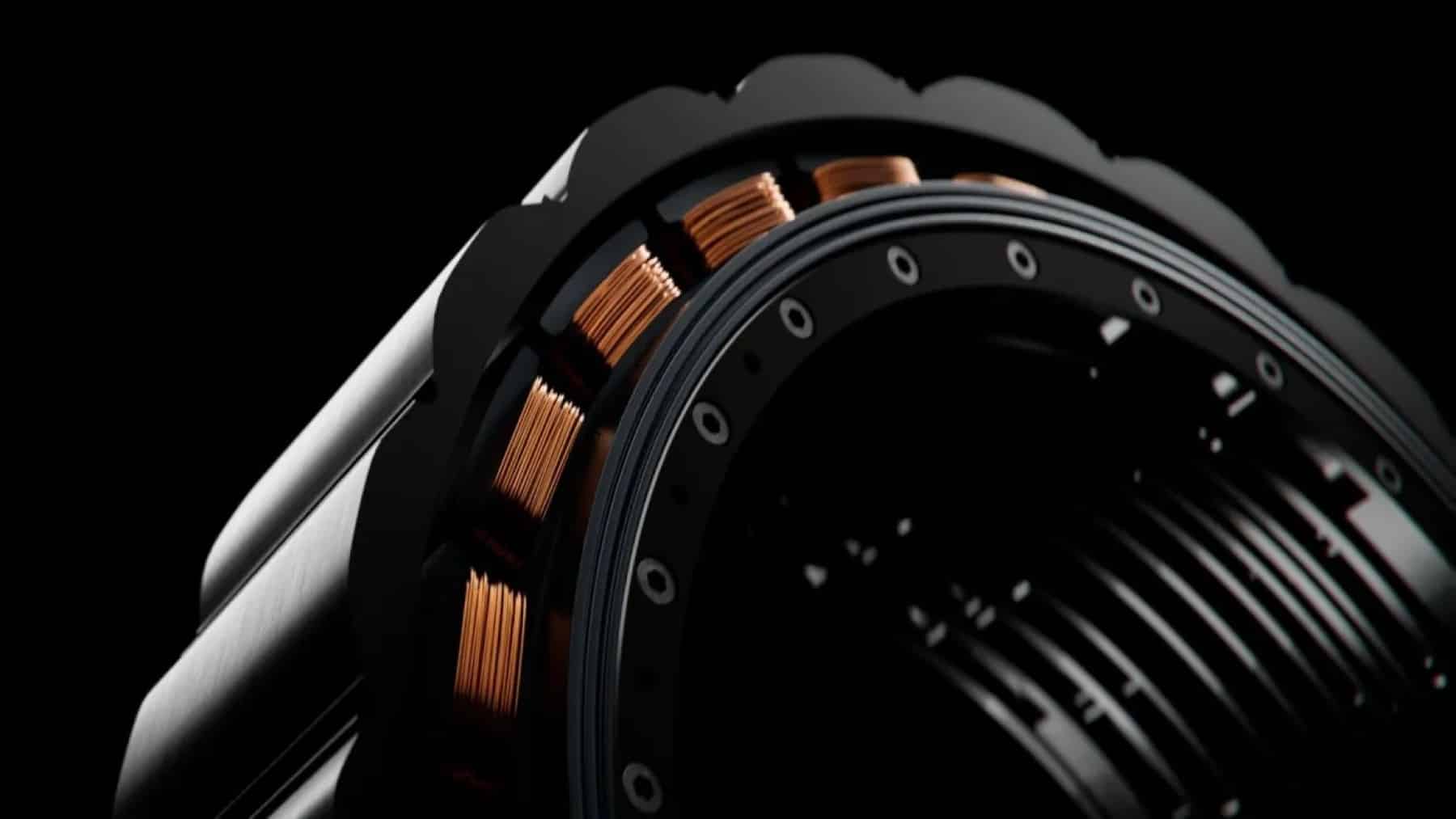
And what would have been the situation if motorcycles neither had big engines nor loud chains or moving parts? Finland thought it out and even replied to it, with a motorcycle engine in the form of a donut, hidden in the wheel. It has revolutionized the rulebook and now, Finland proposes an even greater change, which will potentially transform how people travel in cities and the future of two-wheel movement.
How are the donut-shaped motorcycle engines of Finland any different compared to other conventional engines
Over a century of motorcycle manufacturers used the established order with engines having chains and gears attached to them, moving the power that the engine generates straight to the wheel. The donut idea was invented in Finland, and the motor was on a real wheel, which implied that they could do away with the complex components that produced a light, clean, and machine-simple ride, and also an effective overall experience.
A hollow motorcycle engine design ensured that the moving parts and friction were kept to a minimum to reduce energy waste before the power was transferred to the wheel. The eradication of chains and sprockets ensured that the rider experienced but felt the torque at once and received much less acceleration, and the bike needed significantly less maintenance.
What defines the donut architecture for motorcycle engines
The traditional variety of motorcycles has its engines attached by chains or shafts to the wheels. The shaped motor is attached to the wheel, and thus it is far easier and more adaptable in the design. Donut Lab asserts that this design is capable of higher peak power and torque density and is lightweight enough that the penalty added by in-wheel components, which is common to such designs, virtually vanishes.
The game, which was previously played, was innovated into the road mobility
This type of innovation of a motorcycle engine is not associated with any one thing, yet that will have different influences on the design, manufacture, and consumption of the motorcycles and other cars, just like this groundbreaking future engine.
First packaging. The fact that the motor is located in the wheel or the hub implies that the chassis and frame design have now been considerably liberalized. It might have a smaller engine bay, have a lower center of gravity, and have a more extreme frame geometry. Secondly, effectiveness and efficiency.
The way a radically different motor design can redefine the future of motorcycle engines and world mobility
After having developed the donut motor, it is now time to develop and scale. Smaller motobikes get lighter units, superbikes receive higher performance units, and modular cores adapt to variations of motors of the same model. Battery and software integration can be tighter, making the motor part of one system, no longer an engine, but a smarter system.
The donut motorcycle engines can change mobility in general, rather than just for motorcycles. Its small and modular size does away with the weight and packaging issues of the electric vehicles, scooters, cargo bikes, and off-road vehicles. There are shared hubs that could also house numerous efforts, but they still need to resolve the problems of regulations, scale, structure, trust, and service network.
Finland Donut Lab has not only reinvented a motor but also propulsion. Reportedly, the donut motorcycle engine will offer a smarter design, better packaging, and the possibility of cross-platform applications. Since reliance on mobility systems is going to be increasingly modular and integrated, the mobility of the future might give preference to smart systems as opposed to large engines, just like this powerful air engine design, stunning the world. There is a damp revolution underway; the future of propulsion may be characterized by donut engines.