Carlos Cosín is chief executive of Almar Water Solutions
Water security is a precursor to economic and political security; Europe needs to act
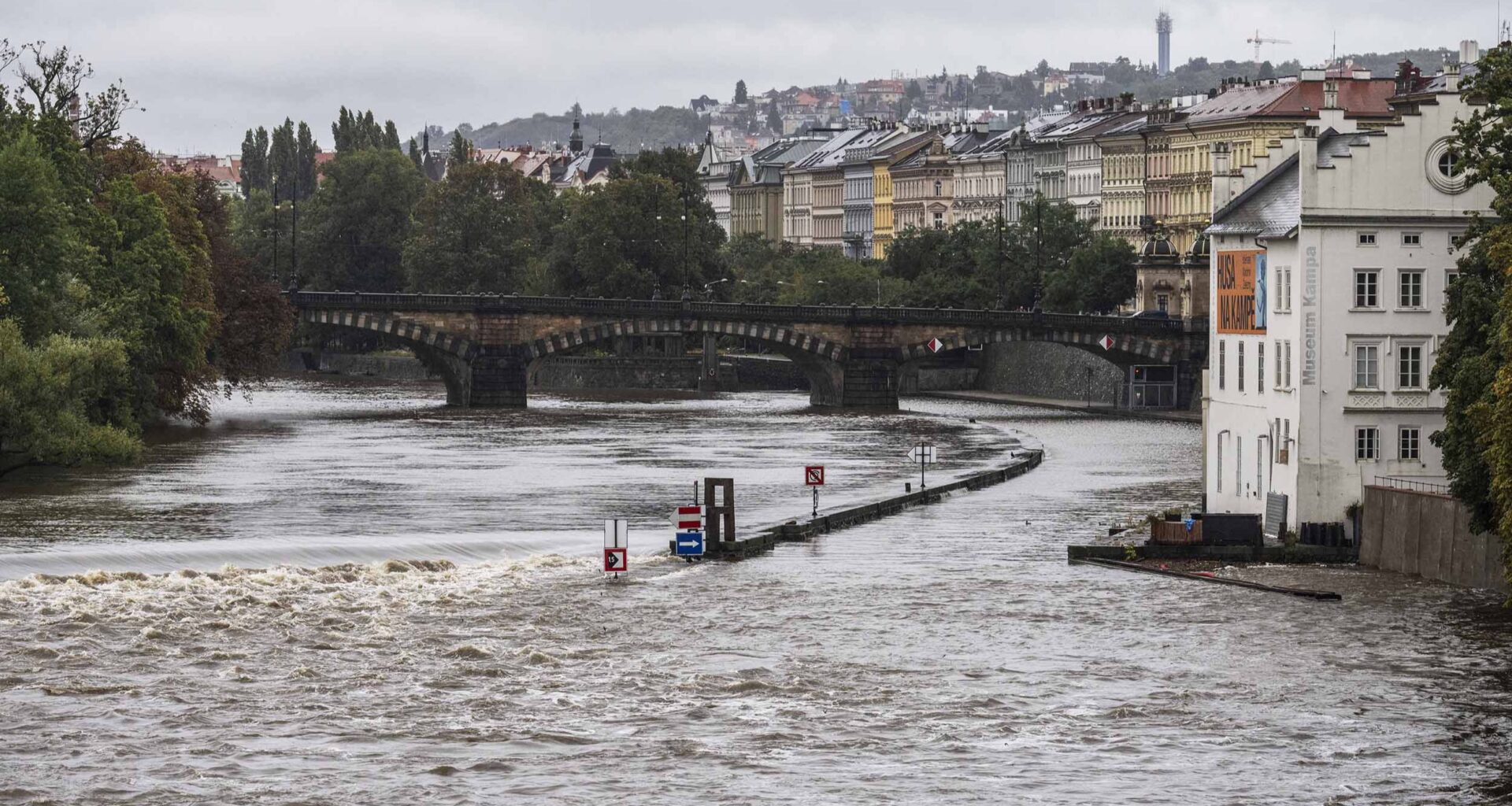
Europe is warming at unprecedented rates, faster than the global average. Water stress — which affects roughly one-third of the continent’s land and population annually — is inflicting huge economic losses, with floods costing around €6.5bn a year between 1980 and 2023.
This is according to the European Environment Agency’s latest report, Europe’s Environment 2025, a comprehensive study on the state of our environment, published every five years.
As someone who has worked at the forefront of the water sector for more than 30 years, these figures are stark yet unsurprising. Europe’s water management practices are outdated and not fit for the pace of change we are witnessing.
The EEA report builds on the EU’s Water Resilience Strategy, unveiled by the European Commission in June. This initiative represents a decisive moment towards embedding water security into the heart of the bloc’s climate, industrial and geopolitical agendas.
It means that for the first time water is being treated as a strategic resource — important to Europe’s competitiveness and energy and digital infrastructure. This is critical, given water-dependent sectors contribute roughly €3.4tn to EU gross value added, about 26 per cent of the European economy.
With the appointment of Jessika Roswall as the EU’s inaugural water commissioner, who has a mandate to restore the continent’s water cycle and build a “water-smart economy”, Europe has an obvious opportunity to lead on water management practices.
From strategy to structure
However, the EEA’s findings are a sobering reminder that ambition — particularly without accountability or enforcement — can falter. While the EU’s optimistic target to improve water efficiency by 10 per cent by 2030 is a welcome signal of intent, measures must evolve into a binding and sector-specific framework.
We have seen the lacklustre effect of non-mandatory targets with existing EU directives such as the Water Framework Directive, with only 37 per cent of surface water bodies achieving a good or high ecological status last year.
Sectors such as agriculture, public water supply (including tourism and services) and industry also have theoretical water-saving potentials of between 20 per cent and 50 per cent, but continue to consume more than 240bn cubic metres of water annually across the bloc, eliciting the slow rate of progress.
While the EU’s optimistic target to improve water efficiency by 10 per cent by 2030 is a welcome signal of intent, measures must evolve into a binding and sector-specific framework
This points to a deeper weakness in governance. The EU’s river basin management plans remain patchy and underdelivered, while the “polluter pays” principle, crucial for tackling toxic contaminants such as per- and polyfluoroalkyl substances, or PFAS, is applied unevenly across member states. It is clear that performance-based incentives are needed to ensure that RBMPs are delivered effectively.
On the policy front, we have also witnessed countless examples of timidity.
The European parliament quietly watered down its own efficiency targets in the revised Industrial Emissions Directive in 2023. Meanwhile, the bloc’s water reuse rules still focus (in the main) on agriculture, ignoring the industrial users that swallow nearly half of Europe’s freshwater.
It would be prudent for the EU to expand its policy scope and apply the same rigour here.
A new financial architecture for water
The final piece of the jigsaw is financing. The world faces a $6.7tn water infrastructure gap by 2030, yet water attracts less than 2 per cent of global public spending and only a fraction of private capital.
Closing this gap requires a new financial architecture for water, including green bonds, blended finance and public-private partnerships, which are powerful tools for mobilising capital. Bundling smaller projects into investment portfolios with standardised risk profiles and common performance metrics can attract institutional capital.
The sooner the EU recognises that water security is a precursor to economic and political security, the better and the stronger its future will be
The EU’s Water Smart Industrial Alliance and European Water Academy will be important for pairing this capital with the newest, most innovative technologies.
At Almar Water, our Centinela project in Chile, a $1.5bn Capex seawater supply system for the mining industry, shows that combination of innovation and capital can combine to build long-term water resilience.
What next?
For now, the EEA has done its part. It makes clear that the EU’s long-standing legal frameworks, while robust in principle, are insufficient in practice to meet today’s accelerating climate risks.
Europe needs three big shifts to bridge that gap:
Voluntary targets must become binding obligations, with clear metrics for efficiency, reuse and pollution.
Water must be integrated across major EU policies beyond the environment, including energy, agriculture and industry.
Stakeholders must incentivise and encourage financial mechanisms that unlock capital at scale.
In an age of accelerating climate risk, Europe cannot afford to treat water as a side issue. The sooner the EU recognises that water security is a precursor to economic and political security, the better and the stronger its future will be.