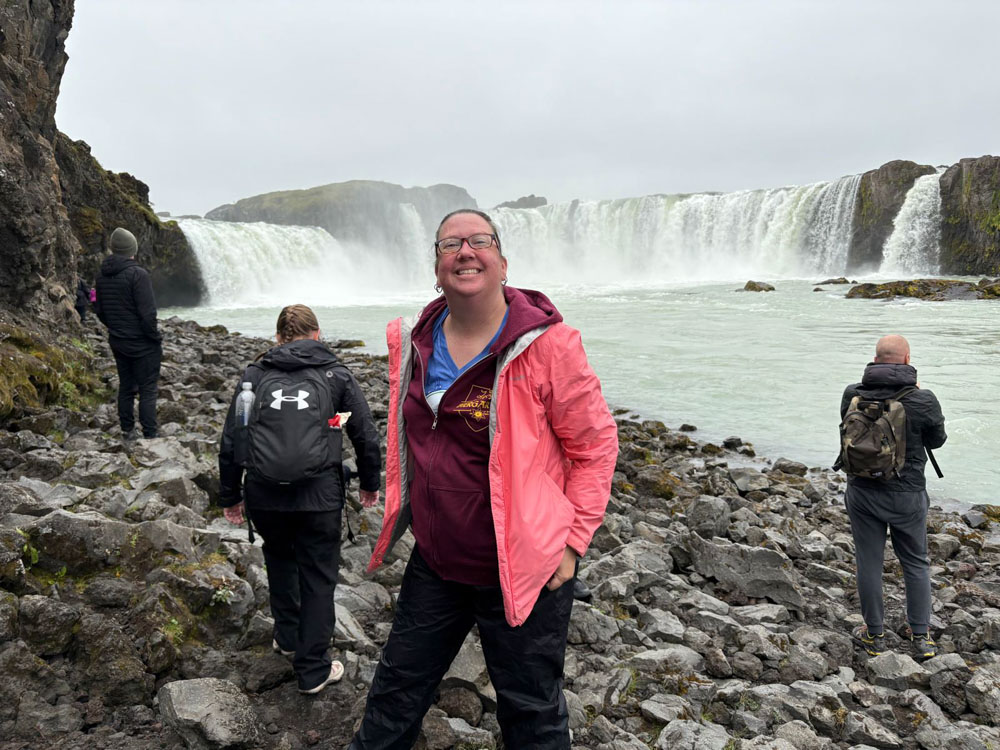
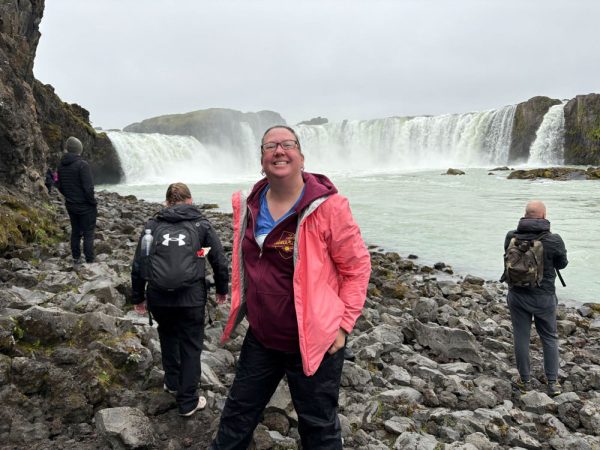
Put-in-Bay science teacher, Melissa Kowalski, stands near waterfalls in Iceland. (Submitted photo)
BY SHERI TRUSTY
PUT-IN-BAY – For many teachers, professional development means joining a webinar or taking a course in a neighboring town. For Put-in-Bay Schools science teacher, Melissa Kowalski, her pursuit of professional development took her from her island home in Ohio to the cold Nordic island country of Iceland. Kowalski was able to make the trip because she was awarded a Fund for Teachers Fellowship grant.
Like many organizations, Fund for Teachers provides grant money to provide real-life experiences that support the advancement of teachers’ skills, but it has a unique twist. Award recipients design their own professional development trips.
“You could absolutely design it around what is relevant for you as an educator, and it was an unbelievable experience,” Kowalski said.
A visit to Iceland had long been on Kowalski’s bucket list, and what better place for an island teacher to visit than another island? Kowalski traveled with fellow educators Amy Boros, a science teacher in Perrysburg, and Shari Insley, a science teacher in North Olmsted. Kowalski teaches all sciences for 7 through 12 grades for Put-in-Bay Schools.
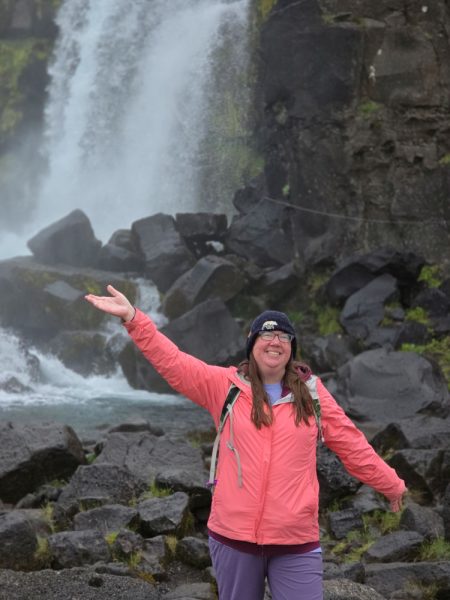
Melissa Kowalski returned from Iceland with a new treasure-trove of knowledge that is impacting her students’ education at Put-in-Bay Schools. (Submitted photo)
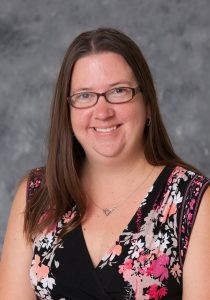
Melissa Kowalski is an award-winning science teacher at Put-in-Bay Schools. (Submitted photo)
The women visited Iceland in July, where Kowalski said she experienced some of the lessons she teaches her students. She viewed an active volcano, stood beneath Icelandic waterfalls, snorkeled in glacial water, and talked with planetary science professors, who were conducting research in a seismically-active area filled with mud pots and fumaroles.
“That was one of my favorites things. It looked like the surface of Mars,” Kowalski said. “They took physical samples of the ground, and they took drone images and satellite images to see how it compared to Mars, so it was really cool.”
Kowalski found herself thinking the same thing over and over during the trip: This is in our textbook.
“At one point, we were on a black sand beach, and I saw what was a perfect example of seashore erosion. Then I realized that what I was looking at was a picture from our textbook,” she said.
Since she can’t bring her students to Iceland, she brought a little bit of Iceland – and a tremendous amount of new knowledge – to them.
“I brought back rock samples, black sand and glacial water,” she said.
She also brought back a way to expand her students’ worldview by talking to them about the similarities and differences between South Bass Island and the island country of Iceland. Both are tourist islands which rely on the fishing industry, including ice fishing. Groceries are expensive on both due to the necessity of transporting so many products to the islands.
But geographically, the islands are very different. Iceland is located on the Mid-Atlantic Ridge, where two tectonic plates are pulling apart.
“It’s like they are ripping the ocean floor apart,” Kowalski said.
Iceland has geysers and volcanos and is comprised of igneous rock, instead of the sedimentary rock found on South Bass.
“There are a lot of parallels between the islands,” Kowalski said. “They are very different geologically, but they have a lot that is the same.”
Kowalski encourages other teachers to apply for a Fund for Teachers grant. 2026 grant applications are now open. For more information, visit www.fundforteachers.org.