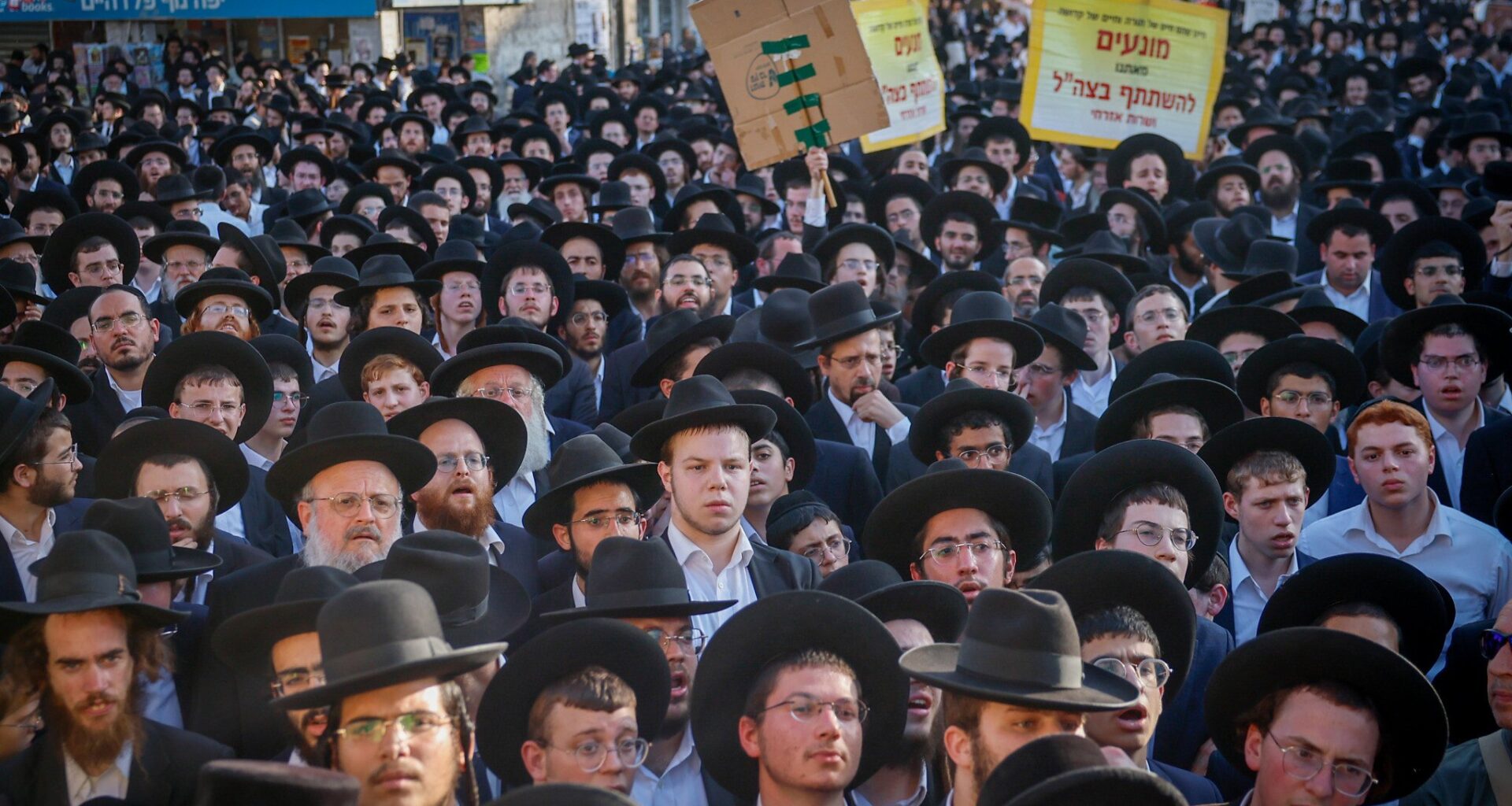
Hundreds of thousands of ultra-Orthodox men are expected to rally at the entrance to Jerusalem on Thursday for a “million man” protest against military conscription that will severely disrupt traffic and cause major road blockages throughout Israel’s capital.
The protest is the only demonstration in recent years to unite nearly all sects and factions of the ultra-Orthodox community, which do not often mingle with one another, Hebrew media outlets noted. According to Channel 12 news, the last protest that similarly united the Haredi world was another anti-conscription demonstration around 10 years ago.
The protest was organized in response to the crackdown on Haredi draft dodgers in recent months, leading to over 870 arrests, amounting to 7% of the 6,975 ultra-Orthodox men who have been declared draft dodgers.
The protest is expected to block the main entrance to Jerusalem for several hours starting from midday on Thursday, and cause major congestion in and around the capital.
Entering and leaving Jerusalem
While the rally is scheduled to start at 2:30 p.m, road closures and traffic diversions will begin earlier.
Get The Times of Israel’s Daily Edition
by email and never miss our top stories
By signing up, you agree to the terms
Starting from 12 p.m. on Thursday and until the end of the protest, only buses carrying rally participants will be allowed to enter Jerusalem via Route 1 — the main Jerusalem-Tel Aviv artery. During that time, the route will also be closed to private vehicles in both directions between the entrance to Jerusalem and Latrun Interchange.
Instead, the Israel Police have said that drivers will be able to exit the city via Route 443, while public buses running between Jerusalem and other cities will be able to leave the capital via Route 16, which connects to Route 1.
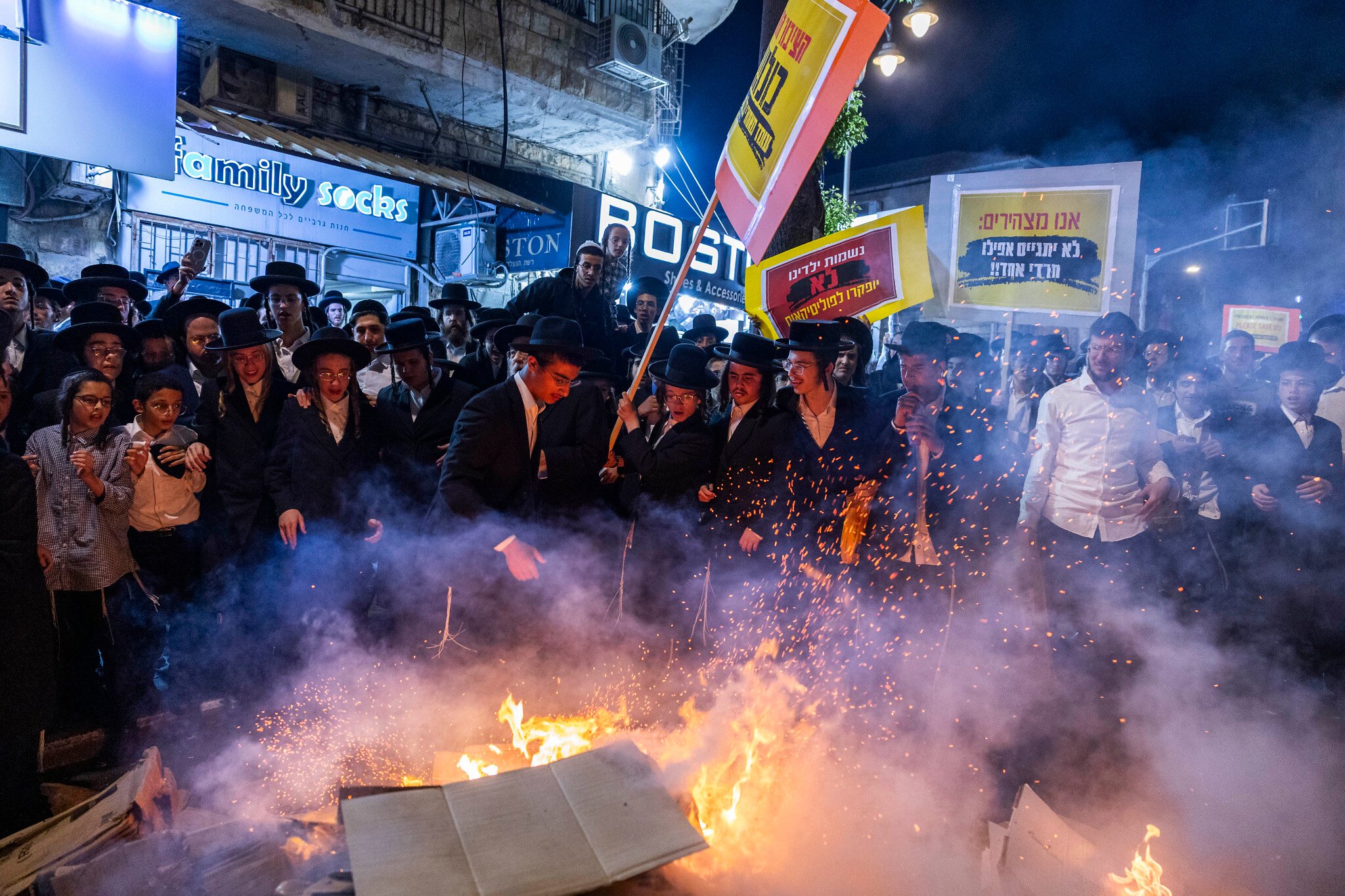
Ultra-Orthodox Jews protest against the conscription of yeshiva students in the Jerusalem neighborhood of Mea Shearim, October 19, 2025. (Noam Revkin Fenton/Flash90)
The religious news website Kipa reported on Wednesday that certain exemptions will be made for the private vehicles of residents and workers from communities located along the stretch of Route 1 between Jerusalem and the Latrun area, including Shoresh, Beit Meir, Neve Ilan, Mevaseret Zion, Har Adar, Abu Ghosh, Ein Rafa and Ein Naqquba. However, in order to pass through the temporary police checkpoints, they will need to present either an ID card or a work pass.
Traveling through Jerusalem
Those who live and work in Jerusalem, as well as those who make it in via alternative routes, will find that their woes do not end once within city limits.
The Jerusalem Light Rail, which runs across the city from Neve Yaakov in the northeast to Hadassah Ein Karem in the southwest, will offer a partial service from midday until the end of the protest.
Trains will run between Neve Yaakov and Davidka, and between Hadassah Ein Karem and Kikar Denya. There will be no light rail service in the city center.
Some of the city’s public buses will be diverted to alternative routes that follow their usual routes as closely as possible, while others will have their routes cut short. Two bus lines, the 54 and the 89, will cease operating altogether until the protest has ended.
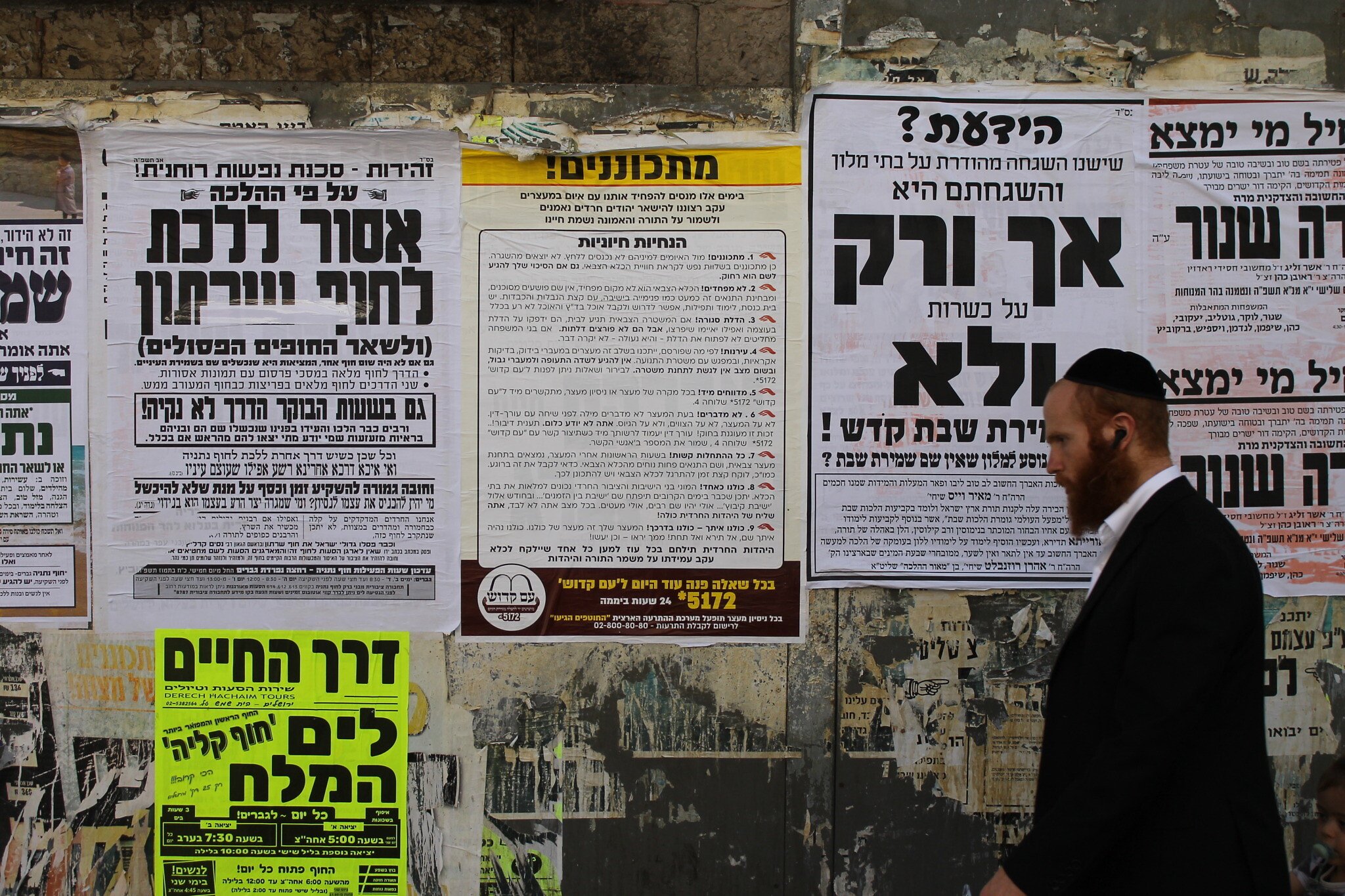
An ultra-Orthodox man in Jerusalem walks past a poster advising yeshiva students who are evading the draft on how to avoid arrest at the hands of the Military Police, August 6, 2025. (Sam Sokol/Times of Israel)
The roads at the entrance to the city and around the city center will also be closed to private vehicles.
On Monday night, Transportation Minister Miri Regev told Haredi radio station Radio Kol Hai that public transportation options will be increased in the lead up to the protest in order to allow demonstrators to arrive.
“We will act as we do at all major events. As soon as we identify congestion at specific points, we will increase public transportation there. Israel Railways will increase train service to Jerusalem, and so will the bus operators,” said the Likud minister.
Her statement was at odds with comments she made to Ynet in 2023, however, when she said that her ministry was “not a transportation company for demonstrations,” after she was criticized for not increasing public transportation during anti-government protests.
Preparations are also in place to secure the massive demonstration, and police said on Tuesday that hundreds of officers would be deployed at Jerusalem’s northern entrance and the city center.
Disrupted plans
The protest also appeared set to disrupt Israel’s education system, as the Mateh Yehuda Regional Council — which covers the area between Jerusalem and Tel Aviv — announced that its schools would be shut on Thursday due to the difficulties created by the demonstration.
It explained that the changes to the transportation system meant that students and staff would be unable to reach school or return home at the end of the day in a timely or safe manner.
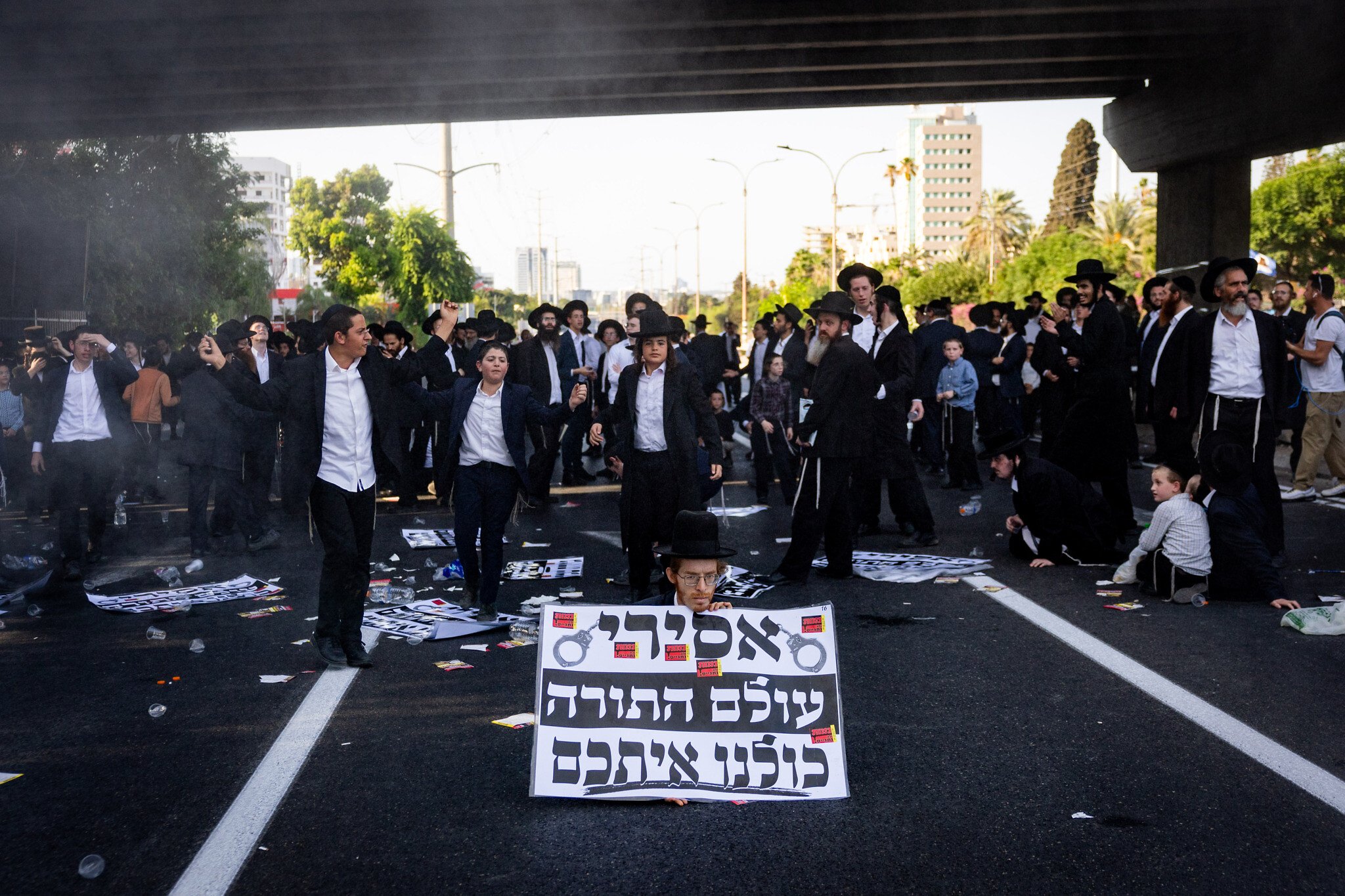
Ultra-Orthodox protesters against the drafting of yeshiva students to the military block Route 4, near Bnei Brak, August 19, 2025. (Yonatan Sindel/Flash90)
The council said that its day centers and clubs for the elderly would also be closed on Thursday, and its services would be offered on a partial basis.
In contrast, the Jerusalem Municipality said that schools across the city would be operating as normal throughout the day on Thursday, but instructed parents and staff to check back periodically in case that changes.
United yet separate
While the rally is set to be the first event in years that brings together all aspects of ultra-Orthodox society, albeit only the men, the varied stances and divided opinions on military conscription will still be on display, according to a Channel 12 overview of the groups taking part.
Due to the lack of consensus regarding the correct response to the crackdown on Haredi draft dodgers and varyingly hostile attitudes to the idea of being conscripted into the military, each Haredi faction will have a pre-designated space in which to stand, and rabbis will keep their students with them throughout the event.
There will also be no main stage and no speeches. Instead, participants will be led in communal prayer and portions from the Book of Psalms will be recited.
Some of the factions that will be in attendance on Thursday are either begrudgingly accepting of, or not openly hostile toward, Knesset Foreign Affairs and Defense Committee chairman Boaz Bismuth’s revised bill to regulate military conscription. These include the Sephardic factions, represented in the Knesset by Shas, and the “Lithuanian” Ashkenazi sects, represented by the Degel Hatorah faction of United Torah Judaism.
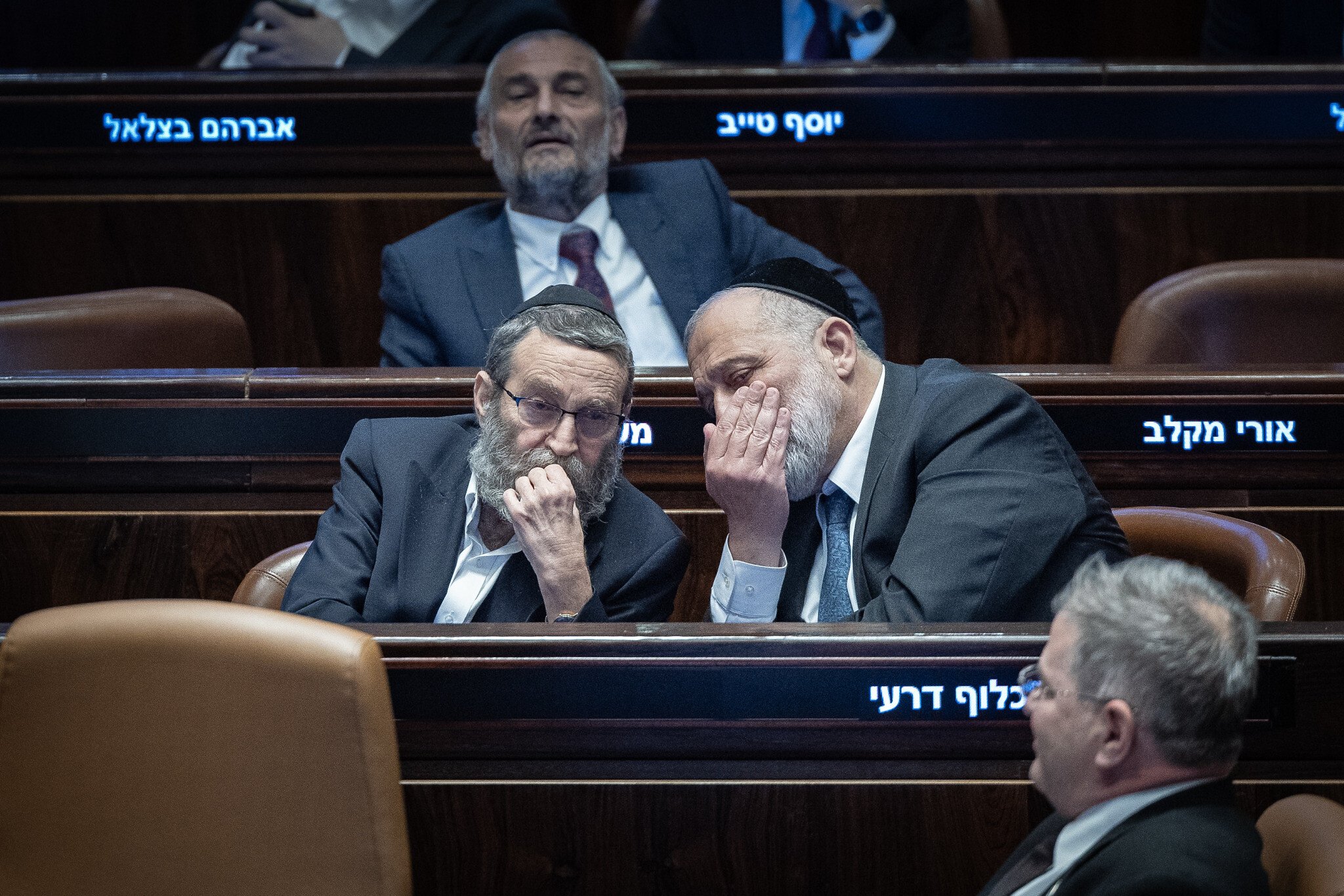
Shas party leader MK Aryeh Deri, right, speaks with United Torah Judaism No. 2 MK Moshe Gafni during a Knesset plenum session in Jerusalem, February 10, 2025. (Yonatan Sindel/Flash90)
The other half of United Torah Judaism, the Hassidic Agudat Yisrael faction, is opposed to Bismuth’s law, and instead supports blanket exemptions for all Haredi yeshiva students.
On the other end of the spectrum, Channel 12 reported that the extremist Jerusalem Faction is divided, and the majority of the group will boycott the protest altogether, as they are unwilling to demonstrate alongside groups that have shown willingness to work with Bismuth and compromise on the matter of Haredi conscription.
Finally, Channel 12 reported that the leaders of the radical Eda Haredit stream of Haredi society had not issued instructions or taken an official stance on the protest, and it was not clear whether its followers would attend.