Separator films were once a growth area for Japanese chemical makers.
The rise of Chinese competitors has caused some Japanese firms to retrench.
Asahi Kasei continues to invest with a big project in Canada.
In the face of relentless Chinese competition, some Japanese firms are reassessing their strategies for the lithium-ion-battery separator—a component once considered a stronghold of Japan’s chemical industry. Some producers, including Toray Industries, are retreating or downsizing.
Not so Asahi Kasei. The company and its partners are spending more than $1 billion on a new wet-process separator plant in Canada targeting the electric vehicle (EV) market in North America. In doing so, Asahi Kasei is counting on the US to remain a safe island in a sea filled with Chinese competitors.
“North America is poised for significant growth in the lithium-ion battery sector, including EVs and energy storage systems,” says Nobuya Kaneko, senior general manager of Asahi Kasei’s planning and coordination division. “Geopolitical developments are clearly pushing for the exclusion of China. With North America choosing between Japan and South Korea for battery components, there is a real opportunity for Japan.”
Separators are microporous polymer membranes placed between the anode and cathode inside EV and other lithium-ion batteries. They allow lithium ions to pass through while blocking electrons. Most separators are produced using a wet process, in which a polyolefin film is mixed with solvents and extruded to create microscopic pores. The wet process is complex and can have a significant environmental impact, but it yields a uniform structure suitable for high-energy-density batteries such as those used in EVs.
Japanese companies once dominated the global market for separators, with Asahi Kasei and Toray holding the two largest shares. But the landscape has shifted. China’s Shanghai Energy has taken the lead, and Japanese manufacturers have been relegated to mid- and lower-tier positions.
Asahi Kasei’s Canadian project is intended to help the firm achieve a 30% market share in North America. It includes the introduction of cutting-edge technology that’s expected to deliver productivity “twice the industry average,” as well as financial support from the Japanese and Canadian governments, Kaneko says. On the commercial front, the company is forging partnerships with Honda and Toyota Tsusho, the trading arm of the Toyota Group.
It’s not yet clear if the incentives and partnerships will be enough to make the Canadian project a success. In the field of battery components, separators and cathode materials are considered capital-intensive industries. For this reason, “players with lower weighted average costs have a competitive advantage—China is a prime example,” says Mikiya Yamada, a senior analyst at Mizuho Securities. The Chinese government encourages companies to accept lower profits in core sectors, he says. “What we had seen in steel and ethylene is now happening in the battery materials sector.”
According to research by groups that include the Japan External Trade Organization, Chinese companies invested about $17 billion in separator production over just 3 years starting in 2020. And while Chinese manufacturers expanded their global market share from 56% in 2018 to 75% in 2021, the market share for Japanese companies shrank from 35% to just 20% over the same period.
Amid these developments, Toray on Oct. 1 announced its withdrawal from the separator business in Hungary by selling its 50% stake in a joint venture to its partner, South Korea’s LG Chem, for $206 million. Toray launched the project on its own in 2018 and sold half of it to LG Chem in 2022.
In Japan and South Korea, Toray is focusing its separator business on value-added applications requiring high safety and capacity. At a press briefing in May, Toray president Mitsuo Oya stated that the company is “currently considering all possibilities, including withdrawal from joint ventures and downsizing or exiting the battery separator film business.”
Dividing line
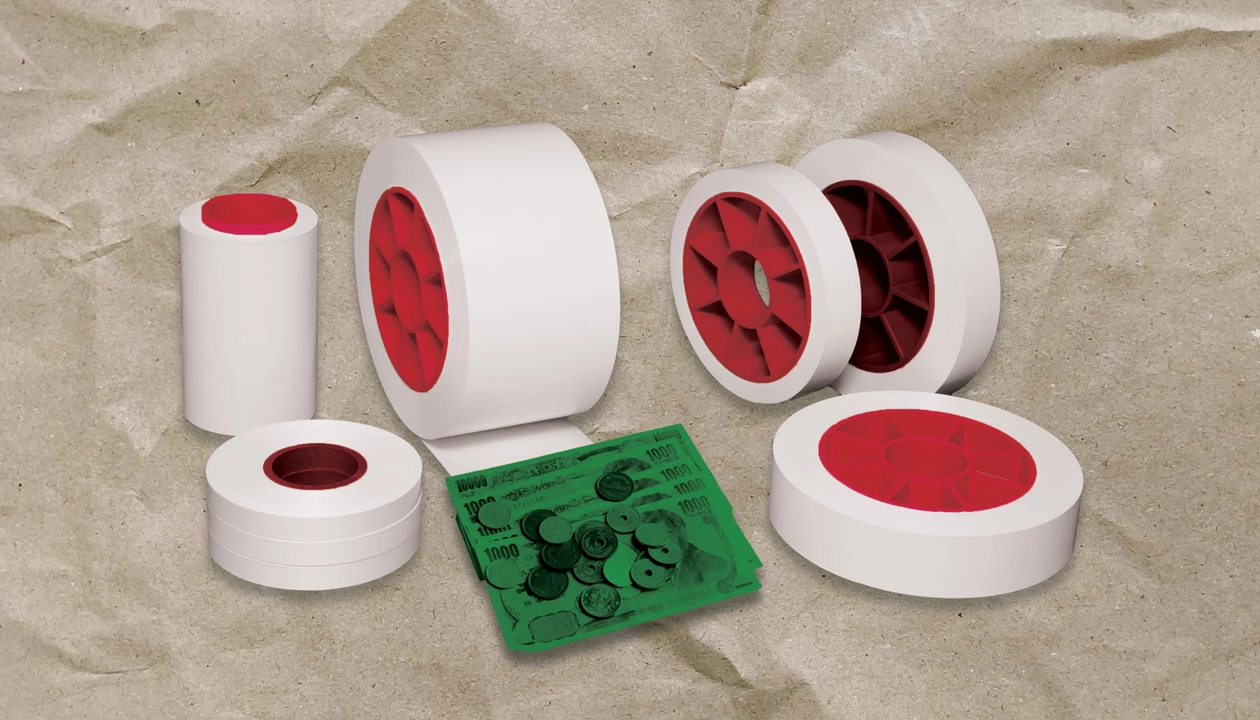
Battery separators are porous polyolefin films that allow lithium ions to travel back and forth between the cathode and anode.
Credit: Yang H. Ku/C&EN/Shutterstock
Sumitomo Chemical is prioritizing improvement over expansion in its battery separator business. At a press briefing in late September, Sumitomo president Nobuaki Mito told C&EN that the company is allocating management resources preferentially to solid-state batteries, which it sees as the next generation of batteries.
Asahi Kasei feels the same pressure that Toray and Sumitomo do but has taken an expansive approach. What sets the company apart is its effort to find a path forward for its separator business through large-scale investment overseas. “If we continue to focus primarily on Japan, we will soon face a situation where we must consider downsizing our operations,” Kaneko warns.
In fact, sales in Asahi’s separator business, which is centered on its flagship Hipore brand wet-process separator, have been on the decline. Earnings before interest, taxes, depreciation, and amortization plummeted from over $170 million in fiscal 2021 to below $20 million in fiscal 2024.
Asahi’s business strategy for separators involves selection and concentration. “We are focusing on automotive applications and prioritizing markets in Japan, South Korea, and North America, while setting aside the European market, where Chinese and Korean battery manufacturers are taking the lead,” Kaneko says.
Asahi Kasei expects sales of EV battery separators in North America to grow to nearly 3 billion m2 of the film by 2030, making it the third largest market after China and Europe. In fact, in the US, Toyota and Panasonic Energy—as well as Korean manufacturers such as LG Energy Solution and Samsung SDI—are moving forward with plans to build or expand large lithium-ion battery facilities.
“If we continue to focus primarily on Japan, we will soon face a situation where we must consider downsizing our operations.”
Nobuya Kaneko, senior general manager, Asahi Kasei
The One Big Beautiful Bill, passed and enacted by the US Congress this year, also provides a tailwind for Asahi Kasei. The legislation maintains a tax credit for advanced manufacturing investments, such as battery plants, and introduces new restrictions on foreign entities of concern. If a project’s share of raw materials or components sourced from specific countries, including China, exceeds a certain threshold, the project becomes ineligible for the tax credit. “Based on publicly available data from major South Korean battery manufacturers, this tax benefit is estimated to exceed $1 billion annually,” Kaneko says.
Asahi has attracted partners to help shoulder the cost of the new Hipore plant, in Port Colborne, Ontario. Honda and the Development Bank of Japan are participating in the project, which involves a total investment of $1.24 billion. The facility will feature an integrated membrane formation and coating line with an annual production capacity of 700 million m2 of coated membrane. Construction is underway, and commercial production is scheduled to begin in 2027.
Asahi will also receive subsidies from the Canadian federal government and the Ontario provincial government. By the fifth year of the new plant’s operation—2031—Asahi Kasei expects its Hipore business to generate over $1.1 billion in sales, up from about $230 million in 2022, and have an operating profit margin of 20%.
Asahi Kasei’s connection to the lithium-ion battery business runs deep. By combining cathode and anode materials, the company developed a prototype battery in 1985 for which the Asahi Kasei honorary fellow Akira Yoshino was awarded the Nobel Prize in Chemistry in 2019.
Mizuho Securities’ Yamada attributes the strength of Asahi Kasei’s separator business to its extensive intellectual property. Asahi’s “technological assets include ultra-high-molecular-weight polyethylene, membrane processing and coating, as well as deep expertise in electrochemistry,” he says.
Still, investments like the Canada project are risky. “If conditions such as the continued enforcement of regulations that hinder Chinese companies from entering the North American market proceed as expected, there is a strong possibility the investment will succeed,” Yamada says. “The key to success lies in whether the project can maintain competitiveness if those conditions begin to change.”
Chemical & Engineering News
ISSN 0009-2347
Copyright ©
2025 American Chemical Society