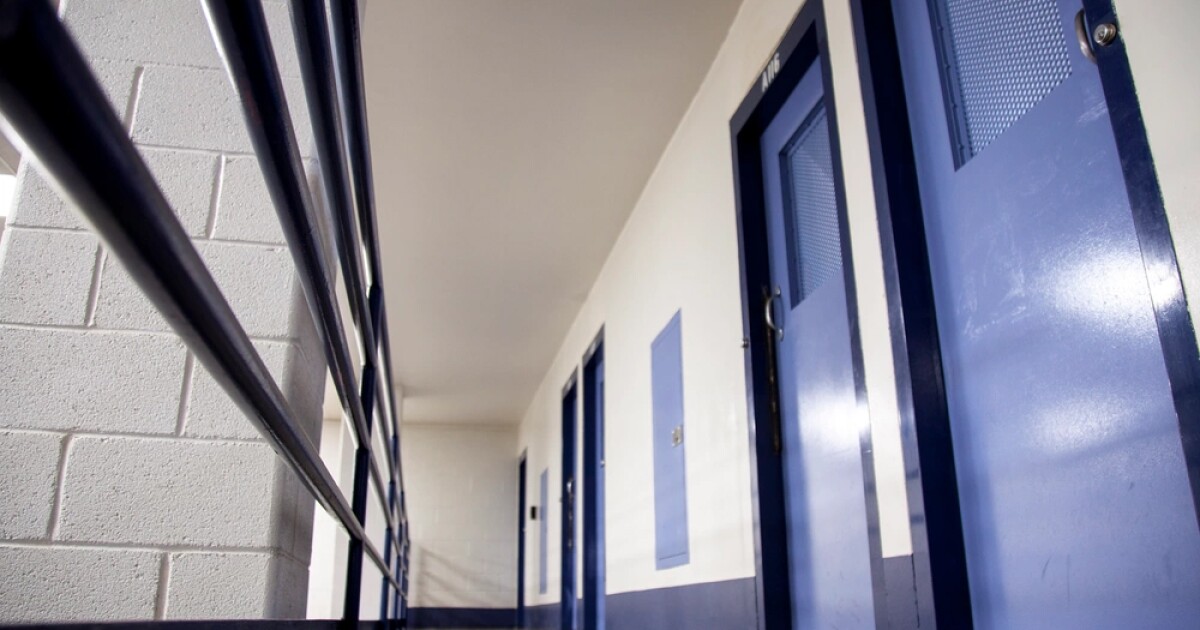
A Syrian national being held in an Arizona detention center could be sent to a third country.
Kamel Maklad fled the civil war in Syria and went to Venezuela. But when his work and residency permit expired, he had to leave.
He crossed the border from Mexico into Arizona in 2023 and surrendered to Border Patrol agents to claim asylum; he’s been held in detention ever since — except for a brief time when he was sent back to Venezuela, but officials there wouldn’t accept him and sent him back to the U.S.
Emily Bregel, border reporter with the Arizona Daily Star, spoke with Maklad and documented his story.
Full conversation
MARK BRODIE: So this is quite a convoluted tale, but it sounds like basically Maklad has — he went from Syria to Venezuela, to the U.S., to Venezuela, back to the U.S. And now he might be headed somewhere else?
EMILY BREGEL: That’s right. He’s pretty confused about what the future holds for him at this point. He has been in detention now for more than two years, and that’s even after an immigration judge granted him withholding of removal back to his home country in November of 2024. Now, withholding of removal, it’s a lesser form, a more limited form of protection than asylum. But it actually has a higher threshold for it to be awarded.
And that means the judge agreed he’d face threats to his life, most likely, back in his home country. But under the Trump administration, people with this form of protection are more vulnerable to being deported to a third country. The Trump administration is aggressively trying to find more countries to accept deportees who aren’t their own citizens.
In this case, they probably thought of Venezuela because Maklad had lived there before. He learned Spanish there over his 10 years there. But when he arrived there, he spent about 30 minutes in the airport. Officials there were very confused. They said, “You’re not Venezuelan. We never agreed to accept you.” And they turned him away.
So that same day, within under an hour, he said, he was back on the same plane headed back to the U.S..
BRODIE: Wow. So I want to read a quote that Maklad gave to you when you spoke with him, which sort of goes to how he’s doing. He said, “I have no energy anymore. I have no desire to fight. I feel finished. They stole my time, my life.” That doesn’t sound like somebody who is in a good place.
BREGEL: That’s right. And I talked with also a volunteer who regularly visits detainees at Eloy, and she’s been visiting him for almost a year. And she says she’s very concerned about Maklad’s mental health. Just this indefinite nature of his detention, not having any idea really the reason, if he could be sent to a third country soon or if he could be locked up for years more. He’s reaching the breaking point, he told me.
BRODIE: You mentioned his status from the federal government. And that seems important for a number of reasons, but especially because the federal government is now saying that he’s a suspected terrorist, and that’s why they’re keeping him in detention?
BREGEL: Yes. So this came out of nowhere, his attorney said. I talked to three attorneys, his current and two former attorneys from Maklad, who said DHS has never accused him of being a terrorist before, even in all these court proceedings, including the hearing when he was awarded withholding of removal. Which would not have been possible if they believed him to be a terrorist.
But DHS, in their statement to me, they did not respond at all to my questions about the attempt to deport Maklad to Venezuela. They just ignored that. They just sent this statement claiming for the first time that he’s a suspected terrorist, and that’s why he’s being detained.
BRODIE: In fact, Emily, you spoke with one of Maklad’s attorneys, as you mentioned. This is Luis Campos. Let’s hear what he had to say about this.
LUIS CAMPOS: The government attorney at that time could have said, “You, Honor, he’s not eligible for any relief because he’s a suspect terrorist.” If they had the evidence or if they had that argument in their pocket at the time, they would have made the argument, provided the evidence. And then he would have not been given the relief by the judge that he was requesting.
BRODIE: Emily, as you say, DHS hasn’t really answered your questions. It sounds like it hasn’t really answered the questions that his attorneys have either.
BREGEL: That’s right. And I did really press them via email for greater explanation of all of this. I think it’s very incumbent upon us journalists to do our best to corroborate any of these claims, especially when they come out of nowhere like this.
After I pressed back in response to that statement, I did get a call from DHS spokeswoman Tricia McLaughlin, but she would only talk on deep background. She said she would not talk on the record, and I declined, which is a judgment call. But I think here that granting anonymity to a top DHS official under these circumstances doesn’t serve the public interest. I think the public and Maklad really deserves to understand why he’s being detained.
BRODIE: So what are his lawyers next steps at this point?
BREGEL: Well, one thing that they’re a little concerned about, we see DHS will sometimes suddenly move detainees to other locations. For example, in Louisiana, where these detention centers can be very remote and cut people off from their legal representation. Or maybe they’ll find a third country.
And in fact, Maklad would be — at this point, he just doesn’t care where he is. He just wants to be out of detention. But if he, as it seems he’s facing another long stay and his attorneys may be able to file a habeas corpus petition. That is the right to go before a judge and have the legality of your detention evaluated by a judge.
So that could be the next step, but at this point, they’re not sure.
BRODIE: Well, you say he really obviously wants to be out of detention. Is he potentially interested in going to one of these third countries?
BREGEL: You know, DHS used to always — before they deport someone to a third country, they’re supposed to give them a chance to raise a fear claim and say, “No, I would also be in danger in that third country.” We’re hearing a lot of concerns from advocates that that is not happening.
But Maklad said that he did agree after DHS assured him that he would be accepted by Venezuela, would be able to get legal standing there. He did agree to be sent back to there, but of course he was rejected.
And I think, yes, at this point, he would probably agree. He said to me that he would rather be incarcerated or even dead back in Syria, because at least he’d be with his family.
KJZZ’s The Show transcripts are created on deadline. This text is edited for length and clarity, and may not be in its final form. The authoritative record of KJZZ’s programming is the audio record.