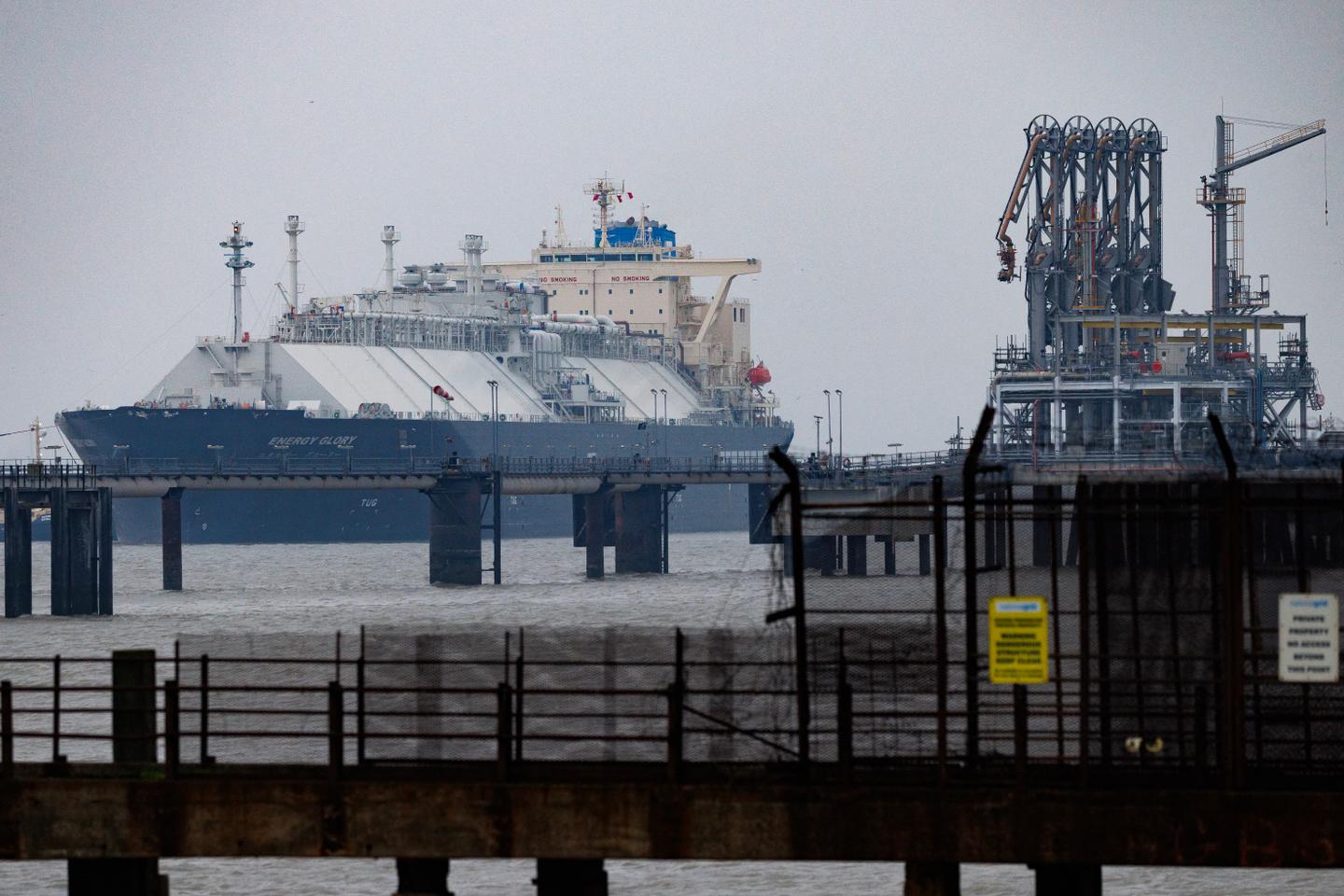
 The Energy Glory LNG tanker, having departed from the Cove Point offshore LNG terminal in Maryland, United States, arrives at the Grain LNG import terminal in England on February 10, 2025. DAN KITWOOD / GETTY IMAGES VIA AFP
A “golden age” was predicted with Donald Trump’s return to the White House – but will the global liquefied natural gas (LNG) market instead be thrown into turmoil by oversupply? A dramatic increase in capacity is on the horizon, as projects for terminals to liquefy natural gas are multiplying at a rapid pace in the United States. Five of them have been given the green light in recent months, following a pause decreed by former president Joe Biden to assess their climate impact.
Among the flagship projects, the CP2 terminal, built in Louisiana by Venture Global, received its final green light from the Department of Energy on October 21 to export to countries without a free trade agreement with the US. According to the Department of Energy, the current administration has now approved more than 390 million cubic meters per day of new export capacity, “greater than the volume exported today by the world’s second-largest LNG supplier.” In other words, Australia.
This industry has been courted by Trump, who is championing his country’s “energy dominance” and trying to force partners to buy LNG from the US, which, with its vast shale gas reserves, is already the world’s leading exporter. As reported by the US Energy Information Administration in mid-October, American operators plan to double their liquefaction and export capacity by 2029. This rush reflects the enthusiasm for this gas shipped by LNG tankers after being cooled to -163°C to be transformed into a liquid. More mobile than natural gas transported by pipeline, LNG allows demand to be met on every continent.
You have 76.12% of this article left to read. The rest is for subscribers only.