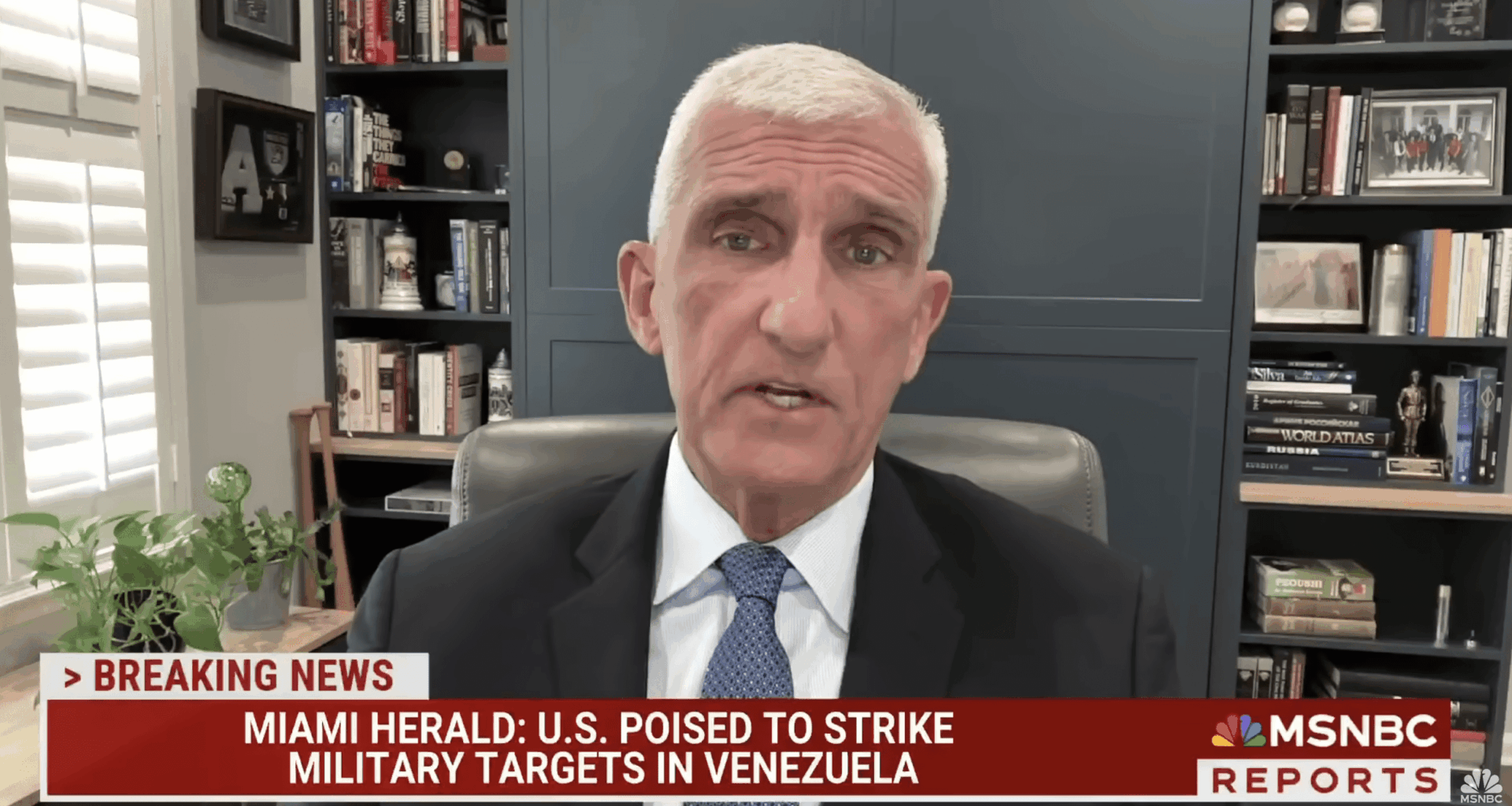
“Maduro is about to find himself trapped,” a senior U.S. source told the Miami Herald. “He may soon discover he cannot flee the country even if he decided to.”
A War on the Horizon and It Starts Just 1,000 Miles South
The Trump Administration’s escalating plans for airstrikes inside Venezuela have pushed Florida closer to the front lines of a new American war than at any point since the Cuban Missile Crisis. The targets, according to defense sources, include key Venezuelan military installations tied to the “Soles” cartel an organization the U.S. claims funnels 500 tons of cocaine per year.
But this is no simple drug interdiction. It’s a full-scale regime-change campaign coordinated by Donald Trump and his newly appointed Secretary of State Marco Rubio, both Florida power players, and both now driving foreign policy directly from the Sunshine State’s coastline.
Rubio’s Rise, Ellison’s Influence, and the Israel Connection
Behind Rubio’s appointment is billionaire Oracle founder Larry Ellison, whose private communications leaked in 2025 revealed he personally vetted Rubio for “fealty to Israel” as far back as 2015. Ellison’s alliance with Rubio has deepened over the decade, merging Silicon Valley capital, pro-Israel lobbying, and Florida politics into a unified foreign-policy machine.
Now, Ellison’s Oracle empire runs U.S. digital surveillance infrastructure, audits TikTok’s algorithm, and provides the cloud backbone for multiple U.S. defense contractors. This partnership has blurred the line between American tech power and military authority and it’s shaping how Trump and Rubio execute their new “War on the Cartels.” The catch? That “war” runs straight through the Caribbean, with Florida in the blast radius.
The New Regime-Change Pipeline
Trump and Rubio’s stated plan is to “liberate Venezuela,” but Pentagon and State Department insiders have told multiple outlets the long-term goal includes extending operations to Cuba and, if needed, Colombia.
That’s where this plan collapses under its own delusion. Colombia is a functioning democracy, a U.S. ally, and one of the few remaining stabilizing forces in the region. For Washington to drag Bogotá into a new “drug war narrative” is reckless, historically tone-deaf, and strategically suicidal.
From Iraq to Libya to Afghanistan, U.S. regime-change wars have left failed states, mass displacement, and new breeding grounds for extremism. Now, those same playbook architects are setting their sights on America’s own hemisphere, turning the Caribbean into a militarized corridor and threatening to destabilize democracies that depend on tourism and trade, not missiles and sanctions.
Florida’s Economic and Security Crossfire
The risks for Florida are immediate and severe. Oil markets will react violently. The IMF already warns that new U.S. interventions could spike global fuel prices, which would hammer Florida’s tourism, transport, and shipping industries. Every airstrike means higher jet fuel costs, pricier cruises, and more expensive imports through Port Everglades and the Port of Miami.
The state’s real estate market, already stretched by insurance crises and climate shocks, could falter if investors sense Florida is becoming a geopolitical flashpoint. A full-scale conflict with Venezuela or Cuba would also push new waves of migrants toward South Florida’s shores, straining already overloaded housing and health systems.
And then there’s the physical danger. Mar-a-Lago, Trump’s personal residence and symbolic seat of power, sits squarely in the crosshairs of potential retaliation. NORAD has already intercepted more than 20 airspace violations near the estate since Trump returned to office. Iran-linked actors have publicly threatened the former president. Any escalation in Venezuela or Cuba increases the risk of asymmetric strikes, from drones to cyberattacks, across Palm Beach, Broward, and Miami-Dade.
The “War Zone” Moves North
What was once the U.S. backyard is now the battlefield. This new “Caribbean War Doctrine” places Florida on the front line of America’s militarized foreign policy, but without the infrastructure or readiness to absorb it. The Coast Guard, already stretched thin by migration patrols, would be tasked with intercepting military threats and refugee waves simultaneously. Civil aviation and tourism corridors could be disrupted overnight.
Rubio, for his part, insists that the operation is about “restoring freedom to Venezuela,” echoing his rhetoric from previous interventions. But the pattern is unmistakable moral cover for corporate and political gain. Florida’s own political elite stand to benefit from reconstruction contracts, private defense partnerships, and media control over the war narrative.
The Lessons of Every Failed War
America’s record of foreign interventions for “freedom” has been catastrophic. Iraq devolved into sectarian chaos. Libya became an open-air arms bazaar. Afghanistan ended in retreat. Each time, the mission was sold as a moral crusade and collapsed into corruption, death, and blowback. Now, Trump and Rubio are trying to reboot that same model, not across the Atlantic, but in the waters where Americans vacation, retire, and invest.
If war spreads from Venezuela to Cuba, and if Colombia is pulled in under the “drug cartel” pretext, Florida will no longer just watch these wars on cable news. We’ll be living inside their perimeter. This isn’t a foreign war anymore. It’s a Florida one.
Sources