Jerry Jones, owner of the Dallas Cowboys, sits in the center of the room. Robert Kraft of the New England Patriots sits in the middle row, looking up at NFL Commissioner Roger Goodell. Al Davis, former owner of the Oakland Raiders, sits in the far back, metaphorically throwing paper airplanes at the owners.
It was a “high school cafeteria for billionaires,” The New York Times sports journalist Ken Belson said, describing a quarterly NFL executive session he sat in on.
In his second book, “Every Day Is Sunday,” released Oct. 14, Belson narrates how Jones, Kraft and Goodell turned the NFL into a “cultural and economic juggernaut.”
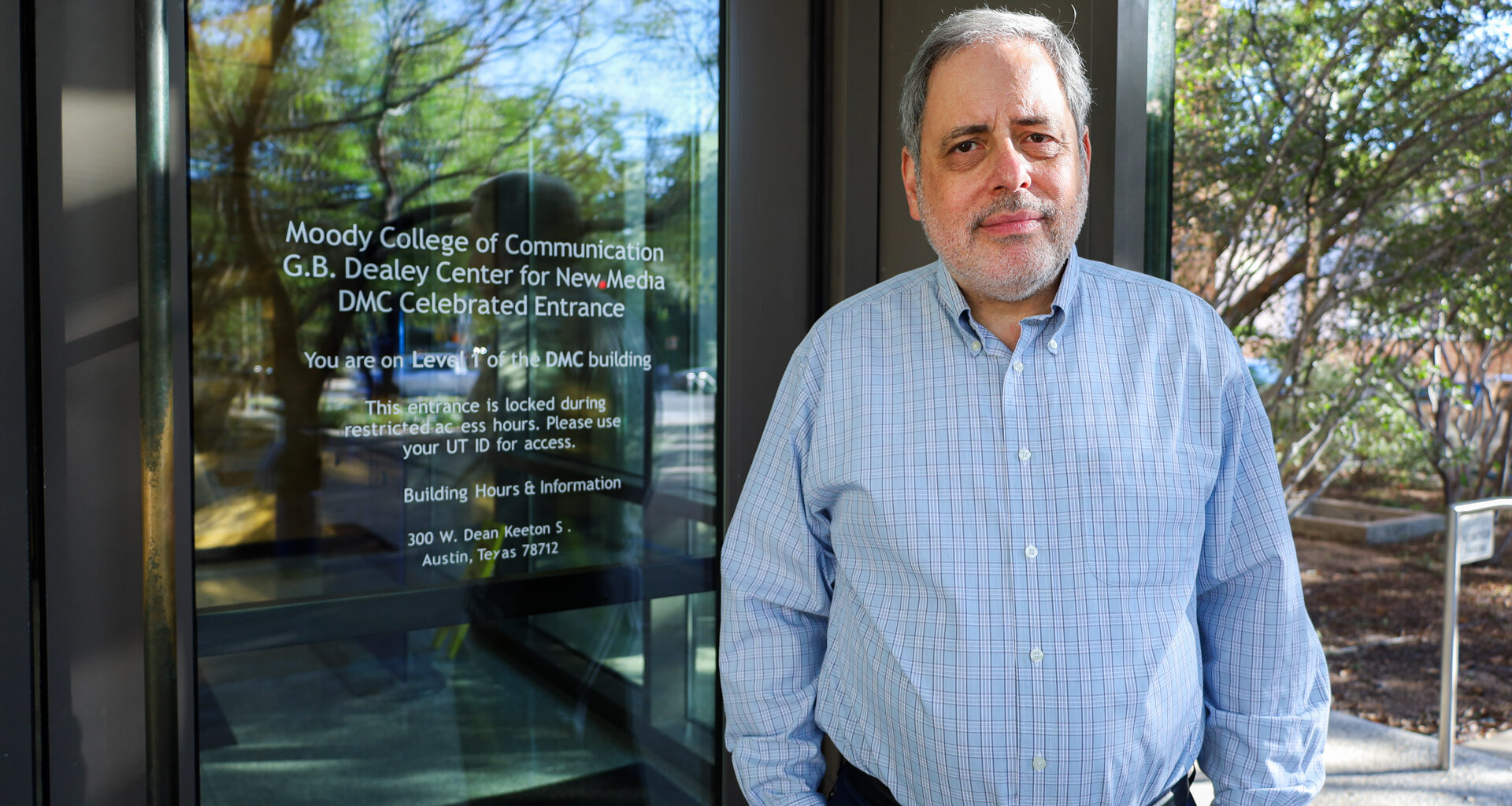
Belson brought the NFL’s business to UT last Tuesday, giving a talk at the Moody College of Communication, moderated by the director of the Center for Sports Communication and Media, Michael Butterworth. Belson also spoke with journalism and sports media classes during the week.
Belson started his career in business writing, then worked in sports for 14 years before returning to the Times’ business section in 2023. He pitched his current position to the Times when asked during the hiring process what he wanted to do in five years. He said sports business. They didn’t have that job, but eight years later, they created it.
“We cover Hollywood. We cover the music industry. Those are big entertainment industries,” Belson said. “Sports is bigger, so why shouldn’t we write about the business of sports?”
Michelle Thorpe, a journalism senior interested in music and sports journalism, attended the talk and heard from Belson in two of Kevin Robbins’ sports media classes.
“You (could) learn something through the business (side). You (could) learn something through a journalist point of view,” Thorpe said. “Being able to have that opportunity with him was something that you wouldn’t find if you weren’t at Moody.”
Belson said the journalism program and its diversity of class topics impressed him.
“I can see their minds are spinning,” Belson said. “Not so much about sports, but about … how to be a journalist. That’s what I’m here for.”
Belson collected clips for the book over the years while reporting for the Times, in addition to interviews specific to the book, which he started working on in 2022.
“I often get asked, ‘How long did it take to write the book?’” Belson said during the talk. “The strict answer is one year and nine months. The real answer is 14 years.”
Some owners turned him down for the book because of his coverage for the Times on issues in the NFL.
“I don’t work for the NFL,” Belson said. “It’s not my job to write positive or negative stories, just honest stories.”
Butterworth said he wanted to give Belson freedom in the talk to share what he thought most interesting. Specific cases included the rise of Kraft and Jones, political protests and sexual harassment in the NFL and the challenges the league faces.
“Sports are about more than sports,” Butterworth said. “They influence our lives, and they mean things to people. … These are not mere games to most people, so I think the more we pay attention to that, the better.”