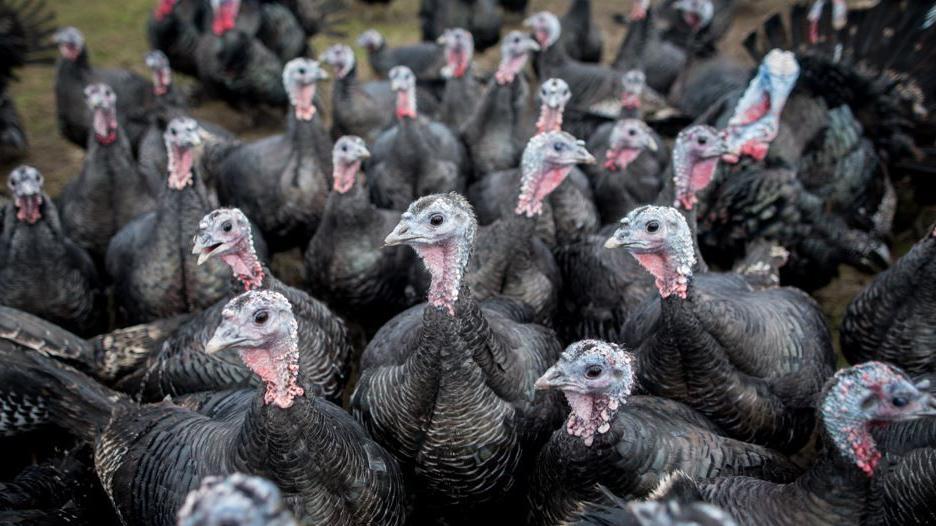
Turkey farmers “should be very concerned” ahead of Christmas, following a suspected case of bird flu at a commercial poultry premises in County Tyrone, a government veterinary officer has warned.
Disease control measures have been initiated by the Department of Agriculture, Environment and Rural Affairs (Daera) after a suspect case of the notifiable highly pathogenic, avian influenza (HPAI), at the site near Pomeroy.
Birds will be culled at the premises after the suspected case was reported on 1 November.
“Turkey farmers should be very concerned, we are now in the higher risk period of avian influenza,” Ignatius McKeown, a Daera veterinary officer said.
‘Devastating for that individual farmer’
“Migratory birds, which help to spread avian influenza, are now returning, more or less to winter in Northern Ireland, so yes they should be very concerned.
“At this particular stage they should be reviewing their biosecurity, making sure they are taking every precaution against the entry of avian influenza into their particular flocks.”
Agriculture Minister Andrew Muir said on Monday that initial results suggested the presence of HPAI, so disease control measures were being introduced at the premises as a “precautionary measure”.
Mr McKeown told BBC Radio Ulster’s Good Morning Ulster on Tuesday that “it is devastating for that individual farmer, that is his livelihood gone”.
He said the chickens would be culled humanely by the department staff.
“Then the premises will be cleansed and disinfected to make sure that the disease has been removed from the premises before the farmer can restock again.
“This is a fairly prolonged process.”
He added that bird flu is “stressful for the poultry industry, it is stressful for department staff, it is absolutely devastating for those particular flock owners that get the disease and see their livelihoods wiped out”.
“There is help available, there are the various mental health organisations that can provide support to farmers,” Mr McKeown said.
“Whenever department staff are carrying out procedures on the farm, we do it in as a sensitive way as possible, because we do realise this is devastating for the farmers involved as well.”
Last month, it was reported that about 20,000 chickens were to be culled after a suspected case of bird flu was found at a farm near Omagh in County Tyrone.
Almost 16,000 birds were also culled at a site near Pomeroy earlier this year due to suspected bird flu.
Temporary Control Zones (TCZ) will also be introduced to mitigate for onward disease spread.
The Public Health Agency (PHA) has confirmed Avian Influenza is primarily a disease of birds and the risk to the general public’s health is very low.
What steps can farmers take?
Mr McKeown emphasised the importance of good biosecurity practices “to mitigate and reduce the risks of infection entering your farm”.
“This disease is spread from wild birds, is carried into your poultry house, so try to prevent that happening,” he said.
“Carry out good biosecurity before entering your poultry house, making sure that you cleanse and disinfect all your equipment again before accessing your poultry house, carrying out good maintenance of your house, because one of the potential methods of spread is by water ingress.
“Make sure that your feed and water is separated from any potential access from wild birds and from vermin as well.”
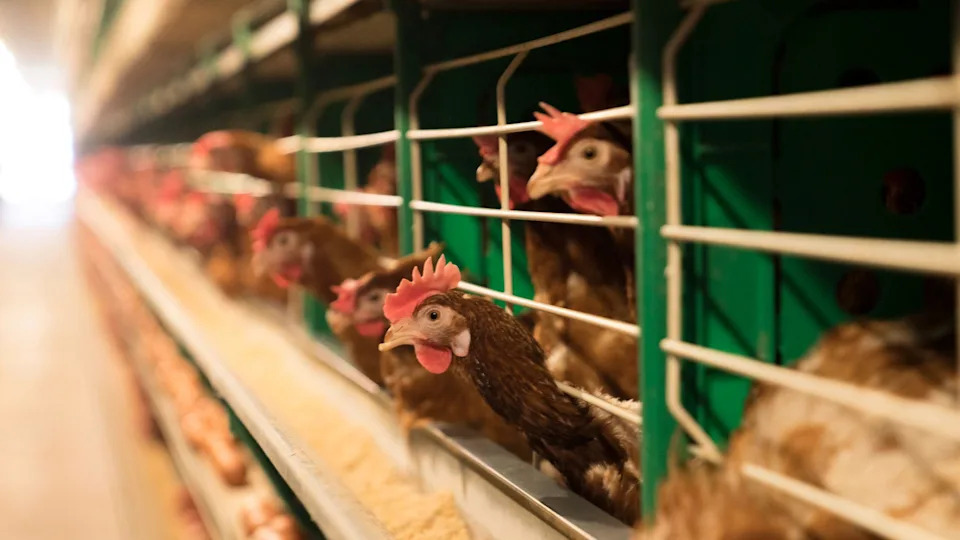
Agriculture Minister Andrew Muir said disease control measures were being introduced as a “precautionary measure” [Getty Images]
‘Crucial to limit any potential spread’
Chief Veterinary Officer Brian Dooher took the decision based on number of factors including the clinical signs and preliminary results provided by the Agri-Food and Biosciences Institute (AFBI).
He said the disease control measures were “crucial to limit any potential spread of disease” and stressed the “utmost importance of ensuring continuous excellent levels of biosecurity and reporting any suspect cases of avian flu to Daera immediately”.
Muir added that all bird owners must adhere to all biosecurity measures to protect their flocks.
Full details of the scope and measures required within the TCZs have been published on the Daera website.