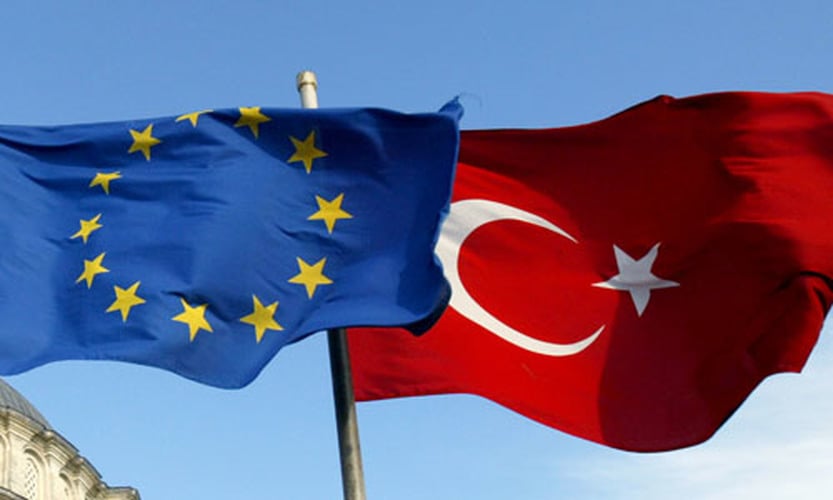
 Turkey’s EU accession process remains frozen. Public Domain
The latest European Commission Progress Report on Turkey delivers a critical assessment, reiterating the EU’s serious concerns about the continued deterioration of democratic standards, the rule of law, the independence of the judiciary, and respect for fundamental rights.
Ankara, in turn, has reacted angrily, calling the EU’s findings “unfounded, biased, and prejudiced”. Despite ongoing economic cooperation, including the EU being Turkey’s fifth-largest trading partner in 2024, the accession process remains frozen.
EU concerned over democracy and human rights in Turkey
The report highlights a significant backsliding in the areas of rule of law and fundamental rights. The overall human rights situation in the country deteriorated during the reporting period.
Rule of Law and Judicial Independence: The judiciary is at an early stage of preparation and backsliding resumed. It is still considered to be under the control of the executive, compromising judicial independence and the quality of judicial outcomes. The judiciary has acted selectively, targeting opposition figures and elected officials, while refraining from similar action against the ruling coalition’s officials. This lack of impartiality has driven public trust in the legal system down to an all-time low.
Targeting the Opposition: The report notes that judicial action against opposition politicians continued. Local democracy was further weakened as elected opposition mayors were prosecuted and removed, with some being replaced by government-appointed trustees. This includes selective investigations launched against opposition-elected mayors, while no investigation was launched against current or former elected officials from the ruling party in large cities.
Repression of Critical Voices: Investigations, prosecutions, and convictions of journalists, writers, lawyers, academics, human rights defenders and other critical voices for alleged support for terrorism intensified. The implementation of criminal laws related to national security and counterterrorism continued to violate the ECHR (European Convention on Human Rights), hindering freedom of expression.
Greece–Turkey relations: Progress and persistent tensions
The EU acknowledges that bilateral relations between Turkey and Greece have improved since 2023. The report notes that Turkey has not engaged in any unauthorised drilling activities in the Eastern Mediterranean or in flights over Greek islands since 2023.
However, the report also stresses that disputes over the continental shelf and maritime zones remain a significant obstacle.
The report notes that no steps were taken to reopen the Halki Greek Orthodox Seminary, which has been closed since 1971. Additionally, UNESCO World Heritage Committee’s concerns about the Hagia Sophia and Chora museums having been converted into mosques remained unaddressed. The document also points out that acts of vandalism and the destruction of minority places of worship continued.
The original summary’s details regarding the 12 nautical miles/casus belli, NAVTEX notices, marine parks, airspace violations, “Blue Homeland” (Mavi Vatan), and the obstruction of the “Great Sea Interconnector” (GSI) are accurate concerns raised in the full report, even if not explicitly detailed in the report’s main findings summary.
The Cyprus issue
On Cyprus, Turkey continued to refuse to recognize the Republic of Cyprus. The EU calls on Ankara to actively support the negotiations on a fair, comprehensive and viable settlement of the Cyprus issue within the UN framework.
It notes that Turkey repeatedly advocated a two-state solution in Cyprus, a stance contrary to relevant UN Security Council Resolutions.
Turkey’s response
The Turkish Ministry of Foreign Affairs officially dismissed the EU report as “unfounded, biased, and prejudiced”. It accused Brussels of adopting “maximalist and unlawful Greek and Greek Cypriot positions”, arguing the report “ignores Ankara’s legitimate concerns” and is “inconsistent with efforts to build a positive EU–Turkey agenda.”
Turkey reaffirmed its strategic commitment to EU membership.