We are delighted to invite you to a hybrid event which will be held on Tuesday, 9th of December at 17.00.
The event will consist of an afternoon of discussion on circular economy. This event will also be a timely opportunity to discuss how a fully-fledged EU circular economy model can foster resilience, competitiveness and innovation in the European economy.
Speakers and further details will be announced in the coming days, however, we are publishing this event now to ensure you save the date.
This event is public and will be held both onsite and online.
Due to a limited number of seats, please await final confirmation from us after registration.

This event is kindly supported by

About the debate
Industrial competition and economic security are now central to both the European and global economic landscape. As major economic powers pursue increasingly assertive industrial policies, the European Union has equally been compelled to strengthen its industrial base while developing new economic models that combine competitiveness and sustainability with long-term resilience.
The competition over critical raw materials has highlighted Europe’s vulnerabilities, as emphasised in the recent proposal of the RESourceEU Plan presented by European Commission President von der Leyen at the 2025 Berlin Global Dialogue. Indeed, despite being vital to the global green and digital transition, these resources are increasingly subject to geopolitical tensions.
The Critical Raw Materials Act, the proposal of creating a Critical Raw Material Centre – included in the 2026 European Commission Work Programme – as well as the EU’s previous, broader circular economy agenda have represented crucial steps toward reducing dependencies and securing access to essential inputs.
In this context, the Circular Economy Act aims to accelerate Europe’s transition by filling resource loopholes, fostering industrial innovation and improving resource efficiency. Such measures would strengthen economic security, support decarbonisation and reinforce the EU’s global competitiveness across sectors.
A clear illustration of the EU’s evolving approach to safeguarding its industrial base, while balancing competitiveness with sustainability, can be found in the automotive sector. As this industry undergoes a rapid transformation, the European Commission has launched several initiatives to reinforce domestic production capacity, as well as to de-risk and reduce dependence on external suppliers.
Parallel initiatives such as the Omnibus Package, the Single Market Strategy and the efforts to advance the Savings and Investments Union are no less relevant. These can further enhance competitiveness and innovation, especially as the scale of investment in Europe still lags behind that of its global rivals. Trade policy and the formation of new strategic alliances can complement these efforts, as, together, they have the potential to create a more dynamic and competitive European economy.
However, only a comprehensive and coherent circular economy strategy, as envisaged in the forthcoming Circular Economy Act, can truly accelerate Europe’s transition. Such a shift, some observers argue, would enhance the Union’s economic security, resilience and competitiveness, while advancing both decarbonisation and innovation processes across industries.
This is a public event, hence the Chatham House Rule will not apply.
The event will start at 17.00 both onsite and online, while the onsite welcoming will begin at 16.30. The discussion will last around an hour and a half.
Due to a limited number of seats, please await final confirmation from us after registration, if you wish to attend this event onsite.
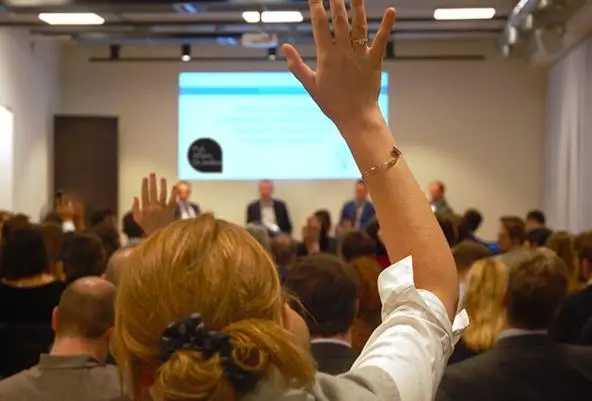
The audience will be able to ask questions both in person and through sli.do #CircularEconomy
We look forward to hosting you on the 9th of December 2025.