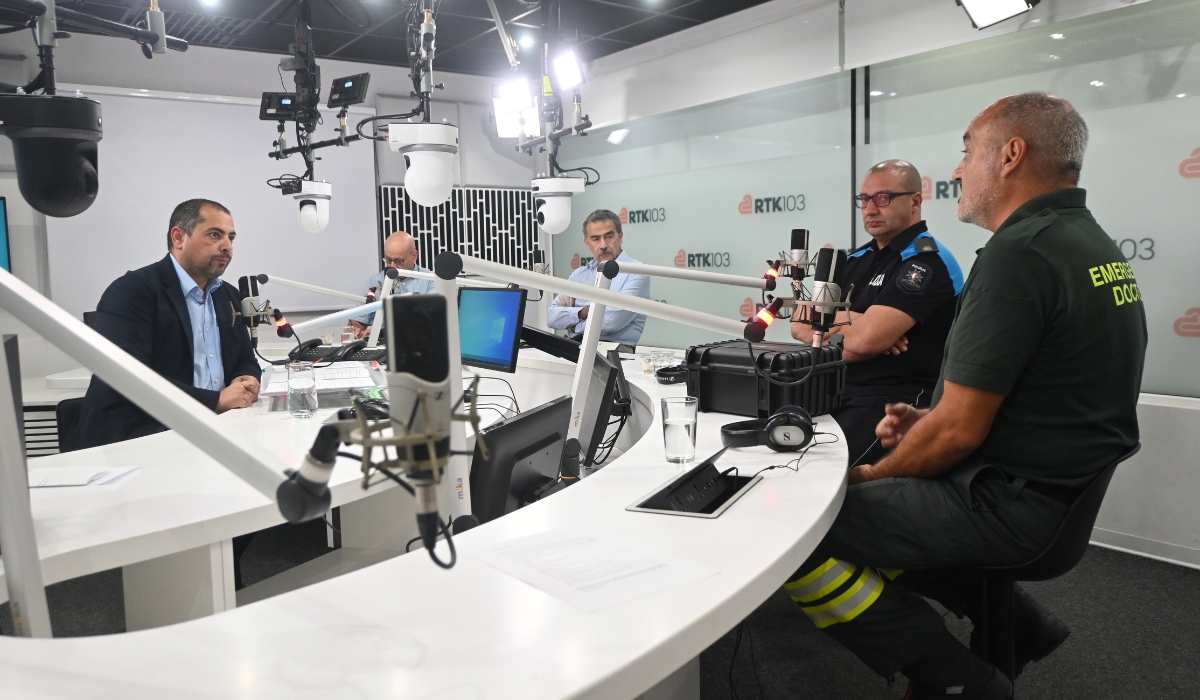
Malta recorded 12 road fatalities last year, most involving men aged between 26 and 40, with motorcyclists among the most affected. And while accident numbers have slowly declined, experts speaking on Attwalità said the country’s approach to road safety must go far beyond new laws or penalties.
The real challenge, they argued, lies in reshaping the country’s driving culture.
Speed determines survival
Dr Michael Spiteri, an emergency specialist at Mater Dei Hospital, said the country’s high rate of serious accidents places an enormous burden not just on victims and their families, but on emergency services as a whole.
“We see four or five serious accidents every single day,” he said. “That doesn’t just stretch hospital resources—it’s a psychological strain on doctors, nurses, police, and civil protection officers who face the same trauma daily. It’s a race against time, and it takes its toll.”
Dr Spiteri noted that accidents will always happen — “everyone is human, and everyone makes mistakes” — but emphasised that speed remains the key factor between life and death. “You can build the best barriers in the world, but if you crash at high speed, you will die. End of story.”
 Ritratt ta’ Laura Galea
He said the solution must be cultural rather than purely legal. “We need to make speeding as socially unacceptable as smoking in public spaces,” he said.
“When I was younger, people smoked on planes, in restaurants and even in hospitals. Today, no one would dream of doing that — not because police are patrolling restaurants, but because society knows it’s wrong. We need that same mentality when it comes to driving fast.”
Responsibility before regulation
Superintendent Nicholas Vella, head of the Police Road Policing Unit, explained how roadside checks for drink and drug driving are carried out. Officers use saliva-based screening tests, which detect signs of impairment rather than simply measuring the presence of substances.
“The test isn’t designed to catch people out—it’s designed to ensure drivers are not impaired,” he said. “Sometimes people assume certain medications are harmless, but they can reduce alertness, slow reflexes or cause drowsiness. The problem is that most of us open the box, throw away the leaflet and never read the warnings.”
He urged drivers to be more aware of how medication might affect their driving, saying that personal responsibility remains central to road safety. “Our job is to enforce the law,” he said, “but people need to read, understand and act responsibly.”
Insurance, infrastructure and shared accountability
Adrian Galea, Director General of the Malta Insurance Association, warned that the impact of reckless driving goes well beyond those directly involved in an accident. “Insurance is not a bottomless pit,” he said. “We can’t keep feeding irresponsible behaviour. At the end of the day, insurance companies are businesses—we have to protect responsible policyholders, not reward risk.”
 Ritratt ta’ Laura Galea
He explained that while drivers with a criminal record for reckless or drink-driving are not formally “blacklisted”, they are considered a high liability, and insurers may refuse to cover them. “When someone has shown a lack of responsibility on the road, the risk is simply too high,” he said.
Former Road Safety Council chairman Pierre Vella pointed to infrastructure and maintenance as another weak point in Malta’s safety record. “If you fix something, fix it properly,” he said, noting how poor visibility and unmaintained traffic lights—particularly at busy junctions such as Msida—continue to endanger drivers. “Some lights haven’t been cleaned in months. You can barely see them. These small details make a difference between a safe journey and a tragedy.”
As the discussion drew to a close, the message from all speakers was the same: rules and fines will not be enough. The culture of driving in Malta needs to evolve—from speeding and recklessness to accountability and care.
 Ritratt ta’ Laura Galea
“Responsible driving saves lives,” Superintendent Vella said. “That’s where it begins—and where it ends.”
Watch the full interview here:

