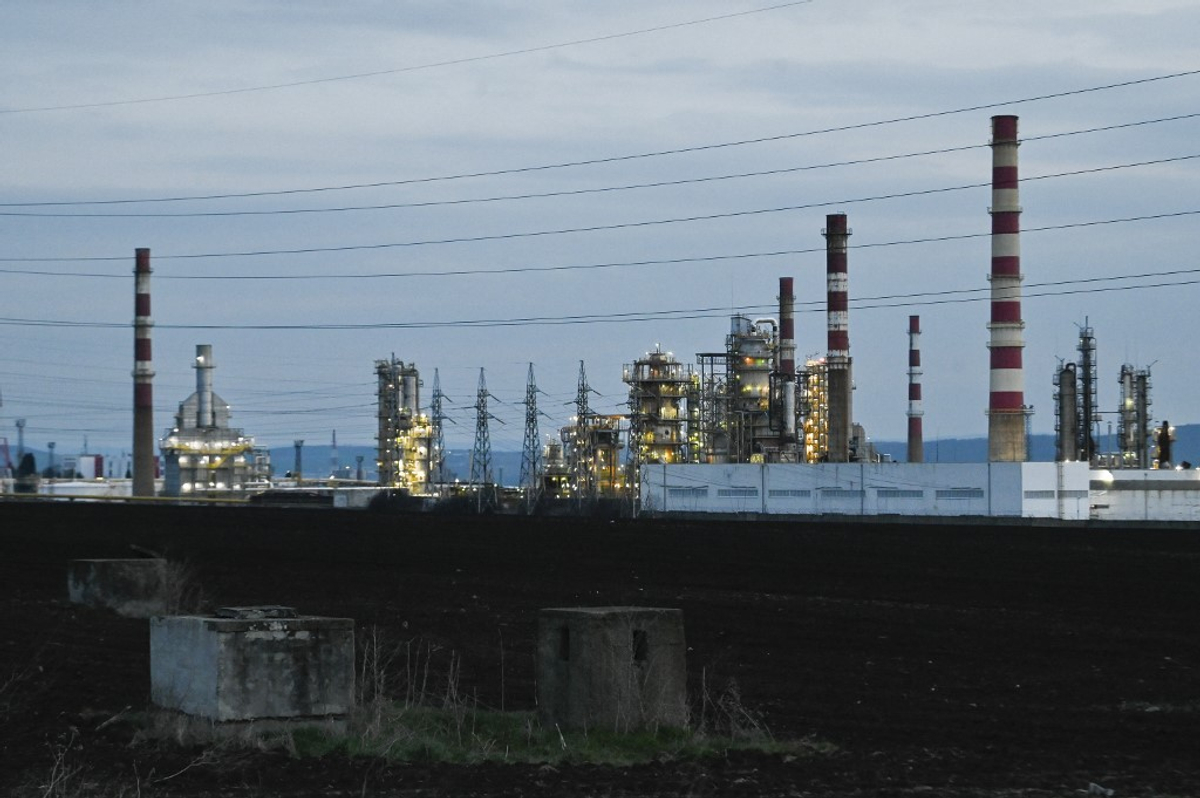
Bulgaria is drafting a new law that would enable it to seize and sell its only oil refinery from sanctioned Russian oil giant Lukoil, Bulgarian media reported on Wednesday, as per Reuters.
On Thursday, President Volodymyr Zelensky held a conversation with Bulgarian Prime Minister Rossen Jeliazkov.
Follow our coverage of the war on the @Kyivpost_official.
“We discussed strengthening energy cooperation and agreed on steps that will enhance energy security in our region. There are concrete decisions, and we will certainly implement them,” Zelensky wrote on X.
It seems possible that these concrete decisions may involve the Burgas oil refinery, which is owned and was until recently operated by Russian oil company Lukoil.
Lukoil, along with fellow Russian oil giant Rosneft, was hit with shock US sanctions last month – a move representing the first major US sanctions against Russia since US President Donald Trump was re-elected.
On Oct. 27, Lukoil announced that it was seeking buyers for its foreign assets due to “the introduction of restrictive measures against the Company and its subsidiaries by some states.” Three days later, it confirmed that it had accepted an offer from Swiss trader Guvnor.
However, Reuters reported on Thursday that the sale may be less of a done deal than it seems. In terms of equity, Lukoil is three times the size of Guvnor.
Burgas is Bulgaria’s only oil refinery. Sofia may be reluctant to wait while Guvnor attempts to borrow the funds it needs to honor the Lukoil deal.
Other Topics of Interest
Orbán Dismisses Claim That Hungary Owes Ukraine for Protecting Europe
Despite being part of the European Union and NATO, Hungary has maintained cordial relations with Moscow and regularly opposed support for Ukraine and restrictions on Russia.
As per Reuters, the draft legislation reportedly proposed by the government would enable Sofia to appoint a “special manager” to oversee the refinery’s sale. Lukoil would have no say in who Burgas was sold to.
The special manager would also ensure that the refinery’s operations continue throughout the sale process to prevent a supply crisis.
UTrump’s unexpected sanctions on Lukoil and Rosneft have already had an impact on Bulgaria’s economy. On Oct. 31, the parliament in Sofia voted to temporarily restrict petroleum exports, including to other EU countries, in order “to guarantee the country’s energy security and the stability of the domestic fuel market.”
Writing on X, Jelazikov described his conversation with Zelensky, which covered regional energy and Black Sea security, as “productive.”
“Bulgaria remains a reliable partner of Ukraine in its pursuit of territorial integrity and economic stability,” he added.