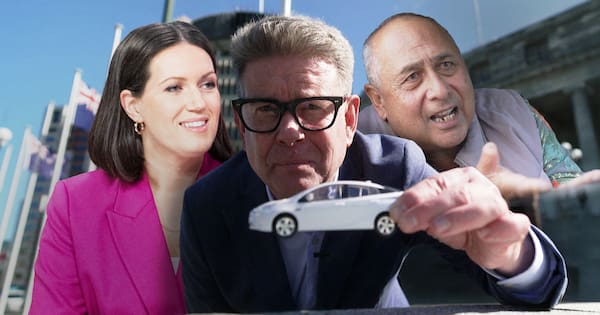
ACT Minister Brooke van Velden’s says her proposed Employment Relations Amendment Bill will increase flexibility for both contract workers and business owners. But could it see more and more Kiwi workers toil for low pay and zero holiday and sick leave, as is already the case with many Uber drivers? By John Campbell
Sometimes, the crumbs only lead to other crumbs.
Marie Aldcroft, an organiser with Workers First Union, is sent weekly earnings figures by some of the roughly 1000 Uber drivers she and the union represent.
‘Nobody’s forcing people to work for Uber’ – Watch this story on TVNZ+.
One driver agreed their statements could be forwarded to me. They’re open on my computer now.
Week by week, that’s an average hourly rate of $15.00, $18.00, and $18.50. “Net” is after Uber’s deduction, but before the cost of buying an Uber-approved car and keeping it on the road. For context, the minimum wage is $23.50 and the living wage (in these high-cost times) is $28.95.
“Uber offers the opportunity for drivers to earn an income any time, anywhere,” the company’s lawyer told the Supreme Court, in July.
That’s true, of course. But “opportunity” doesn’t axiomatically mean income. “I’m in here on my own way more often than I have a passenger,” one driver told me. The loneliness of the short distance ridesharer.
“Our whole goal is to drive the cost of taking an Uber BELOW the cost of owning a car,” Travis Kalanick said, in 2012, about the company he founded and would later sell his shareholding in for US$2.5 billion. And what external cost can Uber most efficaciously control to achieve Kalanick’s “BELOW”? Labour. Not their labour, obviously. Uber don’t employ anyone in this country. (Well, perhaps half a dozen lawyers, lobbyists and admin people.) The BELOW is borne by the drivers.

Many of the Uber drivers I’ve spoken to, over more than three years now, have told me they regularly don’t earn minimum wage. On bad days, and drivers say there are more of those now, it’s not even close. And the living wage is Mars.
One night in early October, the Uber I took home was driven by a man who’d logged on just over nine hours earlier. He’d made $150 in that time. That’s not quite $17.00 an hour. One driver told me he’d recently made $30 in five hours. Marie Aldcroft told me she sees drivers making as little as $13.00 an hour in the course of a week.
“BELOW”.
Uber vs four drivers in the Supreme Court
Uber New Zealand, the corporate entity, that appears to have not so much as an office in this country, has just been in the Supreme Court appealing the Employment Court’s decision that four of its drivers should be treated as employees, not contractors.
This is a battleground of immense significance – and not just for rideshare drivers and gig workers. Potentially, at some time in not too distant future, for all New Zealanders.
The Appeal Court, which upheld the Employment Court decision (which is the reason Uber went to the Supreme Court), defined the value of being an employee: “employment status is the gate through which a worker must pass before they can access a suite of statutory minimum employment entitlements, such as the minimum wage, minimum hours of work, rest and meal breaks, holidays, parental leave, domestic violence leave, bereavement leave and the ability to pursue a personal grievance.”
No wonder drivers want it. No wonder Uber don’t.
And us? The passengers sitting in the backseat? How little are we prepared for our driver to be paid?
“You know”, Jon Duffy, CEO of Consumer NZ said to me, “what is the true price of goods when you factor in what economists call externalities? You know, the effect on the environment, the effect on workers and their lives and things like that? Actually, in some instances, and I know I represent consumers, but in some instances, we should be paying more for the products that we consume than we are, because they have these flow on effects… particularly when it comes to workers’ rights, that aren’t factored into the price, and so someone’s getting shafted somewhere along the line.”

And so here the country is – with the Supreme Court considering whether the four Uber drivers who took (and won) the original case have the status of employees, or that of contractors, with all that doesn’t contain. There are roughly 11,000 Uber drivers in this country. Some are out there now. Circling our cities in perpetual motion. Moving endlessly towards the gig economy’s equivalent of The Great Gatsby’s green light. The “future that year by year recedes before us”.
A business model built on cheap labour?
The Supreme Court operates like a spectacularly brainy law tutorial – judges directly question the lawyers acting for the appellants (in this case, Uber) and the respondents (in this case, the E tū and Workers First unions). Arguments are advanced, considered, repelled, tested, digested – and some will survive to reappear in the (yet to be released) judgment by the five judges who heard them.
(This judgment may be profoundly consequential, but so too may be the political response to the issues it canvasses – more on that, including the minister herself, later.)
There was one exchange in the Supreme Court that I can’t help feeling contained significantly more than its 28 words. A sweeping consideration was taking place, of the potential impact of drivers being declared employees. And the Honourable Justice Forrest Miller asked: “Minimum pay, how would that work?”
Acting for Uber, Paul Wicks KC replied: “Minimum wage, I haven’t turned my mind to how Uber might operate under an employment model, if it was even prepared to.”
“If it was even prepared to.” That’s a hypothetical, of course. A lawyer responding to a question more entangling than it first appears, in the country’s highest court. Still, is it possible that Uber’s business model only survives by being recused the requirements of an “employment model”, including minimum wage? Is an expectation of cheap labour built into the model? And who, other than Uber, wins out of that? And is it a model available to other companies? And where is that leading us?
‘Stand up and fight for your children’
These questions led me to Wellington.
Learning there was a union meeting of drivers taking place, and that Lalogafau Mea’ole Keil would be there (one of four drivers who were victorious in the Employment Court’s historic ruling), cameraman Rewi Heke and I went to film it.
There were roughly 30 drivers present. All of whom had once believed that Uber would offer them flexibility, independence, a reasonable income– not great, obviously, but enough to get by on – and the odd weekend off. Ordinary things, which seem illusory when you don’t have them, and when your life feels indentured to your own car.
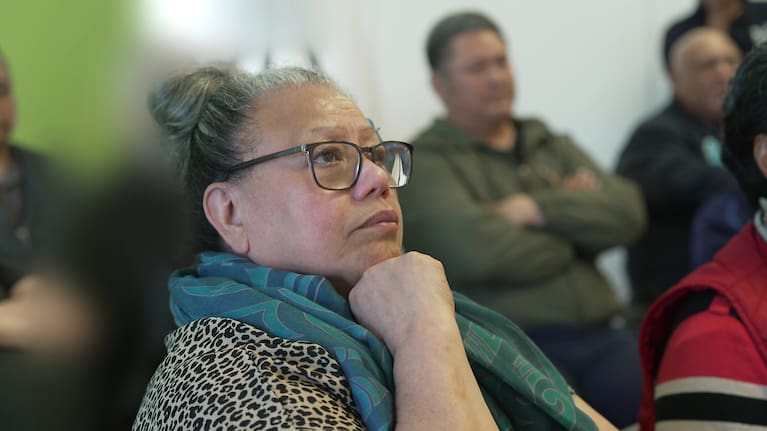
Run by John Ryall – volunteering now after decades in the union movement – it was upstairs in the Ākau Tangi Sports Centre, in Kilbirnie – school holiday programmes echoing their happy chaos beneath us.
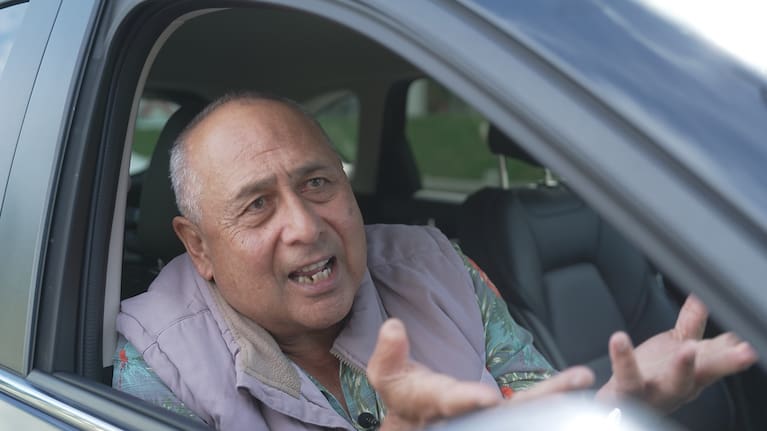
Mea’ole Keil thought the presence of young people contained a reminder. “As a parent and a grandparent,” he said, “if you don’t stand up and fight now, your children and your grandchildren, the young ones, will suffer this sort of thing. You can’t allow it to spread.”
I asked the drivers how many of them drove for Uber as a more-or-less full-time job. Nearly all of them did. And all of them had, at some stage. I asked how many of them had earned less than minimum wage during the course of a full-time week? All of them. How many of them had struggled to pay basic bills on the income they made? All of them.
That last question provoked an almost raucous response. “Put two hands up,” someone said. There was laughter, the way you laugh when you realise life isn’t turning out like it says in the brochure.
(You can watch all of this, including the extraordinary moment when a driver is “deactivated”, on TVNZ+.)
I asked Marie Aldcroft if the Uber drivers get annual leave? “No.”
Do they get sick pay? “No.”
Do they get anything other than the money that comes through the app? “No.”
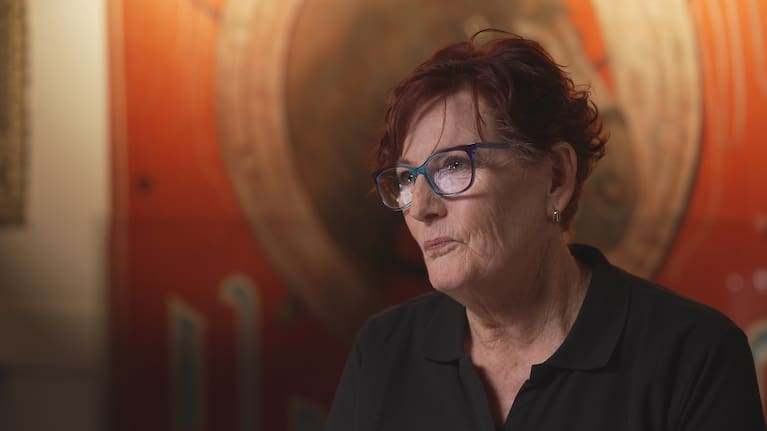
Van Velden: ‘This area of work is only going to increase’
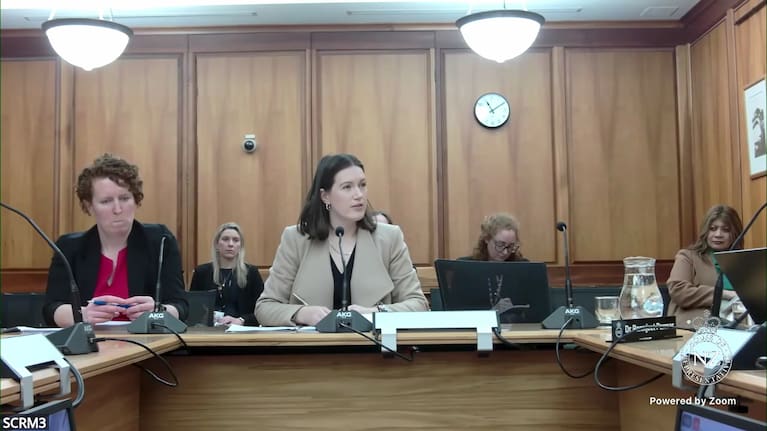
In August, appearing before Parliament’s Education and Workforce Select Committee, Workplace Relations Minister Brooke van Velden defined part of what distinguishes employees from contractors.
“Of course, employees, you know, receive sick leave and holiday pay, whereas contractors that’s part of their overall pay package.”
Is it? If Uber drivers, for example, are sometimes not making minimum wage, if their hourly rate can be as low as $13 or $15 or $17, how does the “sick leave and holiday pay” van Velden refers to enter “their overall package”? When does that happen? And from whom?
In the same hearing, the minister declared: “We know, or at least I believe, that this area of work is only going to increase, over time, as more and more people use digital platforms.”
But an increase in this area of work doesn’t seem to be leading to an increase in those workers’ rights. Van Velden’s Employment Relations Amendment Bill is designed, in significant part, to achieve a greater and more declaratory separation of employee and contractor.
“Flexible labour markets are the best environment for businesses to grow,” she told parliament, during the Bill’s first reading.
“Currently a contractor can challenge their employment status in law despite being a contractor. This creates uncertainty and extra costs for business, potentially placing at risk various business models that use contracting arrangements,” she said.
Here we are again, as with the Supreme Court’s question about what might happen if Uber was required to pay drivers the minimum wage – this half sense of a business of such fragility that existing labour market settings are too tough to do business within.
“I try to push the limits,” Travis Kalanick said. “Pedal to the metal.”

In May 2024, Uber pedalled the metal all the way to the Minister’s office.
Brooke van Velden’s ministerial diary gives no details, other than that the meeting occurred, a fact first revealed by RNZ’s Lillian Hanly the following month.
But MBIE (Minister of Business, Innovation and Employment) documents help us to join the dots. An Aide Memoire, dated April 29, 2024, two days before the meeting, states: “Uber is interested in your priority to increase certainty for contracting parties… Uber views employment law as uncertain and proposes amending the Employment Relations ACT 2000”.
Uncertain. Uncertainty (the minister used that word four times in her first reading speech.)
But broadly, that had indeed been ACT’s position, and Brooke van Velden is an ACT Party Minister.
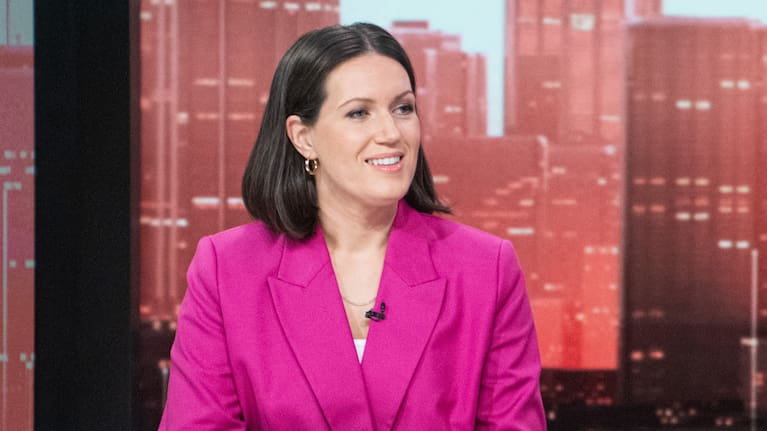
Indeed, ACT’s 2023 coalition agreement with National lists the following ambition in the “Employment” section: “Maintain the status quo that contractors who have explicitly signed up for a contracting arrangement can’t challenge their employment status in the Employment Court.”
So, ACT and Uber were already aligned, and also, possibly, similarly out of sync with the Employment Court, because the “status quo” ACT wanted to maintain had allowed four Uber drivers to challenge their employment status and win.
“Each of the plaintiff drivers,” Chief Judge Christina Inglis concluded, “was in an employment relationship when carrying out driving work for Uber and is entitled to a declaration of status accordingly.”
That’s the four drivers who took the original case, including Lalogafau Mea’ole Keil, who we met earlier.
Uber appealed.
And while the Appeal Court upheld some aspects of the company’s case, the Court concluded, in four extraordinarily matter-of-fact words: “The appeal is dismissed.”
One aspect of the Appeal Court’s judgment is worth quoting at greater length: “The real nature of the relationship between the four drivers and Uber was that the drivers were employees of the Uber companies at times when they were logged into the Uber driver app. They were not carrying on their own independent transport service businesses during these periods. The conclusion reached by the Chief Judge was correct.”
And that broad process of action and appeal, drivers and unions versus Uber, what was figuratively a head-on collision over the rights of Uber’s “contract drivers”, was the background against which Brooke van Velden and Uber met.
Uber’s wishlist and van Velden’s proposed Bill
At the Education and Workforce Select Committee in August, under questioning from the Green Party’s Teanau Tuiono and Labour’s Jan Tinetti, the Workplace Relations and Safety Minister made a kind of ad hoc rebuttal.
“I don’t work for Uber,” Brooke van Velden said. “I don’t work for anybody but the government and being a member of Parliament.”
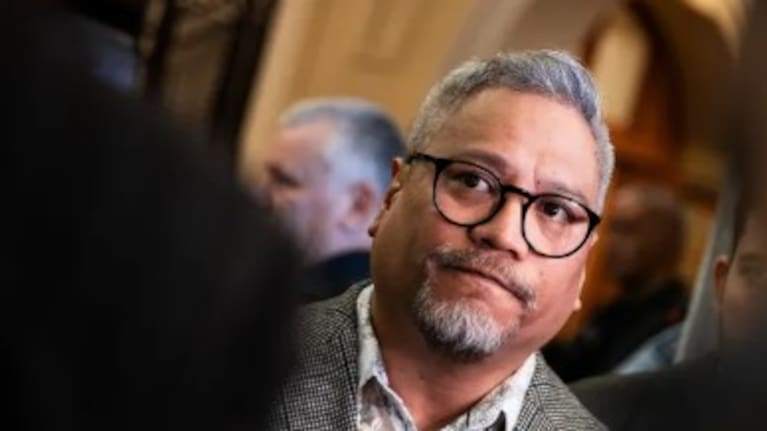
Tuiono and Tinetti sought to interrupt her, but the minister pushed on. “Now, I think it’s really important, because the opposition has made it quite clear that they believe this is the Uber law. That is not true.”
The Uber law?
The Employment Relations Amendment Bill contains reforms across broad areas of employment law, not just in sections material for Uber and its contract driver model. It’s also consistent with ACT’s election policies, with the coalition agreement between ACT and National, and with the ACT party’s ideological worldview.
The minister insists that ministry officials spoke to seven unions.
But, and law firm Dentons Kensington Swan described it matter-of-factly: “The first major area of change set out in the Bill amends the definition of ’employee’ to specifically exclude a specified contractor.”
And it’s here, if you’ll forgive a metaphor younger readers may find incomprehensible, where the Bill’s language and the wish-list Uber took to the Minister are as difficult to tell apart as some of the Osmond siblings.
‘Deep in the pockets of Uber – Government accused of copy-pasting company’s position’, RNZ headlined its story in October 2024, quoting the Green Party’s Teanau Tuiono. “What they’ve done essentially is just cut and pasted what they’ve wanted. They’re copying someone else’s homework, a company – Uber in this case, and just dropping it in there.”
Law News, the weekly publication of The Law Association of New Zealand, conducted an almost forensic comparison. ‘Minister adopts Uber’s wish-list when drafting employment law changes’, Law News headlined their forthright analysis, in July. At the end of that article, Law News presents a game of “spot the difference?”, comparing Uber’s wish-list with a section of the Employment Relations Amendment Bill.
Spoiler alert, if you’re intending to play, there’s hardly any difference at all. Law News even ruins its own game by telling us that. Workplace Relations Minister Brooke van Velden “adopted almost verbatim law reforms drafted by Uber, government documents reveal.”
And the area concerned? That “gateway test” to determine if workers should be classed as contractors or employees.
Is US business influencing NZ government?
Edward Miller is a researcher at The Centre for International Corporate Tax and Accountability Research and previously researcher and policy analyst at (Workers) First Union, which now has roughly 1000 Uber drivers on its books.
So, he’s got flesh in the game.
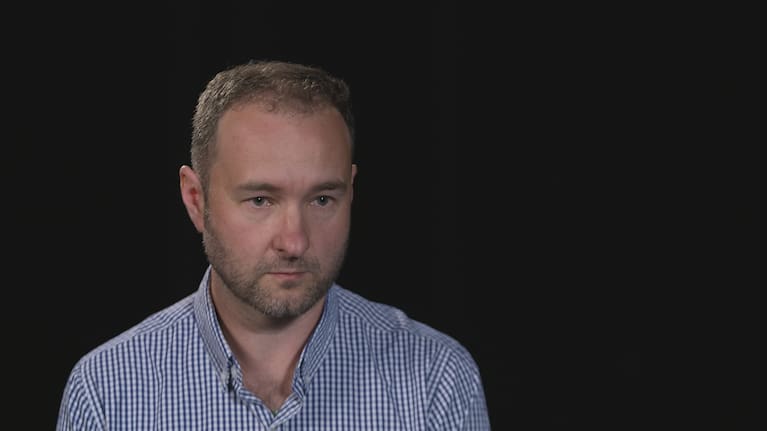
But he insists his position is empirical. How, he asks, does a company that, in 2024, earned $402 million revenue in New Zealand and paid less than $1 million in tax, a company that has gone to the Supreme Court to argue it doesn’t employ its drivers, a company as foreign as moonrock, have, prima facie, an influence on employment law in this country?
“Uber has been pushing the minister to adopt their version of what a labour law should be, to keep Uber drivers as contractors”, Miller told me.
“Countries like New Zealand are in a very vulnerable position when dealing with a company of this size, and should be really thinking about, how do we get ourselves in a position to be able to push back against this? Because if we don’t do it in the case of the taxi and delivery industry, which other sectors of the economy is Uber going to be able to push its labour and tax model into?”
It may not be Uber, of course. It may be another company entirely. But once the pedal has reshaped the metal, the old shape doesn’t easily return.
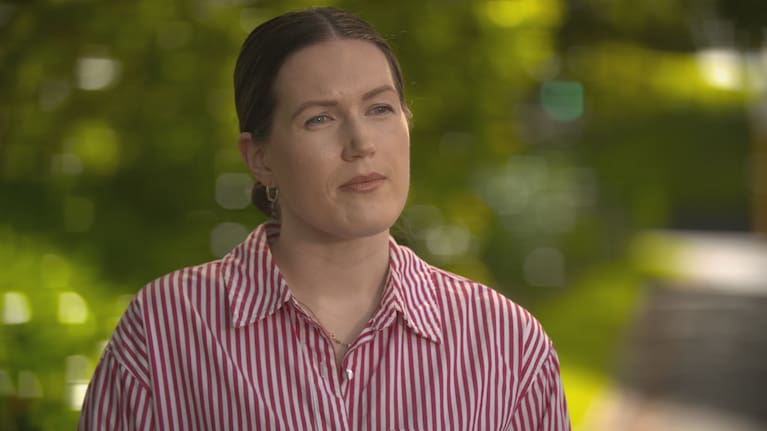
A meeting with the minister in Meadowbank
And so where are we?
Well, public submissions on the Employment Relations Amendment Bill have now closed, and the Education and Workforce Select Committee is due to report back before the end of this month. The Supreme Court will release its judgment when the Supreme Court is good and ready to release its judgment (that’s why it’s called “Supreme”).
And if the Supreme Court asserts that the Employment Court, then the Appeal Court got it right, and the four drivers, including Mea’ole Keil, were indeed employees of Uber, not contractors to Uber, what then? Will it be a precedent that opens floodgates?
Or will Brooke van Velden’s new Bill sufficiently alter the playing field for the judgment to only temporarily hold sway?
And what does the minister say to this? After to’ing and fro’ing with her office, off and on, for three or four weeks, we were told she’d be free at 3pm on Friday, October 31. The problem? It was 2pm and the minister was in her electorate office in the suburb of Meadowbank.
We scrambled and arrived at her tiny office, upstairs in the Meadowbank Shopping Centre, by 3pm. Outside, the good people of her electorate visit Alex the Cobbler, Dental Wellness, Meadowbank Family Doctors, Elegant Nails, Ray Pharmacy… .
Brooke van Velden won Tāmaki for ACT in 2023. For the previous 63 years and 21 General Elections, Tāmaki had voted National. There were times when it felt like National could have stood an ass in Tāmaki and won. You don’t underestimate a politician who snatches an electorate like that.
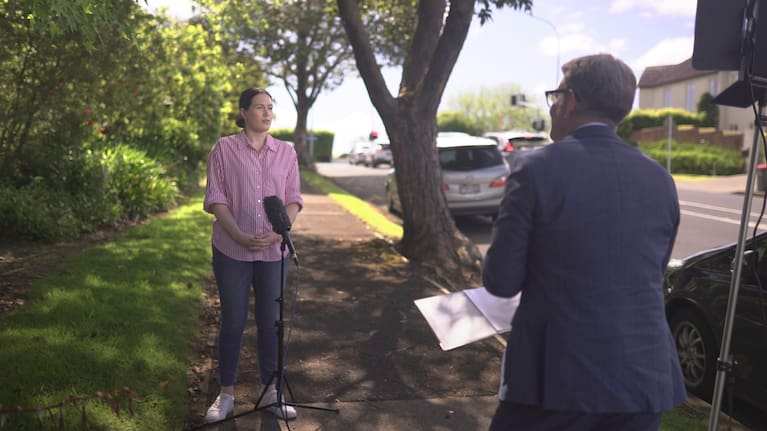
Van velden told us she had another appointment at 3:30pm. Time was running out. So Phil set up out on the footpath, and as the afternoon traffic crawled past, parents and carers collecting children from school, early commuters heading into the weekend, rideshare drivers dreaming of a forty dollar fare, we talked Uber and the future of work.
‘There are two people in a contracting relationship’
“There are a lot of people who like the flexibility of a contractor model,” Brooke van Velden tells me, out on the Meadowbank footpath.
“You think of mums wanting to go back to work part time. You think of students who want to be able to fit work around their student arrangements. There is a place for contractors in New Zealand, and I think around one in 20 people who are working in the country are contracted. So yes, there is a place for contracting.”
That, according to Stats NZ, is 144,000 people. That figure appears to date from late 2018. If so, the number will almost certainly be higher now.
But even that is inexact. As Stats NZ pointed out in their information release at the time, “the distinctions between employees, self-employed contractors, and other types of self-employed people are not always clear-cut.”
And then – and the minister didn’t refer to this – Stats NZ offered an unusually opinionated piece of commentary: “While self-employment has traditionally been regarded as giving people more independence than waged or salaried employment, this is not always the case with contracting. Some contractors depend on a single business or organisation for their work. Anecdotally, we know that some are treated much like employees, but without the benefits and protections of an employment contract.”
And perhaps that is the issue? The absence of benefits and protections. And the increasingly large number of people working without them.
I asked the minister about that. I asked her about the drivers I’ve spoken to doing 50, 55, 60 hours a week, and sometimes not making minimum wage.
“Look, I can’t talk about any specifics to do with Uber because they’re cases before the Supreme Court, so I’m not going to touch on that.”
I asked the minister about the general principal of drivers, contractors, earning less than minimum wage – setting aside the four drivers in the Supreme Court case. Is that a model she supports?
“What I’m happy with is people who are knowingly signing up to contracts that they are happy with. There is a place for employment. There is also a place for contracts. There is a place, John, I think the thing that you’re not quite recognising here is that, in order to be a contractor, there have to be two people in a relationship. That is the person wanting to give the contract and the person taking on the contract. Nobody is forced into a contracting relationship. That is actually the whole purpose of contracting.
“People who are contractors don’t have to take on work. They can, of course, if they want to meet this new gateway test, be able to work for others. They don’t have to just work for one company. They can have flexible arrangements and choose and pick the hours and days that they work. They could also subcontract out their work. There’s inherently a good side of being able to be a contract.”
And the Employment Relations Amendment Bill reflects that belief. “The Bill”, the minister said, as she introduced it to Parliament for its first reading, “establishes a gateway test establishing an exclusion from the definition of “employee” in the Employment Relations Act.”
Employee? Contractor? Court? Parliament? Minimum wage? BELOW?
“Ladies and gentlemen”, in the words of the Spiritualised song, “we are floating in space.”
Below us, the planet as we think we remember it. Samuel Parnell. The eight-hour day. The first country in the world to introduce a minimum wage. Labour Day. Jobs for life. The halcyon days – were they as good and golden as the pining heart insists?
Above us, what? What are we floating towards? Freedom. Choice. Flexibility. No safety net.
“The whole purpose of contract work is that people do have choice”, the minister tells me. “They don’t have to take up contract work.”
On Wednesday, November 5, five days after the minister and I spoke, Stats NZ released figures showing the unemployment rate had risen to 5.3%, its highest level in nearly nine years.
“Our government is determined that New Zealanders who are seeking work can find it’, Finance Minister Nicola Willis said.
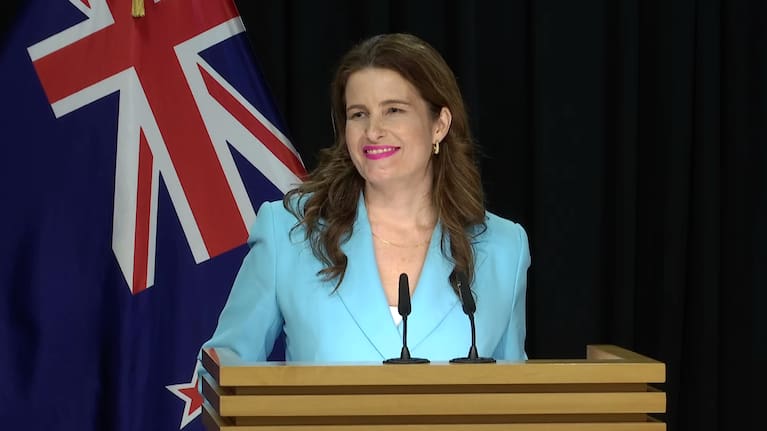
Thousands of New Zealanders are seeking work in their cars. Are they finding it – or they finding the crumbs of a working life?
And if what they’re finding sometimes doesn’t even pay them minimum wage, if what they’re finding doesn’t pay them holiday and sick pay, if what they’re finding can involve working 50 or 60 hours a week, in a car they’ve provided themselves, after which they’re still struggling to get by, then they have the “choice”, as the minister insists, to do… what?
“So what we’re doing here is trying to make it really clear where is the boundary between a contractor and an employee”, Brooke van Velden told me. “Because under employee minimum standards, yes, there is sick pay and holiday pay. That is not the case in contract law, because that is much more flexible.”
Flexibility. Is it a sacred cow or a Trojan horse?
“So in general terms,”, I ask, “are you happy that we have contractors, potentially thousands of contractors, earning less than minimum wage, no security of employment, and not getting sick pay and holiday pay? Is that a model you’re happy with?”
“I’m happy with the fact that there is a flexible labour model, allowing for contract arrangements where people can pick and choose their hours of work, where they can pick and choose what they’re willing to work for,” says van Velden. “That is a good thing to have in our system. And yes, it’s true, when people sign up to a contract relationship, they know that they need to factor in their own holiday time. They need to factor in payments for when they are sick. That is inherently part of a contract relationship, that is not part of the minimum wage or minimum labour standards. Those are separate ideas under the laws of New Zealand. It’s not a hard concept, John. You’re either an employee or you’re a contractor. You can’t be both.”
Who pays for the convenience of Uber?
“There are thousands of drivers in New Zealand for Uber,” the company’s lawyer told the Supreme Court in July, “and the barriers to become a driver are low.”
And that’s the model, in a nutshell. Low barriers, high supply.
It works for passengers. One of the reasons Uber is overwhelmingly number one in the rideshare market, is that there are so many cars on the road.
This is what Marie Aldcroft of Workers First Union told me: Uber “floods areas with numbers of drivers, but then that means that there’s insufficient work to be shared around for everybody to make a reasonable living.”
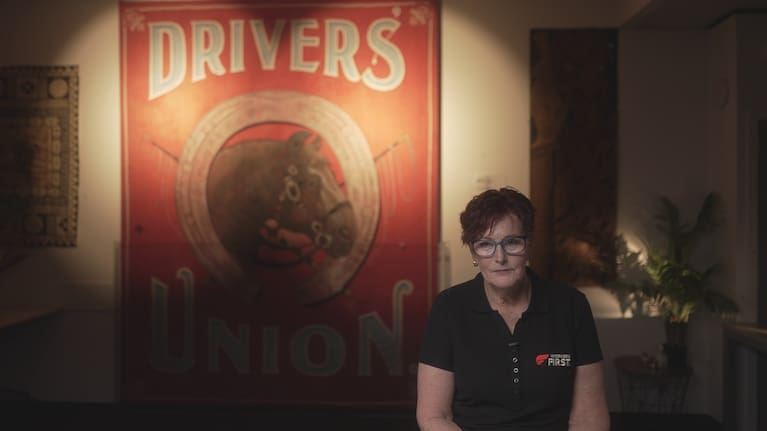
So, when you order an Uber, there’s a high chance there’ll be a car nearby. If it’s a good day, the driver may be dropping another fare off near you, but they’re more likely to be waiting, unpaid.
Five, six, seven minutes? How long is too long to wait for your driver to get to you? The model only works if there are drivers out.
When you attempt to ask questions of Uber you quickly find that the company itself does not work within this model of instant availability.
The company itself does not arrive within minutes. The company itself does not use its app to get someone to you as quickly as possible. The company keeps you waiting.
And then the company does not arrive at all.
This is a company that likes visibility – on its own terms.
Bradley Cooper, Jennifer Aniston, Matthew McConaughey, Javier Bardem, Gwyneth Paltrow, Jude Law, Jennifer Coolidge, David Schwimmer, Victoria and David Beckham, Trevor Noah, Usher, and Charli XCX… Uber loves a celebrity endorsement. Uber loves some people talking about them.

And yet, and yet, here we are again. I phoned. I emailed. I gave them time. I stressed that there is immense public in the issues this story is raising.
No interview. A flat refusal to appear. Again.
As Uber New Zealand appears to have few, or no people at all, in this country available (or permitted) to do media interviews, I offered to fly to their regional HQ, in Sydney. I suggested that their roughly 11,000 contractors deserve to hear them respond to some of the concerns drivers have raised.
They declined.
So, I sent them specific points to respond to. And I asked how they felt about drivers earning less than the minimum wage.
They largely ignored me. But they sent me a statement. A “general comment, to be attributed to an Uber spokesperson”:
“We’re proud of the journey Uber has taken alongside Kiwis since launching here in 2014. Today, Uber operates in over 100 towns and cities, offering tens of thousands of New Zealanders a flexible, reliable way to earn on their own terms, while supporting local businesses and helping consumers to go anywhere and get anything.”
They didn’t give me a name. Uber, who demand more from their drivers thousands of times a day, didn’t even give me a name.
After their “general comment, to be attributed to an Uber spokesperson”, they gave me, quote: “Comment on the Employment Relations Amendment Bill 2025 (to be used specifically in regards to discussion of that topic), to be attributed to an Uber spokesperson”.
Was it the same Uber spokesperson? Or another one? The Uber spokesperson said: “We welcome the Government’s efforts to provide greater certainty around contracting arrangements, which tens of thousands of Kiwis rely on for flexible earning opportunities – nine out of ten say they would stop earning with Uber if that flexibility were taken away.
“We strongly support the intent of the Bill and the clarity it aims to deliver, but, as raised in our submission to the Select Committee examining the Bill, believe important details need refining to ensure it works as intended. Our focus is on protecting the flexibility and independence that driver and delivery partners consistently tell us they value most”.
“Flexibility”. That word, again. The drivers I spoke to told me they do like it. But the thing they would value most is being able to pay their bills after working a long week.
I would have liked to have discussed that with Uber spokesperson. Bradley, Jennifer, Victoria, David, are you there?
In the Supreme Court in July, the country’s most senior Judge, Chief Justice Dame Helen Winkelmann, looked out over the court and asked Uber’s lawyer: “Can I as a driver, give my customer my business card whilst doing an Uber fare? I think that’s not allowed, is it?”
“I understand it’s not allowed”, Uber’s lawyer replied.
Just how flexible do we want our work force to be?
Three years ago, then over the past few weeks, and almost every time I’ve used an Uber in the period in-between, I’ve asked Uber drivers about their working lives.
Some love it. If they have another job and they drive for Uber for a few discretionary hours a week, they tell me it can pay for a holiday a year, or cover the cost of school trips, or some new clothes, or the extras that can make life seem less of an uphill climb.
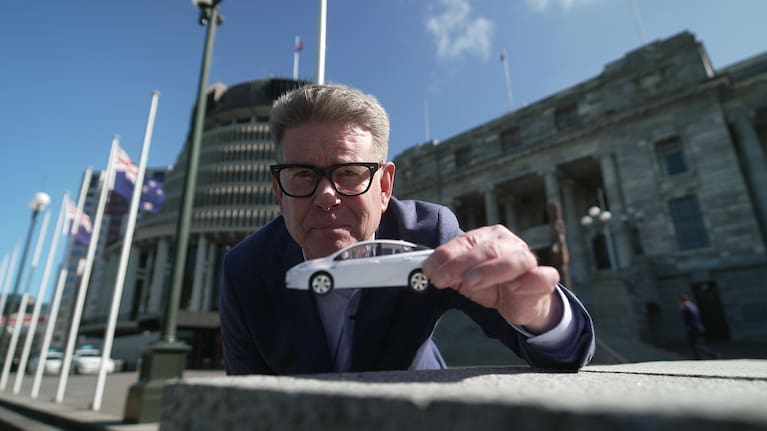
But full-time drivers often describe something less liberating. Long hours. An hourly rate that is sometimes below minimum. And a sense of being trapped. They’re almost always looking for other jobs, these drivers. They’re often qualified enough to have other jobs. And yet here they are.
Uber is built on the back of a brilliant app. But the app meets passengers when drivers are plentiful and cheap.
That model is singular, consistent and unapologetic. Uber essentially went to the Supreme Court to defend it. And in territory after territory, it tests the margins, understanding and applications of employment law.
In 2014, Nairi Hourdajian, Uber’s former head of global communications, sent a message to a colleague about efforts to exert greater control over the company in parts of Asia, “Sometimes we have problems because, well, we’re just f***ing illegal.”
That’s far blunter language than anyone is using here.
The Appeal Court wrote in its judgment on the Employment Court decision: “Are Uber drivers employees of one or more of the Uber companies for the purposes of New Zealand employment law, as the Employment Court concluded? Or are they, as Uber contends, independent providers of transportation services to “riders” and “eaters”, with whom they enter into contracts using software and facilitation services provided by the Uber companies?”
In other words, who do the drivers work for – themselves, with the freedom and independence that entails, or Uber?
Van Velden’s Employment Relations Amendment Bill suggests that Uber’s business model may be a window into the future for more and more New Zealand workers.
“What are the implications for working people?”, Edward Miller asked when he spoke to me. “Not just in terms of the wages that they earn, but in terms of their ability to have decent health and safety on the job? If you’re an independent contractor, what if the Uber labour model starts pushing into increasingly dangerous, high-risk sectors, construction, logistics, agriculture, all of these? It doesn’t sound too difficult to have a contractor model operating within that framework.
“How long until Uber, or an Uber-like company, starts pushing into these sectors and demanding that it gets its way on the model of labour and tax delivery in these sectors?”
How cheap do we want our labour to be?
At the end of her speech introducing the Employment Relations Amendment Bill to Parliament, Brooke van Velden stated that it will lift the value of labour: “The outcomes of these changes will be a more productive economy with higher employment, higher wages, and thriving businesses.”
On the footpath in Meadowbank, when I asked her about the Uber drivers I’ve spoken to for three years now who work long hours, without sick pay or holiday pay, and sometimes don’t even make the minimum wage, she talked instea about the contracting model: “I’m happy with the fact that there is a flexible labour model, allowing for contract arrangements where people can pick and choose their hours of work, where they can pick and choose what they’re willing to work for. That is a good thing to have in our system.”
But is that “flexibility” a sacred cow or a Trojan horse?
‘Nobody’s forcing people to work for Uber’ – Watch this story on TVNZ+.