
After a fast-paced summer at the Grapevine, I decided to take an overdue summer vacation in October. While packing my bags for the Netherlands, I perused the programme for Eindhoven’s Dutch Design Week, which I was planning to spend a few days exploring. As I scrolled through exhibitors and projects, my eyes jumped to some familiar words: Skraf by Studio KE&PB. Â
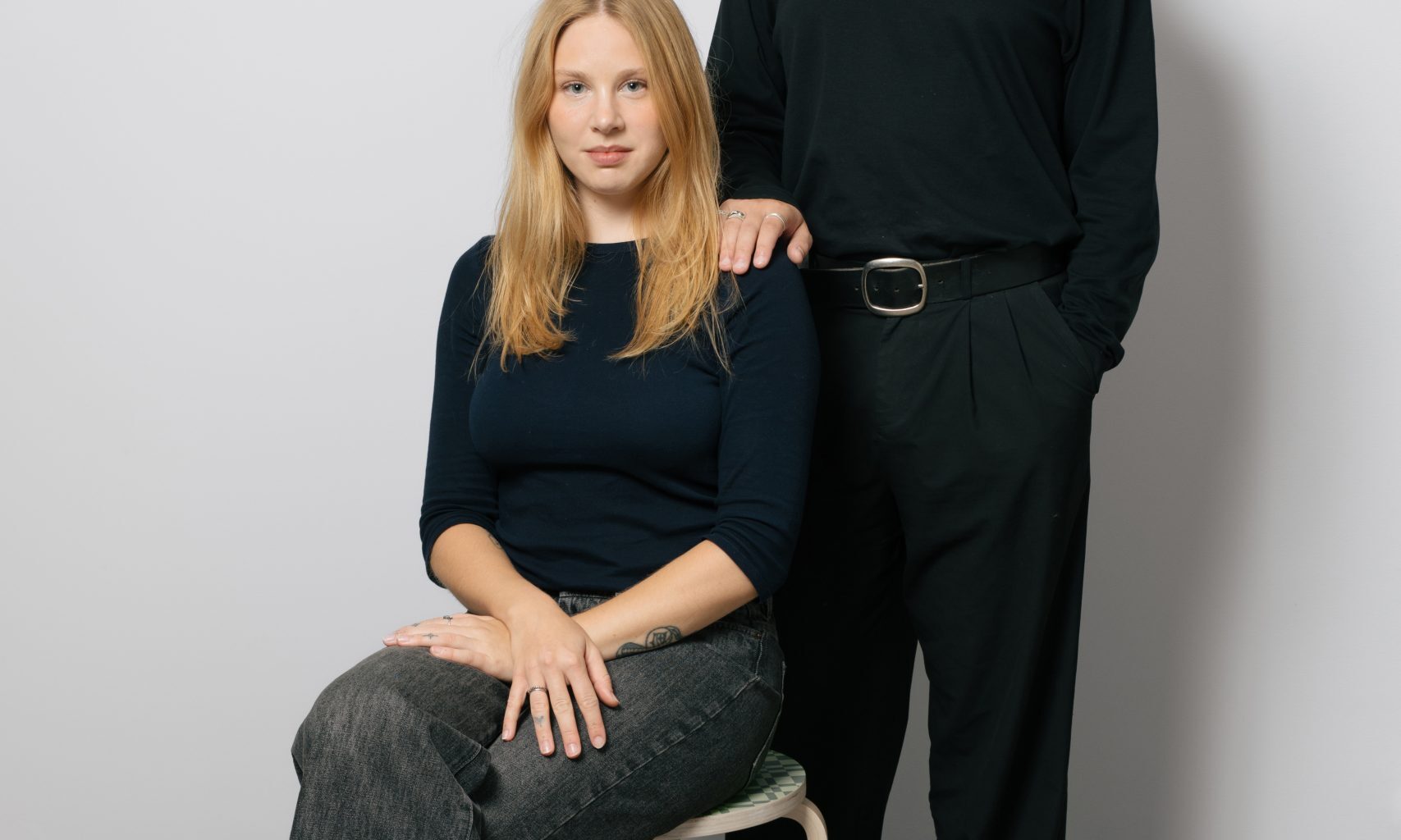
Studio KE&PB is the collaboration of Icelandic graphic designers Katla Einarsdóttir and Patrekur Björgvinsson, whose ongoing project — Skraf — I first heard about this summer while they had a residency at Hönnunarsafn Ã�slands. I missed their residency, so catching the designers at Dutch Design Week would have to do. Â
Let’s meet at the KetelhuispleinÂ
For the uninitiated (as I was before my visit), Dutch Design Week features 2,500 exhibitors showcasing works across the southern city of Eindhoven. The festival envelops Eindhoven; works are shown in warehouses, art museums, and cafés, and students take over an entire parking garage with their graduation projects. In one outdoor area, the Ketelhuisplein, a swath of installations in freshly constructed greenhouses explore municipal problems in the Netherlands and some potential solutions.Â
But standing alone and unsheltered is a modest structure of wood with four squares of colourful patterns attached, almost tenting it. There stand Katla and Patrekur, who corroborate what I’ve been noticing about their exhibition area. Â
“We have gotten feedback that our little structure is nice because it’s the only non-commercial thing here at the Ketelhuisplein, or it’s not tied to any kind of foundation or the government,â€� Katla says. “It’s something that I also like, that there’s no connection to any establishment. It’s just language and expression, colours and fun.â€�Â
Dynamic duoÂ
Both are studying in the Netherlands — Katla in Rotterdam and Patrekur in Eindhoven — but started collaborating as they were getting bachelor’s degrees at the Iceland University of the Arts. They paint downtown ReykjavÃk as the scene for their duo’s outset, with Katla laughing, “Every time we went out, we would find each other and be like, ‘We just need to work together! We just need to do some project together!’â€�Â
“We have some complementing abilities,â€� she states. “I feel like everything I suck at, Patrekur is really good, and maybe vice versa.â€� Â
“She has a really active mind, which I think is a nice combination with me being a bit strict,â€� Patrekur adds. “He is the one that’s better at communication and keeping our stuff together in a very neat way, but not too rigidly,â€� Katla says. Â
The two have completed several projects as Studio KE&PB: an identity for art festival Rökkvan, design and layout for Verzlunarskólablaðið and the book Gamli bærinn à Hvestu, nú à Andahvilft by Tómas Guðbjartsson, and more. But as they entered this summer’s residency, they aimed to work on just one project of theirs: Skraf. Â
Havin’ a chatÂ
Skraf, which is a word for “conversationâ€� in Icelandic, is a pattern language. Utilising a specific style of Icelandic pattern-making named “salún,â€� Katla and Patrekur created an alphabet with distinct variations of the pattern for each letter. When strung together, each word or sentence forms a new, unique pattern within this style.Â
Katla has a strong background in folk arts and crafts, and the two came up with the idea after she heard about the Icelandic Textile Centre’s open database of weaving patterns. “I think the idea of Skraf sparked from, ‘How can we kind of take this database that exists and kind of…’â€� Katla begins, with Patrekur continuing, “apply meaning to it, so it makes sense now.â€�Â
As the two thought about how to apply meaning, they conducted research. “Historically, women have been using crafts to send secret messages,â€� Katla explains. In the Second World War, for instance, “the way women were knitting had to be deciphered. They were messages to go between cities and countries in Europe at the time.â€� She concludes, poignantly, “It’s interesting how history remains in the threads.â€�Â
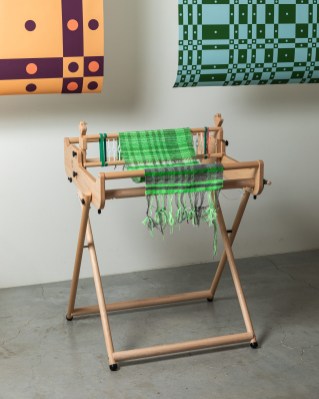
Photo by Studio Fræ
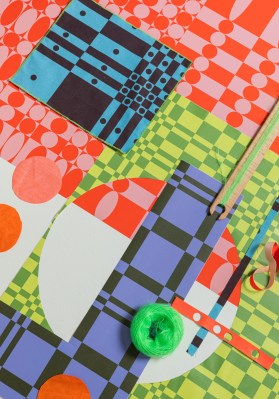
Photo by Studio Fræ
Learning a new languageÂ
They began to use their new alphabet to imbue the patterns with literal meanings. In the project’s early stages, each pattern took significant time and effort to create as they referred back to their alphabet, moving slowly like a child practising their handwriting. Then, a crucial upgrade came during their residency, where a summer employee — DavÃð Einar Ingólfsson — created a code that transmutes words into their pattern language. Â
“This code really saves us a lot of time, and also moved us one step closer to making this an open source tool,â€� Katla explains. “In the future, you can hopefully download it like a font and use it in your own practice, whatever that might be.â€�Â
As they continued to create patterns, they began to learn their new language themselves. “You can read the pattern if you learn the language,â€� Patrekur says. “I can recognise a few letters at least, but sometimes we used to hang stuff upside down without realising it. Now we can recognise it, we’re slowly getting there.â€�Â
Summer of patterns and partiesÂ
Towards the end of their residency, they hosted the curiously named “Dinner Pattern Party.â€� Advertised with a photo of the two of them at a dinner table, their patterns were displayed on napkins, banners, tablecloths, coasters, all around them — there was even a long strand of patterns that Katla was feeding to Patrekur like spaghetti. I was left confused when I heard about this event. Was there actually going to be food? Or just fabric? Were they going to be just the two of them at a table, while we observed? Â
“We did a whole dinner party,â€� Katla states. The event was proper and bountiful, complete with cucumber sandwiches, Royal pudding, and glassware supplied by fellow ReykjavÃk designers HvÃslustell.Â
“The funny part about this language is, you can only see it. You can’t talk it.�
“We decided to use [Skraf] as a tool to present food, rather than it being the object. We made a lot of food, planting the Icelandic tradition into it. We got a book from [Katla’s] grandma,â€� Patrekur says, then Katla continues, “We just wanted to invite people into the patterns, and to interact with them a bit. And the funny part was then people ate what was exhibited. And everyone that came kind of late, they just saw crumbs and random pieces of napkins.â€� The two of them laugh. “Which was also fun, because it’s rude to be late to a dinner party,â€� Katla concludes.  Â
Reading and writingÂ
“The funny part about this language is, you can only see it. You can’t talk it,â€� Katla notes. As a solely visual language, communicating through Skraf is a slower process than we’re used to. Patrekur elaborates on this, explaining, “Everyone’s talking about that you’re always available on your phone and you are expected to answer everything really quickly.â€� Katla adds, “In theory, you could make yourself incredibly unavailable by only communicating with cryptic patterns. So, every time, people stop wanting to message you because you answer in pattern codes.â€�Â
They have further hopes for people engaging with Skraf. A consistent theme is making their code open source, so more people can play with their alphabet and create their own patterns that they can use however they want. “We remove the fact that you need to have all of the knowledge of being a textile designer to use the patterns.â€� Katla explains, “But you can do both, you can weave them. And we have actually had my mom weave the patterns in the traditional salún way.â€�Â
The two designers reminisce on the pattern Katla’s mom wove, which read, “Don’t Speak,â€� referencing the No Doubt song. Now, in Eindhoven, they exhibit a piece with the phrase “Do you understand me? Would you like to?â€� Â
Speculating on the project’s future, Katla says that, “In graphic designer years,â€� Skraf is now a teenager. “It’s entering a rebellious era,â€� the two of them laugh. “We have a lot of ideas.â€� Â
Keep updated on Katla & Patrekur’s projects and studio by following @studio_keogpb on Instagram. Â