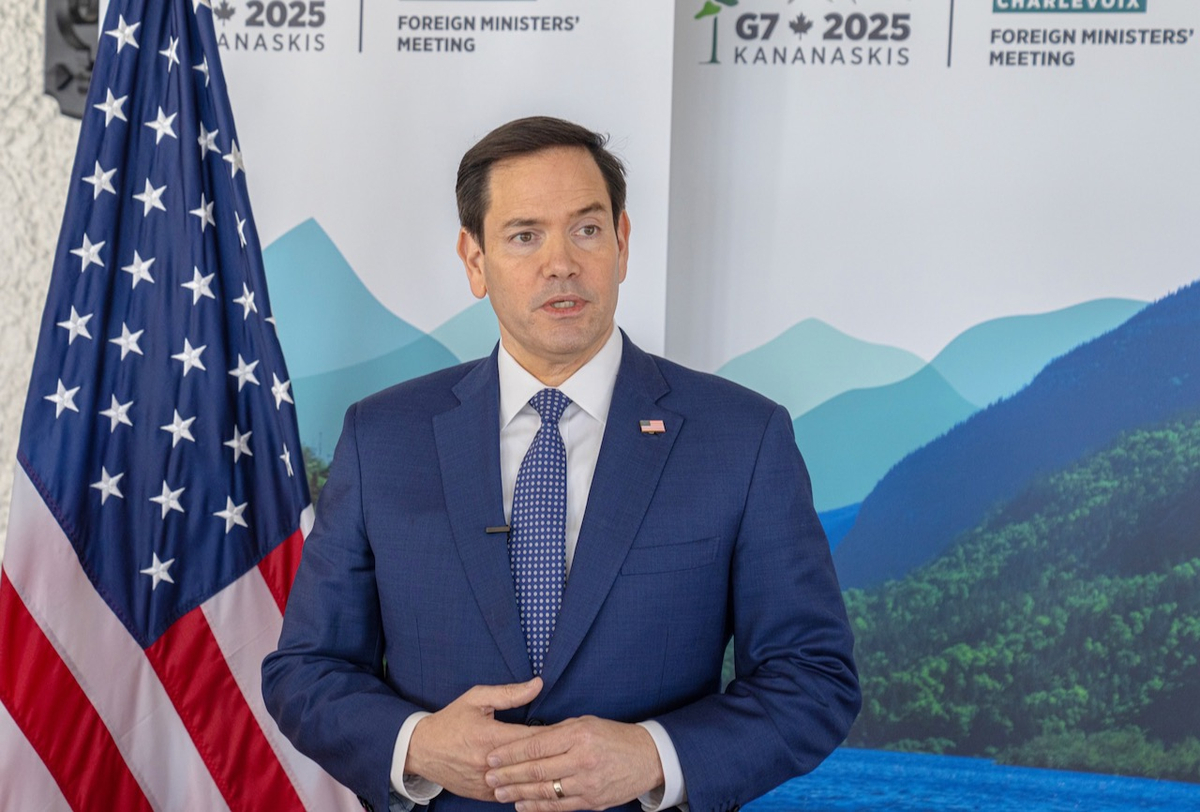
NIAGARA, ON – US Secretary of State Marco Rubio arrives today in Canada’s Niagara region for a meeting of the Group of Seven (G7) foreign ministers, carrying the weight of President Donald Trump’s recalibrated approach to Russia’s war in Ukraine and a protectionist-tinged foreign policy agenda.
Rubio is expected to press ahead with what the administration calls “President Trump’s peace initiatives in Ukraine and Gaza” while engaging allies on a wide slate of global crises – from Haiti’s spiraling insecurity and Sudan’s civil war to the fight to secure maritime trade routes.
Follow our coverage of the war on the @Kyivpost_official.
Critical minerals and supply-chain resiliency – core to Trump’s “economic security is national security” doctrine – will also dominate the two-day summit.
“Secretary Rubio will advance US interests in peace and security, strategic cooperation, and global stability,” State Department’s Principal Deputy Spokesperson Tommy Pigott said in a statement.
Ukraine peace vs. weapons divide
The meeting, set for Tuesday and Wednesday, faces immediate turbulence over Ukraine. G7 members failed to present a united front on Russia’s invasion at the leaders’ summit in June – and the political fault lines have only deepened since.
Last month, Trump publicly urged Ukrainian President Volodymyr Zelenskiy to cede territory to Russia in exchange for peace – a stance directly at odds with Kyiv’s pleas for more Western weapons.

Other Topics of Interest
The Kremlin’s Secret Playbook: How Power Shapes Minds
Authoritarian control relies on psychology, not just force. Dr. Eric Shiraev explains how Putin’s regime weaponizes fear and myth – and how truth can fight back.
And just last week, Trump signaled that he is “not really” considering supplying Ukraine with long-range Tomahawk cruise missiles, though he left open the possibility of changing his mind – further evidence of Washington’s shifting emphasis away from military escalation toward negotiated settlement and economic stabilization.
Canada, hosting this year’s G7, has tried to bridge the widening divide by inviting several non-member nations, including Ukraine, to join parts of the discussions.
A Senior State Department Official on Monday previewed the administration’s strategy ahead of Rubio’s trip, describing it as a blend of diplomacy and economic leverage.
In response to Kyiv Post’s questions, the official emphasized that Washington’s aid to Ukraine is “not just foreign assistance but an act of self-interest.”
“Geopolitical conflict leads to higher volatility in commodity markets,” the official said, adding, “The [US] President has been clear that his policy is entirely oriented toward ending this conflict. The use of economic tools to stabilize conflict zones has evolved into a strategy that strengthens our own economic security posture.”
The official pointed to initiatives already underway – including a Ukraine reconstruction bank and new critical mineral partnerships – as examples of this “economic diplomacy” in action.
“The ultimate goal,” the official added, “is taking volatility out of the system, stabilizing conflict zones, and bringing an end to the war in Ukraine.”
Expanded guest list and Ukraine session
In addition to the G7 members, Canada has extended invitations to foreign ministers from Australia, Brazil, India, Mexico, Saudi Arabia, South Korea, South Africa, and Ukraine.
Diplomatic sources told Kyiv Post the ministers plan to hold a special session on Ukraine alongside the country’s top diplomat.
Ahead of his departure, Rubio met Monday with Turkish Foreign Minister Hakan Fidan to discuss Gaza and Ukraine.
According to a State Department readout, Rubio “emphasized President Trump’s call for all NATO Allies to stop purchasing Russian energy in order to help bring the ongoing war in Ukraine to an end.”