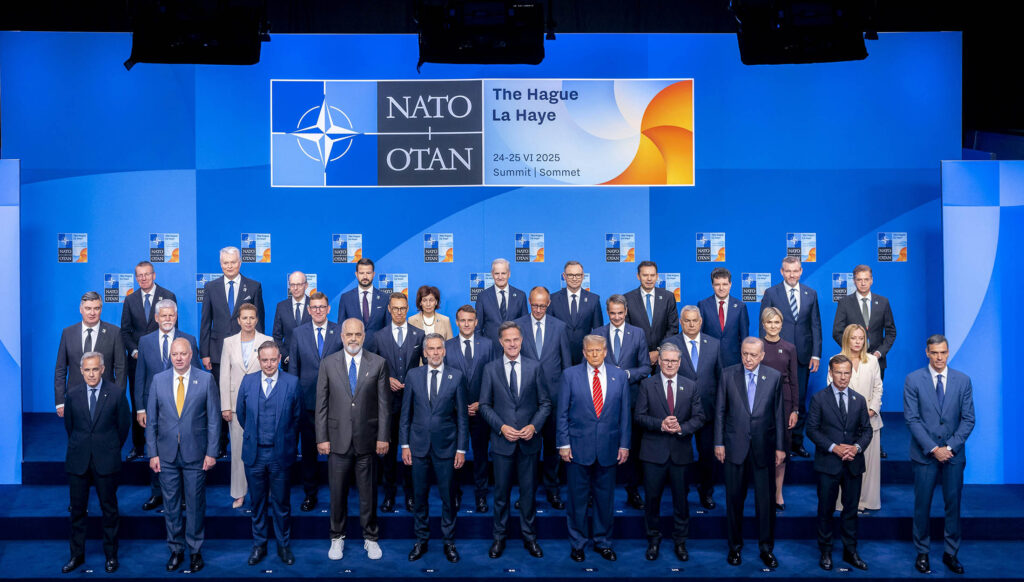
On June 25, 2025, leaders from all 32 NATO member countries committed to a five per cent GDP defence investment, ushering in a new era of Euro-Atlantic geopolitics. This expenditure, a significant increase from the two per cent agreement established in 2014, and involves a minimum of 3.5 per cent GDP spending allocated to NATO’s “core defence requirements:” crisis prevention and management, cooperative security, deterrence, and defence. The enhanced spending commitment followed months of pressure from US President Donald Trump over burden sharing and comes amid increasing spending disparities among NATO members in 2024. Poland was the sole member to spend over four per cent of its GDP on defence last year, whereas Spain spent the least, allocating only 1.3 per cent to its military.
One nation, however, stands apart from the rest. Iceland, one of NATO’s founding members, is the only member without a standing military. Accordingly, these new NATO spending requirements pose unique challenges and opportunities for this tiny island.
One of the oldest countries in Europe, Iceland was under Danish rule for centuries until gaining a degree of independence at the end of World War I. Following Nazi Germany’s invasion of Denmark in 1940, Iceland became an increasingly valuable strategic location for the Allies, given its position along key transatlantic shipping routes. The country gained complete independence on June 17, 1944, establishing itself as a pacifist social democracy with strong ties to the US.
Strong currents of cultural and ethnic nationalism had many Islanders reluctant to join an intergovernmental military alliance. Despite this, the country joined NATO as one of 12 founding members in 1949, reflecting the evolving geopolitical landscape amid Cold War tensions. As a young, military-less republic, Iceland initially contributed to the alliance by providing key territory and strategic resources to counter Soviet forces. Iceland’s security situation evolved over time, culminating in the American military’s departure in 2006. Since then, Iceland has fulfilled its NATO commitments by hosting Air Policing missions and a variety of multinational naval exercises.
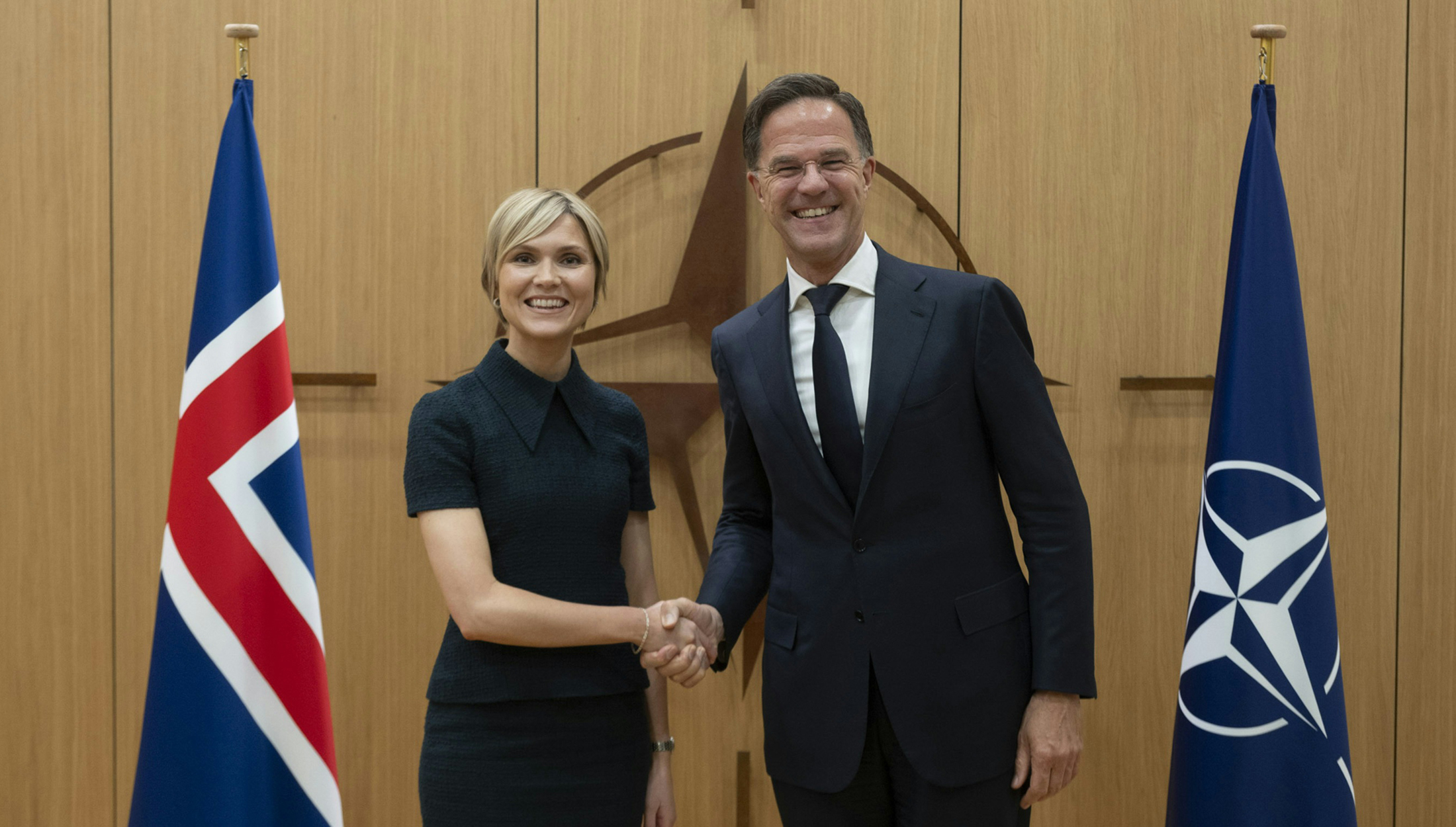 Prime Minister Kristrún Frostadóttir (left) greeting NATO Secretary General Mark Rutte (right) in Brussels to further their established relationship and discuss Iceland’s support of Ukraine before the 2025 NATO Summit. “NATO Secretary General welcomes Icelandic Prime Minister to NATO Headquarters” by NATO is licensed under Fair Use.
However, Iceland continues to lack a standing military. Control over the Greenland-Iceland-United Kingdom (GIUK) Gap, a narrow transit route that acts as a choke point in the North Atlantic, has historically been the basis of Iceland’s defence. During the Cold War, monitoring Soviet vessels was critical for NATO. The strategic importance of this surveillance work, and the Gap itself, diminished post-war, yet with the rise of revanchist Russian foreign policy—as lethally expressed through the occupation of Crimea in 2014 and invasion of Ukraine in 2022—the Gap has regained significance in the last decade. Moreover, President Trump’s attempts to acquire Greenland, Iceland’s Arctic neighbour, reinforce Iceland’s need to tighten its hold on the GIUK Gap in tandem with NATO. If it is unable to present a self-reliant front on the international stage, Iceland is vulnerable to the whim of larger powers.
 Trump tells NATO chief Mark Rutte the US needs Greenland. “NATO Secretary General Mark Rutte with the President of the United States of America, Donald J. Trump at the White House” by NATO is licensed under CC by 4.0.
Today, environment-related security challenges run rampant and cyber threats that spread misinformation are redefining global security. Both threats are immune to machinery and army troops—thus, as world crises evolve, the definition of “defence” must evolve along with them. NATO’s five per cent defence expenditure offers a unique opportunity for Iceland to redefine what modern defence alliance participation looks like. Despite their exclusion from the formal agreement, Prime Minister Kristrún Frostadóttir affirmed Iceland’s commitment to raise defence-related spending to 1.5 per cent of GDP by 2035. “Our membership in NATO and the defence agreement with the United States will remain cornerstones of Iceland’s foreign policy,” Prime Minister Frostadóttir wrote in June 2025. “There will be no fundamental change in Iceland’s relationship with NATO.”
In Reykjavík, Iceland’s capital city, the technology industry has excelled over the past three decades. Abundant and affordable renewable energy sources have attracted global tech companies to establish data centers across the nation, empowering Iceland’s contributions to the international tech industry while minimizing environmental impacts. These advancements, such as IceWind, an Icelandic innovation developing remote wind turbines selected for NATO’s Defence Innovation Accelerator for the North Atlantic (DIANA), present a possible avenue for Iceland’s future as a defence-oriented technology leader. By investing the 1.5 per cent spending requirement in defensive, arctic-based technology, Iceland can position itself as a pioneering model for other northern nations—reimagining defence and elevating its status on the global stage.
Edited by Alexandra Agosta-Lyon.
Featured Image: “Welcome Ceremony and Official Photo – 2025 NATO Summit in The Hague” by NATO is licensed under C.C by 2.0