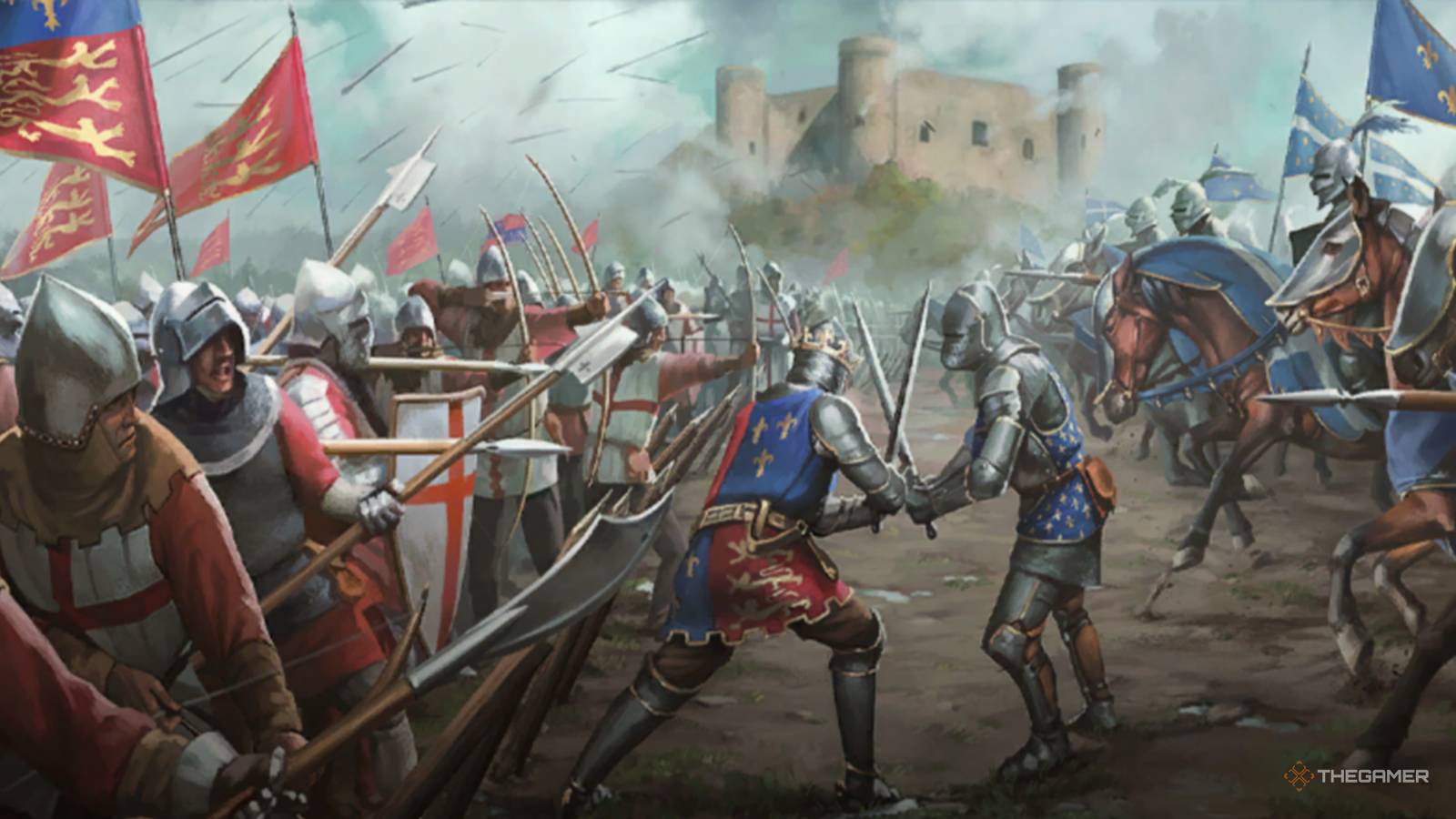
Historians can explain exactly how the real Hundred Years’ War played out, but half the fun of taking control of a country in Europa Universalis 5 is being the author of your own version of history. Who cares how the war happened in real life? How do you want to see it play out?
Pretty much any European country will be roped into the conflict between England and France (as well as between France and France – get ready for civil war if you’re jumping into King Phillippe’s shoes) during the Hundred Years’ War in EU5. Good luck out there!
Hundred Years’ War Overview
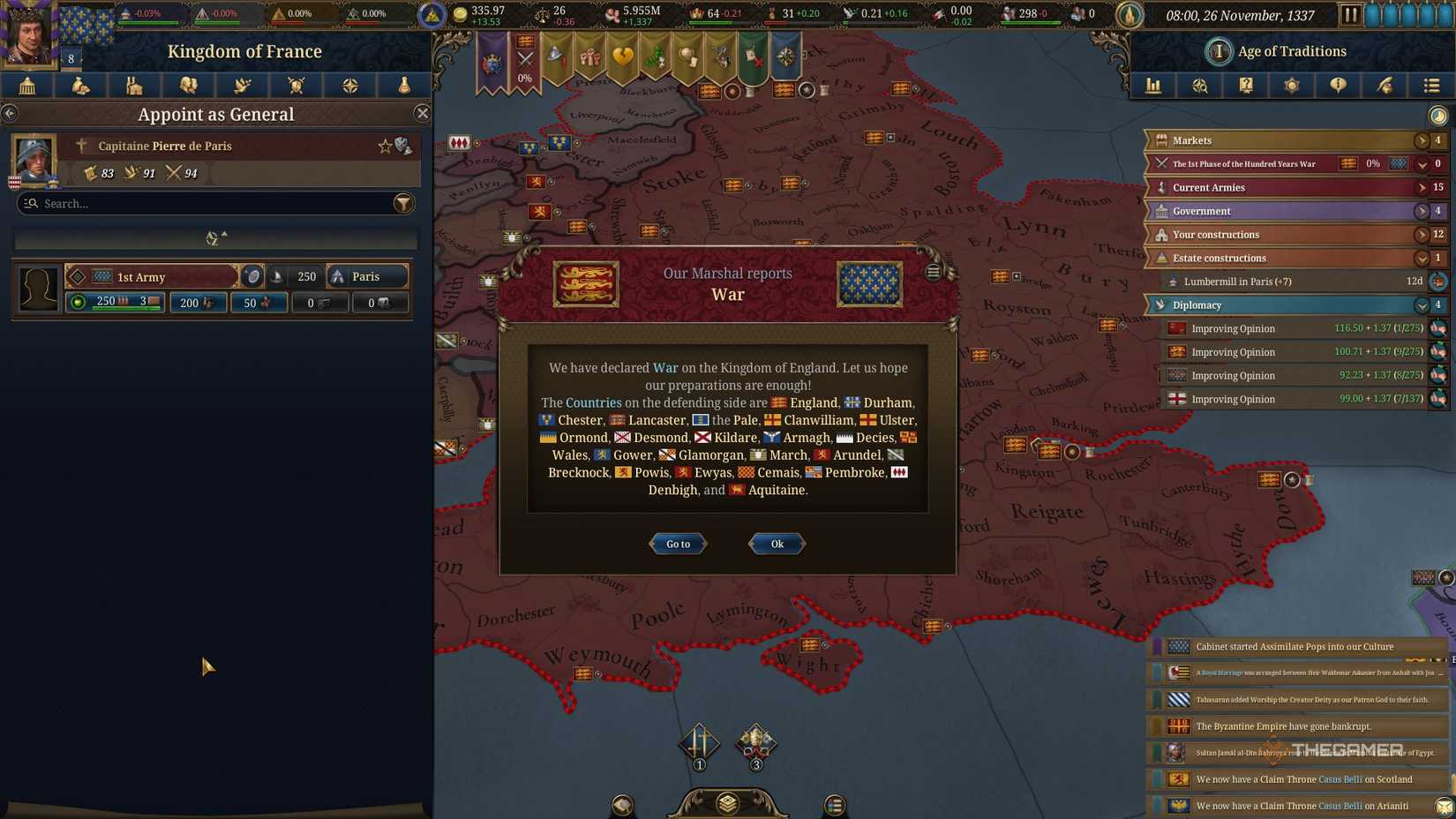
The Duchy Of Aquitaine
You’ve barely got time to get your feet wet with your new country in Europa Universalis 5 when the Hundred Years’ War begins on the first day of July 1337. While the primary combatants in the war are the Kingdom of England and the Kingdom of France, you’ll find that the war impacts every European country. Even if you’re not playing as England or France, you’ll still be made aware of the conflict, if not roped into the battle depending on your allegiances.
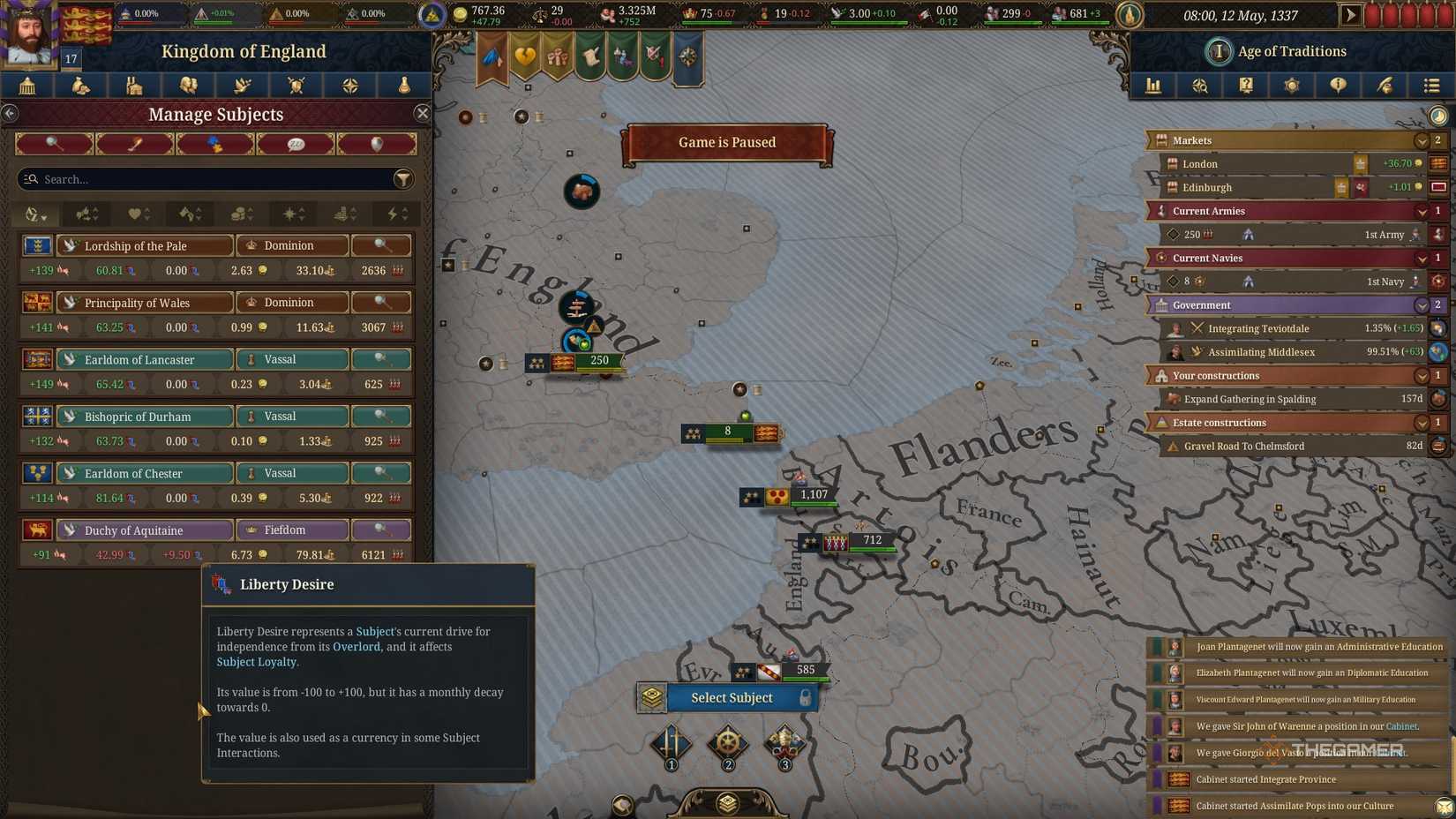
France and England will see changes to Aquitaine as you cycle through the game’s first three months. It’s a small territory in the Southeast of continental France, colored more like the reddish pinks of England than the purples denoting the French territories. King Edward asserts himself as the Duke of Aquitaine, and you’ll see him as the ruler should you choose to play as the Duchy.
Aquitaine grows unhappy with England and festers a low subject loyalty to England in the spring of 1337. The French King dies on July 1, and it triggers the Hundred Years’ War in EU5 and ropes the whole of Europe into a battle that rages for almost a century – unless you change history with your gameplay, that is.
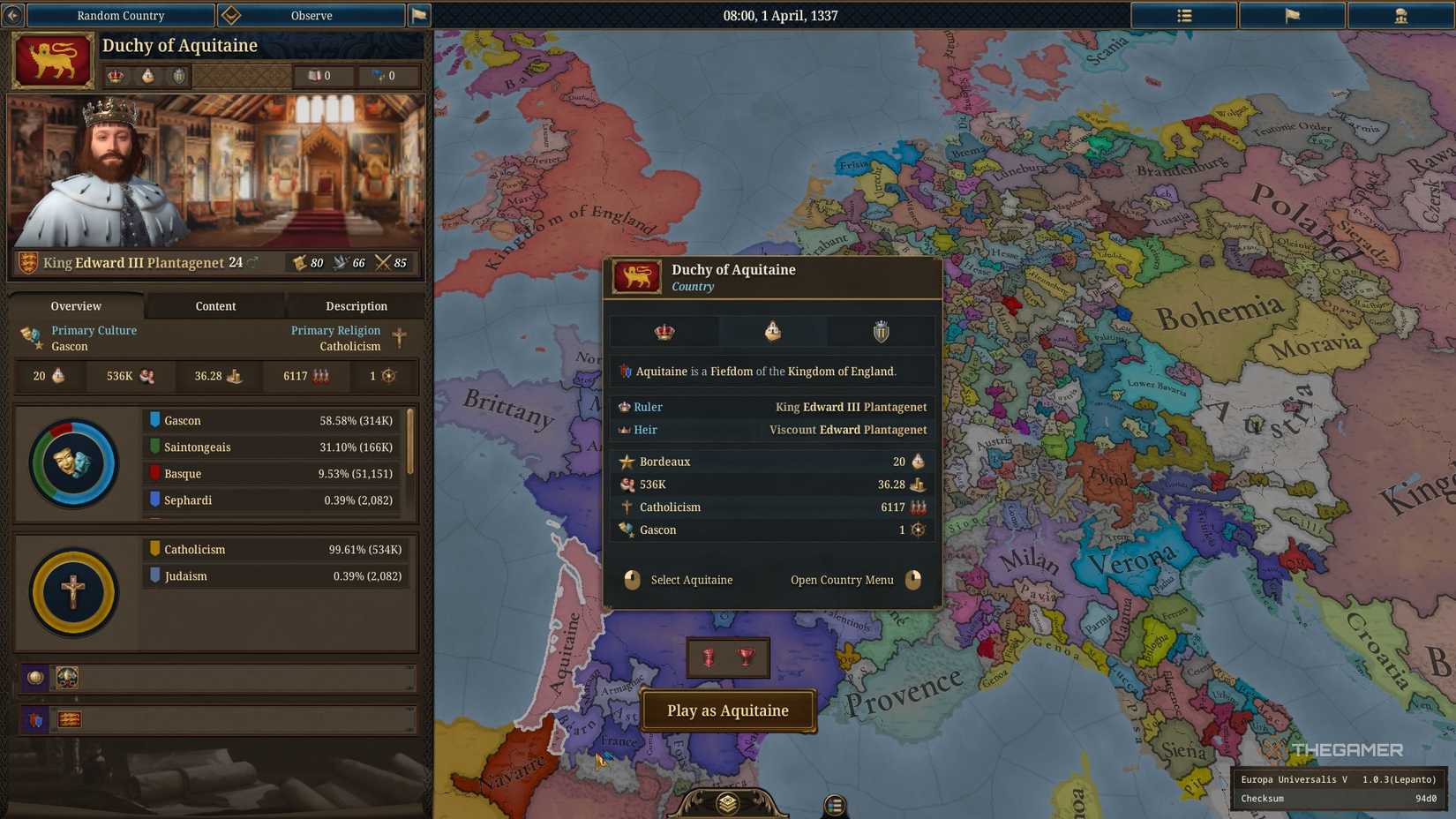
The actual war in history had a short, tense peacetime between 1356 and 1364, and the conflict ended in real life in 1453, but you can end the war early with decisive military action, careful diplomacy, or a fun-to-play balance of the two.
Robert d’Artois
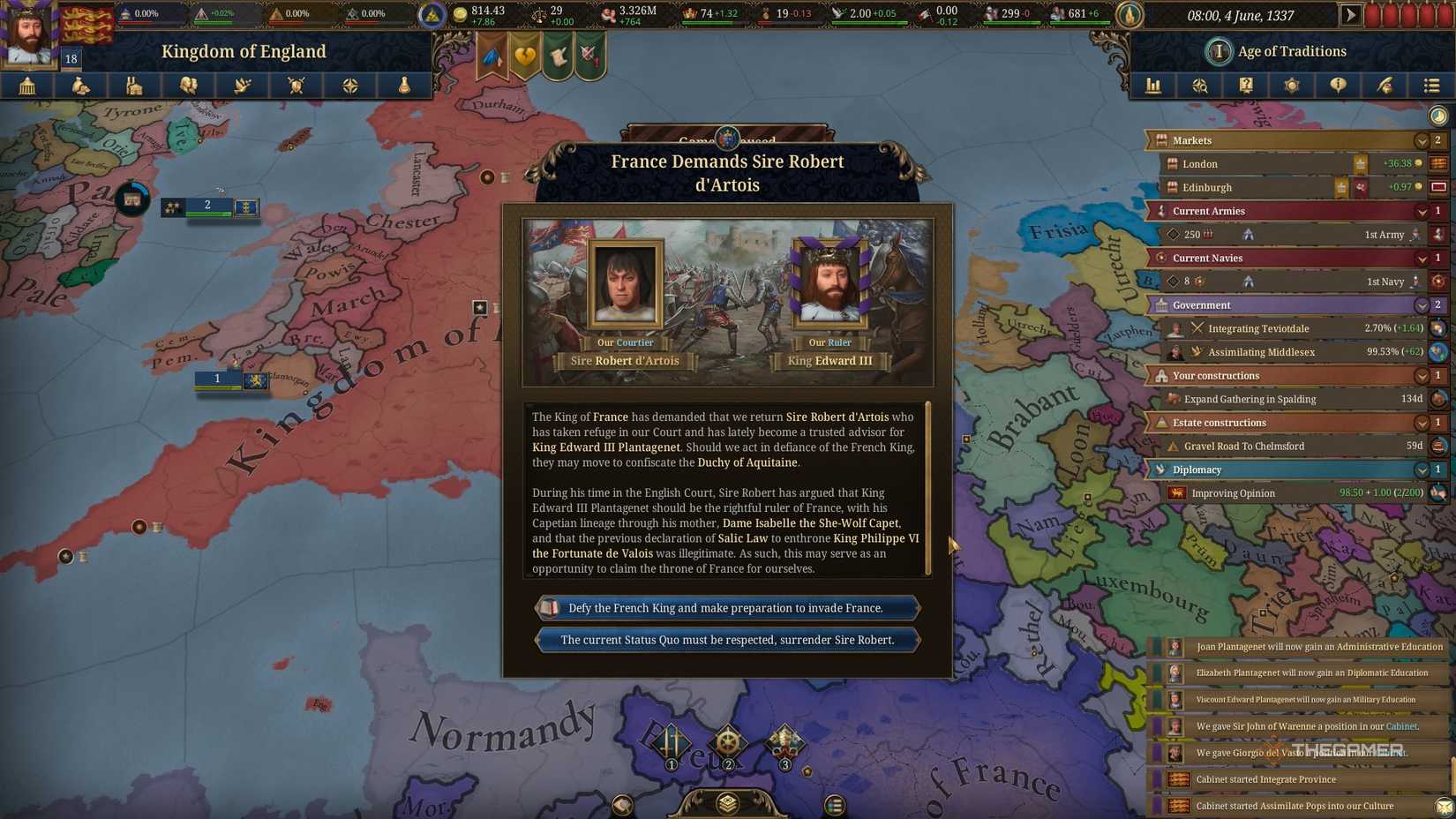
Regardless of if you’re playing as England or France, you’ll receive a pop-up event on June 1 about Sire Robert d’Artois, a man on the run from the French crown after trying to usurp a county. France asks England to send him back, and regardless of which country you’re playing, your decision matters.
Pay attention to the icon of a white book with a red bookmark, which denotes Historical Options – these are the decisions made by the world leader you’re playing, and they’re there to inform you about pivotal decisions you’re about to make.
If you’re playing as England, you’ll have the choice to either surrender d’Artois and stave off war with France, or harbor ‘Artois anyway and provoke the French into battle. Harboring d’Artois gives you a Casus Belli against France, the Conquer the Throne of France option.
As France, your notice gives you the choice to demand d’Artois’ surrender and return to France, the Historical Option, or to refuse to provoke England for sake of trying to preserve peace. Pressing might allow you to trigger the Hundred Years War before its slated start date.
If you press the issue and England does not return d’Artois to France, you’ll have a second chance to back out, or choose the Historical Option to trigger the war. Refusing to demand d’Artois be returned will cost you some Prestige.
The return of d’Artois may be enough to circumvent the war altogether, but if the Hundred Years War breaks out in EU5, each country involved has unique ways they can sway the battle in their favor.
The Black Death
As you’ve likely heard the Bubonic Plague called, you’ll receive notice that the Black Death hits your country early in the war, likely sometime in the 1350s. Both countries will need to be mindful of this plague, since it can be an easy tide-turner for the opposition. Either way, the Plague will require work to eradicate, which will likely distract from your war efforts.
The Black Death is something of a tutorial on communicable diseases in EU5, and it helps to prepare you for population maintenance. However, losing Pops to the Black Death can heavily hamper your levies used in battle, since dead men can’t fight wars for you. There are a number of other negative Modifiers tied to the Situation, but count on it impacting your wartime plans.
How To Win The Hundred Years’ War
When the conflict breaks out, England and France become Rivals, which will increase the Antagonism score of both countries involved. You’ve got enough on your hands with this fight, so it might be best to not pick other battles with countries outside France, lest the world begin to see you as something of a warmonger and begin forming coalitions against your aggression.
When the Hundred Years’ War breaks out, most of continental Europe gets involved, and even if you’re not on active battlefronts yourself, countries in Europe will need to be mindful of their diplomatic actions with those involved in the conflict, since the opposing side may see this as a slight and take you for an enemy. Naturally, the war will play out very differently for different countries, with unique powers, abilities, and events possible for ending the war sooner.
The game will not stick strictly to historical accuracy here – the Hundred Years War ends when either England or France achieve decisive victory, whenever that ends up happening. Some players report the Hundred Years War taking only 50 years or so, while others have seen the war go on for over two centuries, so your mileage will vary based on which country you play as in the conflict and the decisions you make along the way.
Each country has its own victory condition, but either can win if they fully subjugate the opposing country. England can win the Hundred Years’ War by forcing the Union with France Peace Treaty. France, meanwhile, must ensure that fewer than four territories in France are subjects of England or are owned by the English.
Bulk Up Your Military And Claim What’s Yours
With the English Channel between continental Europe and the territories owned by England, you’ll see a lot of naval warfare during the Hundred Years’ War in EU5. England will receive some very early naval Advancements, so be sure your navy is prepared for the first parts of the battle as your army gets ready for land-based invasions.
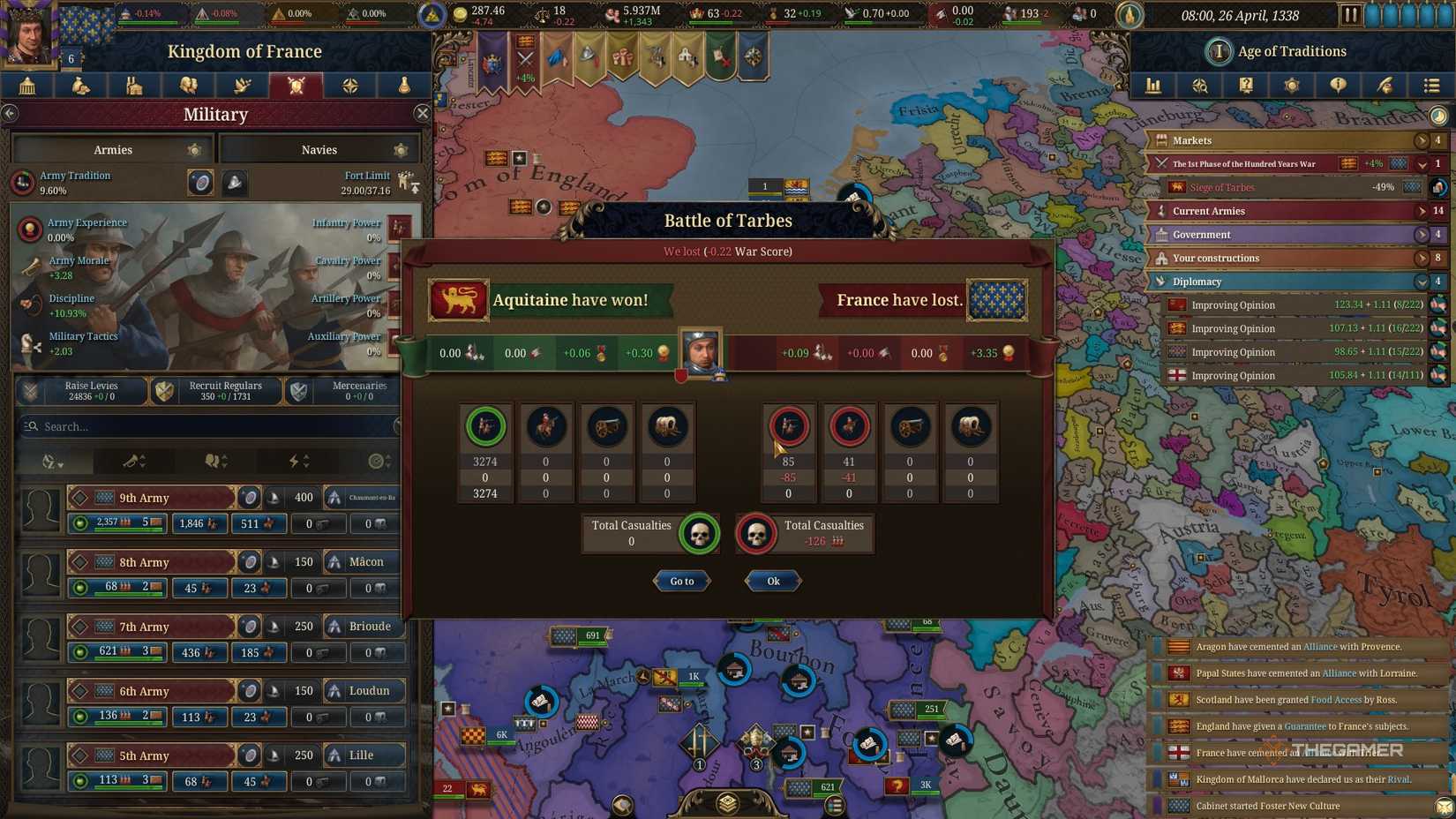
The war will be broken into phases, and you’ll be able to see the information about your troops and navies at a glance by clicking the banner for the current phase on the top bar.
No matter what, ensure you’re researching military Advancements throughout the war, since these Advancements will often lead to new kinds of ships, ground units, and more than can help turn the tides of war in your favor. The war will likely last the majority of the game’s first age, the Age of Traditions, so you’ll want to build as much into your militaristic Advancements as possible.
This is very likely your first major skirmish in Europa Universalis 5, so there’s no shame in trying to automate the military to perform actions the computer approves of during more stressful phases of combat. You can always switch back to manual control after you’ve gotten the hang of warfare.
Monitor Subject Actions During Wartime
Throughout the war, the English can choose to Influence French Subjects while at peace overall, wreaking havoc within a chosen Appanage and tanking Loyalty to the region’s Overlord, effectively putting the territory on a path toward English rule. The French can sway their subjects by Granting Titles to try keeping them on your side against potential sway in Opinion in one way or another from the English.
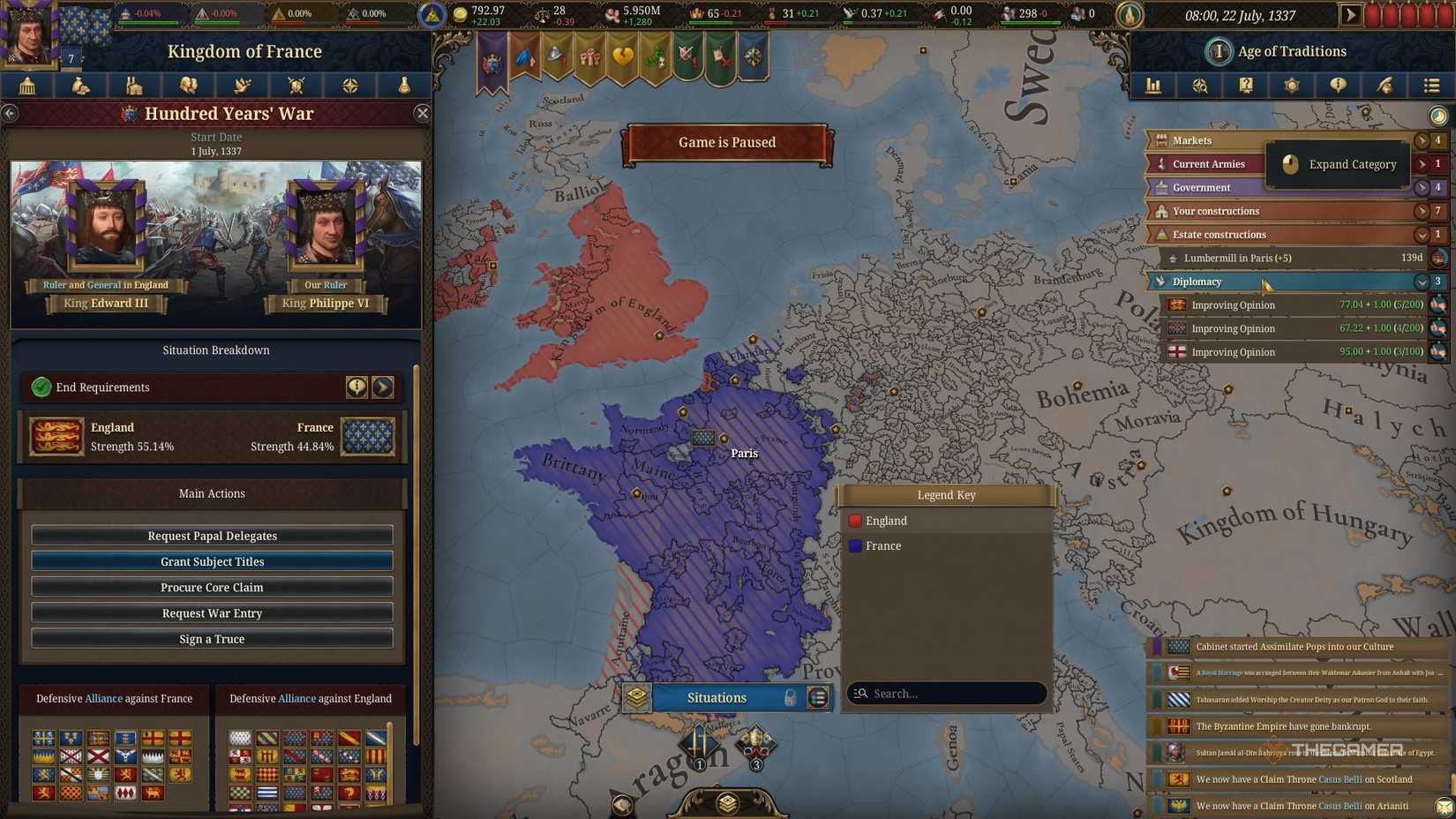
You’re also able to Procure Core Claim to get the Casus Belli needed to re-invade lands England may have claimed from you. For the most part, your Diplomats will spend a lot of time trying to improve Opinion of the territories within your grasp and try to sway them toward your side of the alliance, or firm up Opinions in territories with lower Loyalty scores.
Subjects of France may use the Demand Autonomy from France action to free themselves from the Crown. You can Grant Subject Titles to help sway opinion of France with the subjects that have the lowest Loyalty scores, as well as an increased Loyalty score for 15 years. French Subjects may Demand Promotion to Appanage, at risk of their Opinion of France.
Regardless of which side of the war to which they were naturally conscripted, subjects of both countries can Betray the Alliance and try fighting for the other side, which will likely cause geopolitical tensions to rise. As the ruler of England or France, deal with subjects that have betrayed you swiftly to try bringing them back in line.