
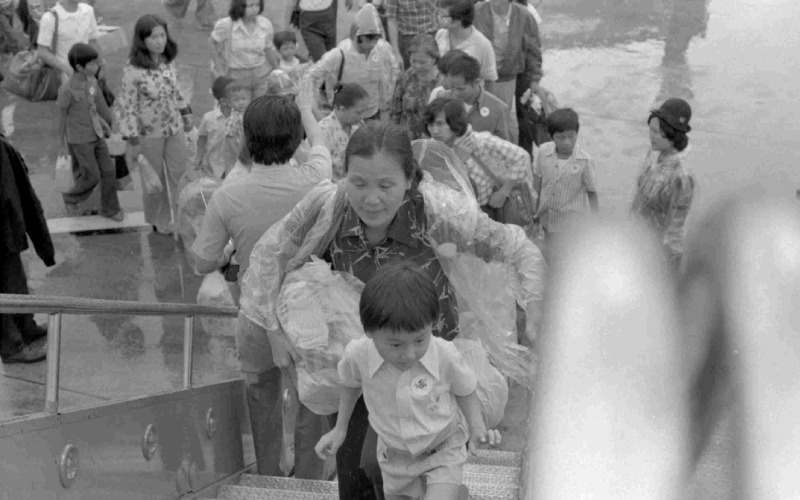
 Vietnamese refugees boarding second Airlift from Hong Kong to Canada, 1979.
© Photo attributed to MCpl Bryantowich, Canada. Department of National Defence / Library and Archives Canada / e999901782-u
The arrival of refugees from Vietnam, Cambodia and Laos in Canada was designated as a national historic event in 2023.
Historical importance: after the end of the Vietnam War in 1975, Canada accepted nearly 200,000 refugees from Vietnam, Cambodia, and Laos who fled persecution and difficult living conditions, and braved significant dangers.
Commemorative plaque: no plaque installedFootnote 1
Arrival of Refugees from Vietnam, Cambodia and Laos in Canada
After the end of the wars in Vietnam, Cambodia, and Laos, Canada admitted, between 1975 and the 1990s, more than 210,000 refugees. They fled persecution, violence, and difficult living conditions and braved significant dangers in their journeys to Canada. Their arrival reflects the impact of the modernization of Canada’s immigration laws, which became more accepting of refugees in the 1960s and 1970s. It also reflects the increasingly receptive and supportive Canadian public opinion toward refugees’ struggles in the wake of the Hai Hong incident in 1978, which led tens of thousands of Canadians and many organizations to sponsor refugees. Through public support programs and their own perseverance, these refugees were able to build new lives and form communities across Canada, notably in Montréal, Toronto, and Vancouver, but also in smaller cities and towns, where they contributed to Canada’s economic and cultural prosperity.
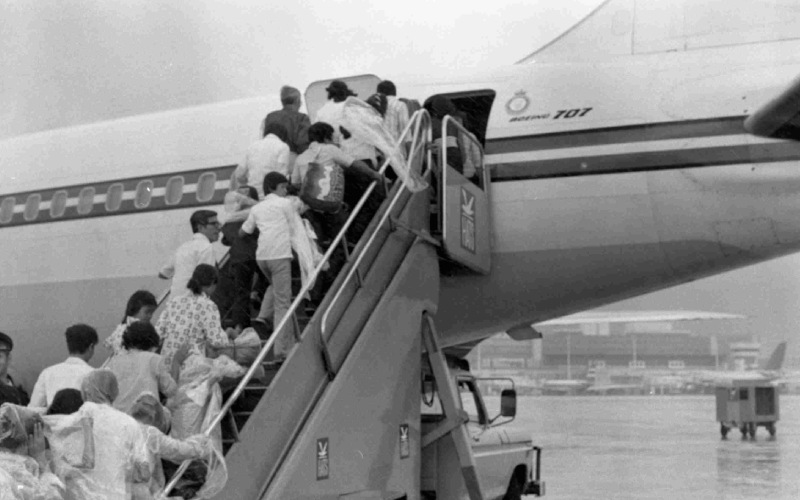 Refugees board first flight of CF707 from Hong Kong to Canada, 1979.
© Photo attributed to MCpl Bryantowich, Canada. Department of National Defence / Library and Archives Canada / e999901766-u
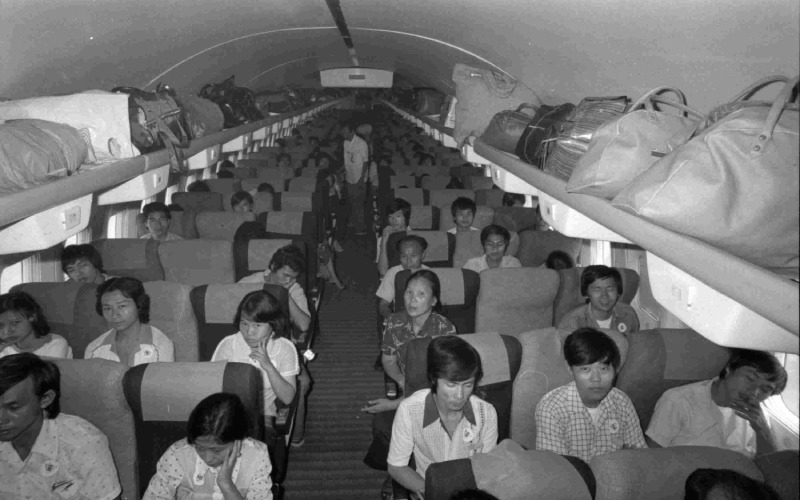 Overall view of the interior of an aircraft with refugees enroute to Canada, 1979.
© Photo attributed to MCpl Bryantowich, Canada. Department of National Defence / Library and Archives Canada / e999901768-u
When the wars ended in Vietnam, Cambodia, and Laos in 1975, the countries came under the control of new regimes: the Socialist Republic in Vietnam, the Khmer Rouge in Cambodia, and the Pathet Lao’s communist regime in Laos. Many people from these and the neighboring countries fled famine, persecution, prolonged conflict, and instability. Some refugees left by land through perilous jungle, but most travelled by water and had to contend with the dangers of the sea, piracy, and Vietnamese authorities who were trying to stop the exodus. By the end of 1975, approximately 6,000–7,000 people arrived in Canada. Some were refugees under the 1951 United Nations (UN) Convention relating to the Status of Refugees, while others joined family members and relatives. The majority, about 65 per cent, were educated Francophones who settled in the Montréal region. From 1976 to 1977, Canada accepted only 630 refugees, partly due to a scandal surrounding the arrival in Montréal of former South Vietnamese General Dang Van Quang who was accused of war crimes. But in 1976, the Canadian government enacted the new Immigration Act to allow more groups to move to Canada, and it included refugees as a distinct class of immigrants for the first time. A special category of refugees, the Indochinese Designated Class, was created to accelerate processing of these refugees’ files and bring them to Canada sooner.
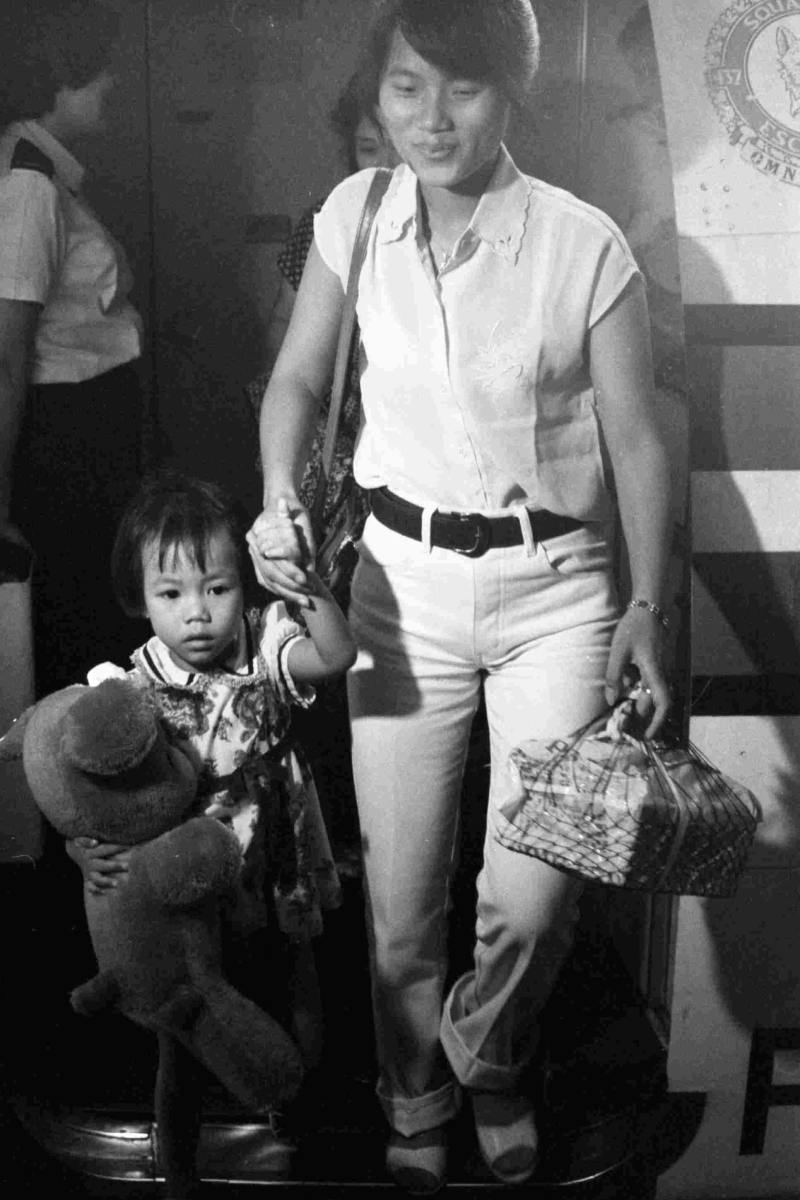 Arrival of second Airlift from Hong Kong to Canada. Mother and child departing aircraft, Vancouver, 1979.
© Photo attributed to MCpl Bryantowich, Canada. Department of National Defence / Library and Archives Canada / e999901773-u
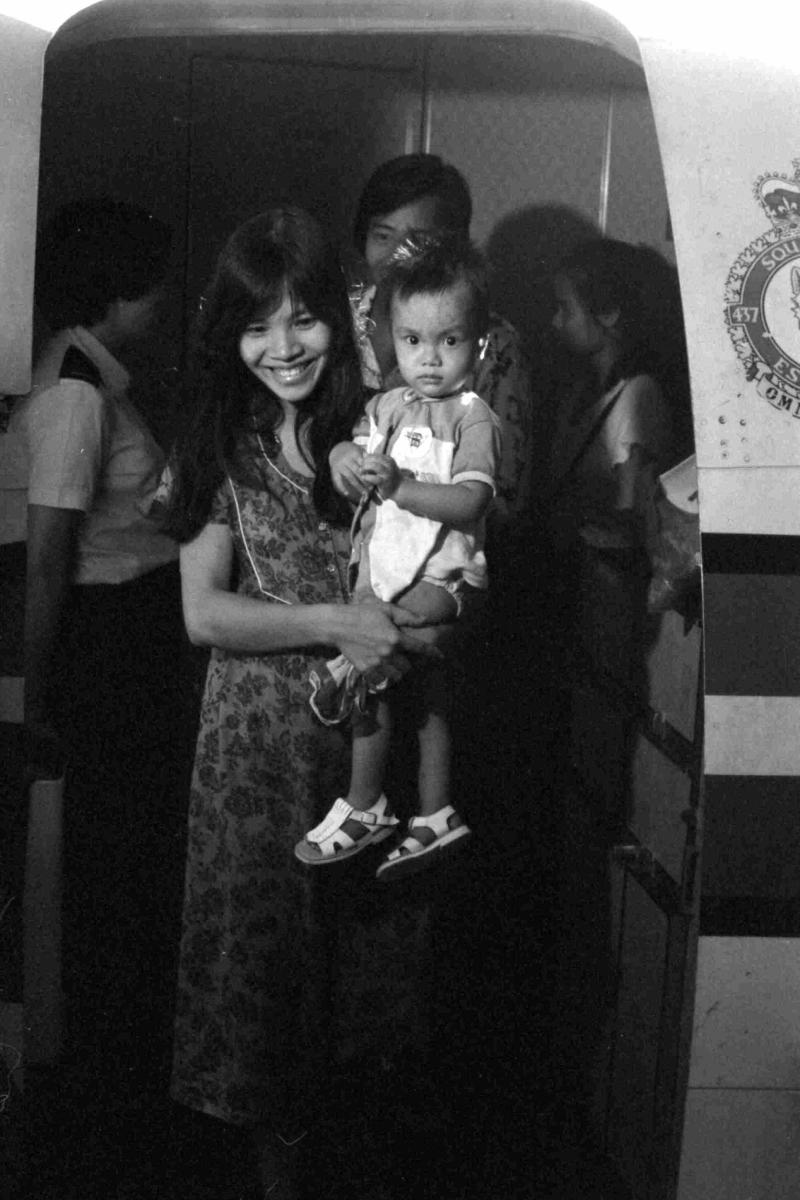 Mother and child departing aircraft, Vancouver, 1979.
© Photo attributed to MCpl Bryantowich, Canada. Department of National Defence / Library and Archives Canada / e999901772-u
When in November 1978 Malaysia refused to allow the cargo ship Hai Hong to land with 2,500 refugees on board, Canada admitted 600 refugees from this ship, and other countries offered to resettle the remainder. This marked a turning point in Canadian attitudes. Just before the UN conference on refugees and displaced persons in July 1979, the Canadian government declared it would admit 50,000 refugees from Vietnam, Cambodia, and Laos. Half of the refugees would be supported by the government, and the other half would be sponsored privately by Canadians. Many citizens and groups sponsored refugees, including Operation Lifeline, which was launched in Toronto and expanded with 60 chapters across Canada, Project 4000 in Ottawa, and the Montréal Committee to Save the Boat People. By the end of the 1990s, more than 210,000 refugees, mostly from Vietnam, had arrived in Canada, including about 60,000 people who joined their relatives in Canada under the Orderly Departure Program sponsored by the UN High Commissioner for Refugees.
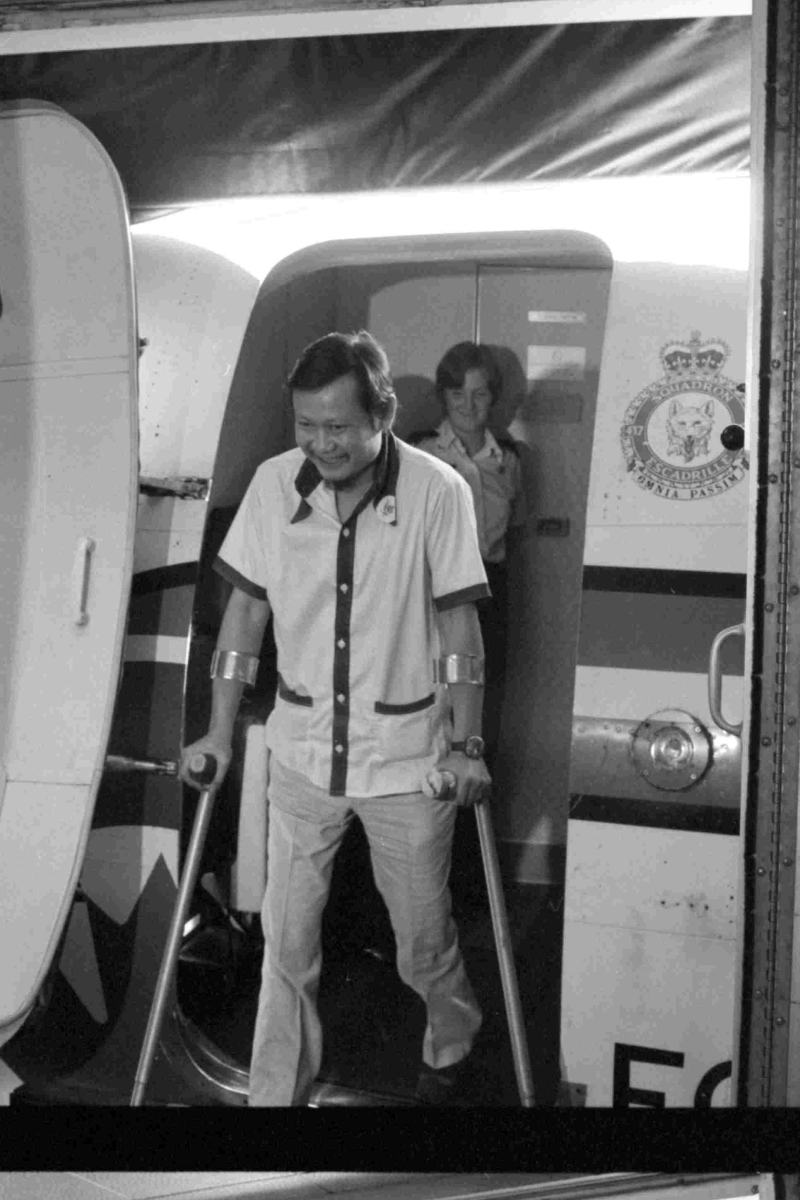 Refugee departing aircraft, Vancouver, 1979.
© Photo attributed to MCpl Bryantowich, Canada. Department of National Defence / Library and Archives Canada / e999901774-u
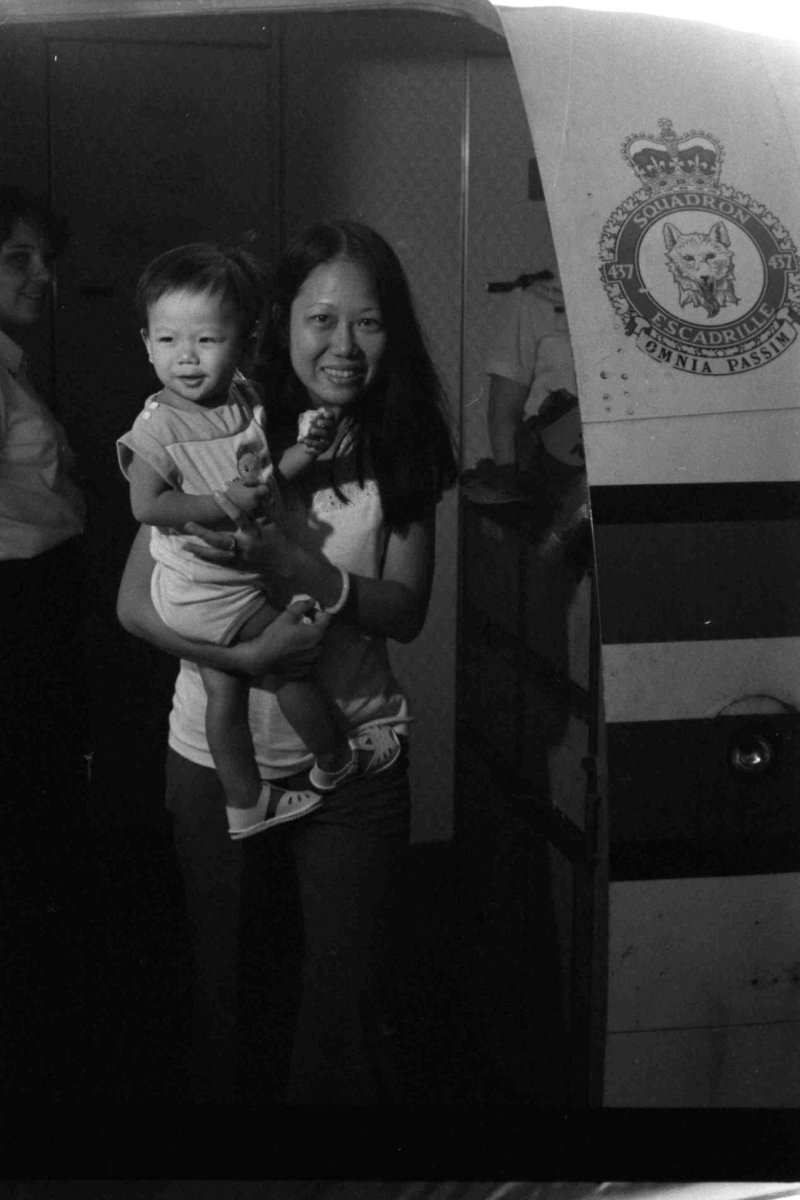 Mother and child departing aircraft, Vancouver, 1979.
© Photo attributed to MCpl Bryantowich, Canada. Department of National Defence / Library and Archives Canada / e999901770-u
In 1986, the UN presented Canada with the Nansen Refugee Award for its sustained effort to help refugees worldwide, including those from Vietnam, Cambodia, and Laos. This was the only time this medal has been awarded to the people of a country as a whole.
This press backgrounder was prepared at the time of the Ministerial announcement in 2024.