An immigration judge supported prosecuting the prime minister in 2019 and publicly criticised the Home Office online.
James Dixon, a judge in the Immigration and Asylum Chamber, has kept his political views visible on his LinkedIn profile despite judiciary guidance on impartiality.
The comments, which make known his vote for Remain and dislike of Boris Johnson, were posted in 2019, before his appointment in April 2020.

Robert Jenrick, the shadow justice secretary, said: “The overwhelming majority of our judges are a credit to their profession but there are a small minority of judges whose behaviour brings the independence of the judiciary into question.
“The similarity between the political views Dixon has publicly broadcast and his decisions will lead many to question how objective he really is. It’s incredibly damaging.”
The courts and tribunals judiciary outlines impartiality as one of its three key values, saying that judges should avoid taking part in “public demonstrations which might diminish their authority as a judge or create a perception of bias in subsequent cases”.
Last year, Baroness Carr of Walton-on-the-Hill, the most senior judge in England and Wales, and Alex Chalk KC also said that judges must remove any reference to their roles from their social media profiles.

Baroness Carr of Walton-on-the-Hill and Shabana Mahmood, the justice secretary
JORDAN PETTITT/PA
• Judges rush to delete job titles from online profiles
Dixon has a public LinkedIn profile in which he does not identify himself as an immigration and asylum judge. Although he has not commented since his appointment, he has several posts still visible from 2019 and 2020.
In August 2019, he described the Home Office as having a “words mean what I say” attitude, paraphrasing Humpty Dumpty from Lewis Carroll’s Through the Looking-Glass.
Another LinkedIn user wrote that people from the EU living in the UK were “safe” after questions about the government’s plans to end freedom of movement on October 31 2019.
Dixon responded: “‘Safe’ and the Home Office? These two are very often in conflict with each other. I do not want to unnecessarily alarm anyone but often the Home Office think they are the law and the law is whatever they say it is on any particular day. More like Alice in Wonderland, whatever I say it is as opposed to safe”.
He added in a separate comment: “I will keep an open mind and hope you are right.”
In a post on the detention of teenagers, written at the time of the November 2019 election, Dixon wrote: “I fear we are at risk of electing a party into office who has a cohort of people at the helm with an ideology as regards penal policy which favours more punitive measures. Oh dear. Better brace ourselves.”
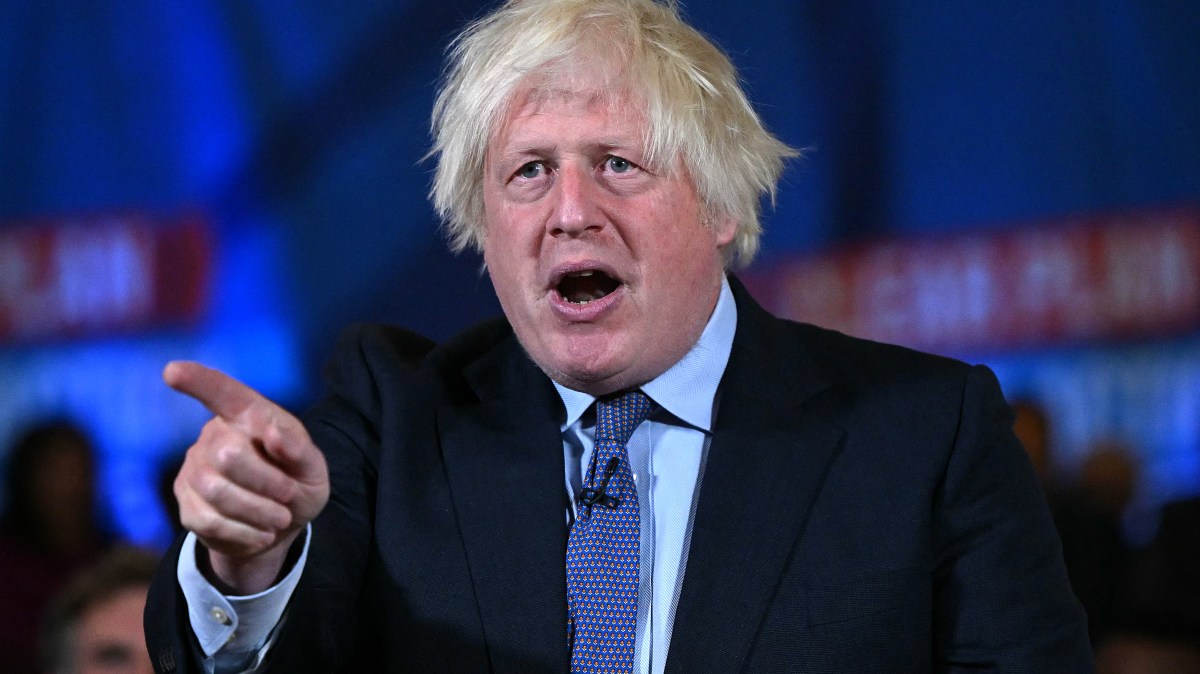
Several posts expressed a dislike of Johnson. In August 2019, he commented beneath a post by Marcus J Ball, who privately prosecuted Johnson for alleged misconduct in public office.
Dixon appeared to support the prosecution, commenting in an apparent reference to the Supreme Court: “Thank you Marcus I hope that the SC gives permission to appeal.”
In another post, Dixon relayed a conversation with his daughter about returning to the UK after holidays. He described “ruefully” facing the “concerning reality” of “Boris land” and a “country led by such a person”.
Dixon’s record as an immigration judge is not entirely public as decisions from the first-tier tribunal are not published. However, in 2024 and 2025 his name was mentioned in 41 decisions in the Upper Tribunal, in relation to cases that were appealed in the higher tier. In about six cases, Dixon had granted an appeal that was later dismissed or set aside. In March last year, a decision mentioned that Dixon had misapplied Brexit laws to allow an appeal that was later set aside.
In a separate case, this April, an Upper Tribunal judge set aside Dixon’s decision to allow a Nigerian drug dealer to appeal against his deportation. Dixon had argued that the appellant had been a lawful resident of the UK for most his life and was socially and culturally integrated in the UK. The Upper Tribunal judge found that the appellant had had leave to remain for three specific periods adding up to nine years.
A judicial spokesperson said: “Judges in the immigration tribunals come from all backgrounds … it is common for them to have previously acted on both sides of cases. Should there be anything in a judge’s background or professional activities that gives rise to actual or a real appearance of bias then they must recuse themselves.”