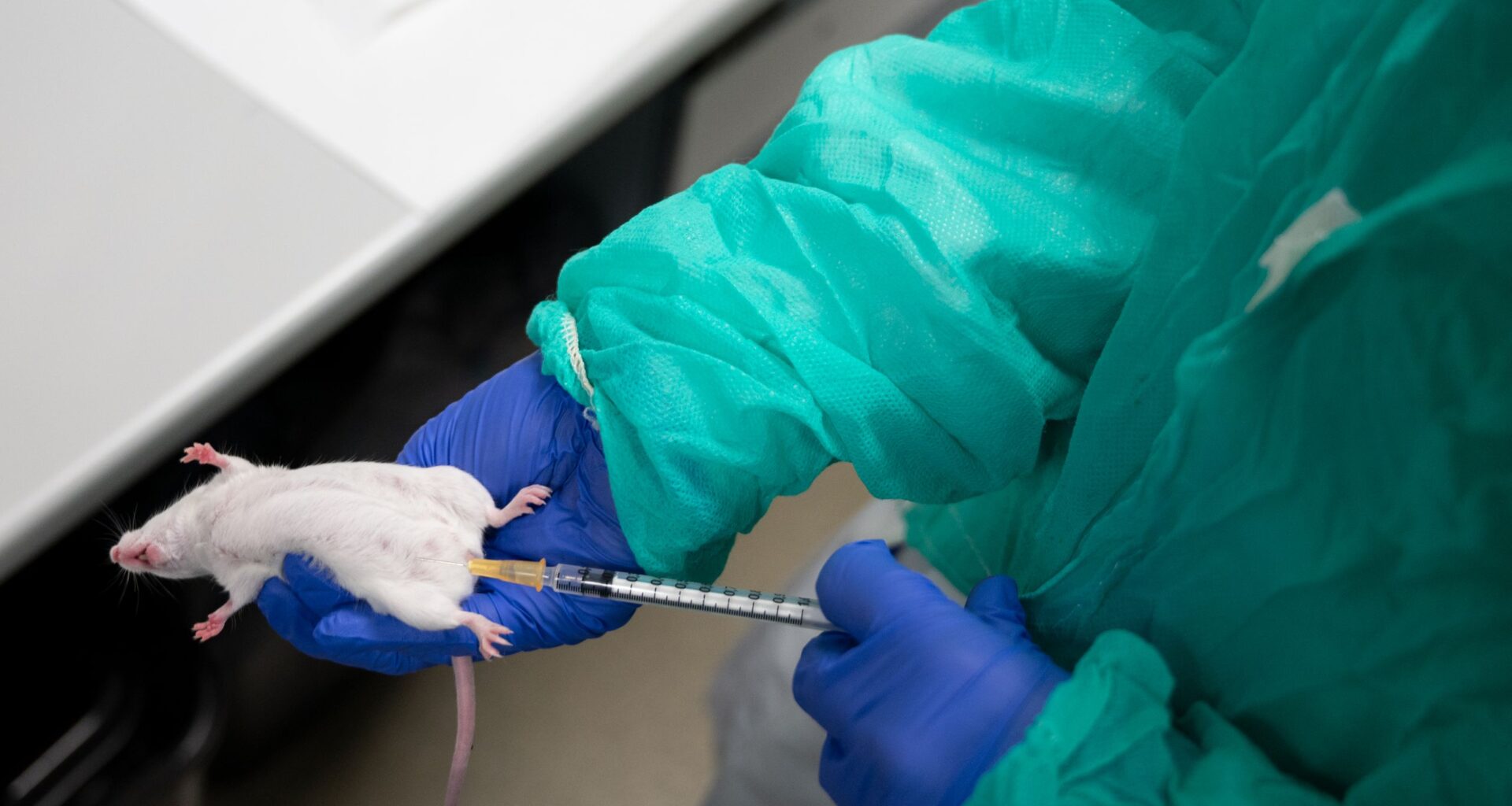
The government has set out a plan to phase out scientific experimentation on live animals in all but the most exceptional situations.
New funding will be given to researchers to support a pivot towards the use of artificial intelligence and other innovative methods to gradually replace the controversial use of animals in laboratories.
How many animals are used in experiments?
There were 2.64 million animal tests in Britain in 2024, according to the Home Office. Some 488,255 animals were used in experiments that caused them “either moderate or severe pain and suffering�. The majority of tests took place on mice, fish, birds or rats, but there were 2,646 experiments on dogs and a further 1,936 on monkeys.
From our morning news briefing to a weekly Good News Newsletter, get the best of The Week delivered directly to your inbox.
From our morning news briefing to a weekly Good News Newsletter, get the best of The Week delivered directly to your inbox.
What is the government’s plan?
Under the new plan unveiled by Science Minister Lord Vallance, animal testing will be phased out for “some major safety tests� by the end of this year, and the use of dogs and non-human primates in tests for human medicines will be “cut by at least 35% by 2030�, said the BBC.
The “comprehensive roadmap� will support researchers to “seize on new and developing opportunities� to replace animal tests, said the government.
Ministers will encourage researchers to use alternative methods such as “organ-on-a-chip systems�, which are small devices that “mimic how human organs work using real human cells�. There will be increased use of AI and also os “3D bio-printed tissues� to replicate human tissue samples for testing.
But the new strategy “recognises that phasing out the use of animals in science� can only happen where “reliable and effective alternative methods, with the same level of safety for human exposure�, can replace them.
What do experts say?
Welcoming the strategy, the RSPCA said it will “help UK scientists to embrace the high quality, ethical science needed in a rapidly changing world�. By “accelerating the replacement of animals�, it “will be positive news for animals, science and society�.
Some scientists, including Professor Frances Balkwill, of the Barts Cancer Institute at Queen Mary University, London, believe that “reaching ‘near zero’ tests on animals will be extremely difficult�, said the BBC. “These non-animal methods will never replace the complexity that we can see when we have a tumour growing in a whole organism, such as a mouse.�
Asked about the prospect of a complete ban, Professor Robin Lovell-Badge, of the Francis Crick Institute in London, told The Telegraph it would be “disastrous�.