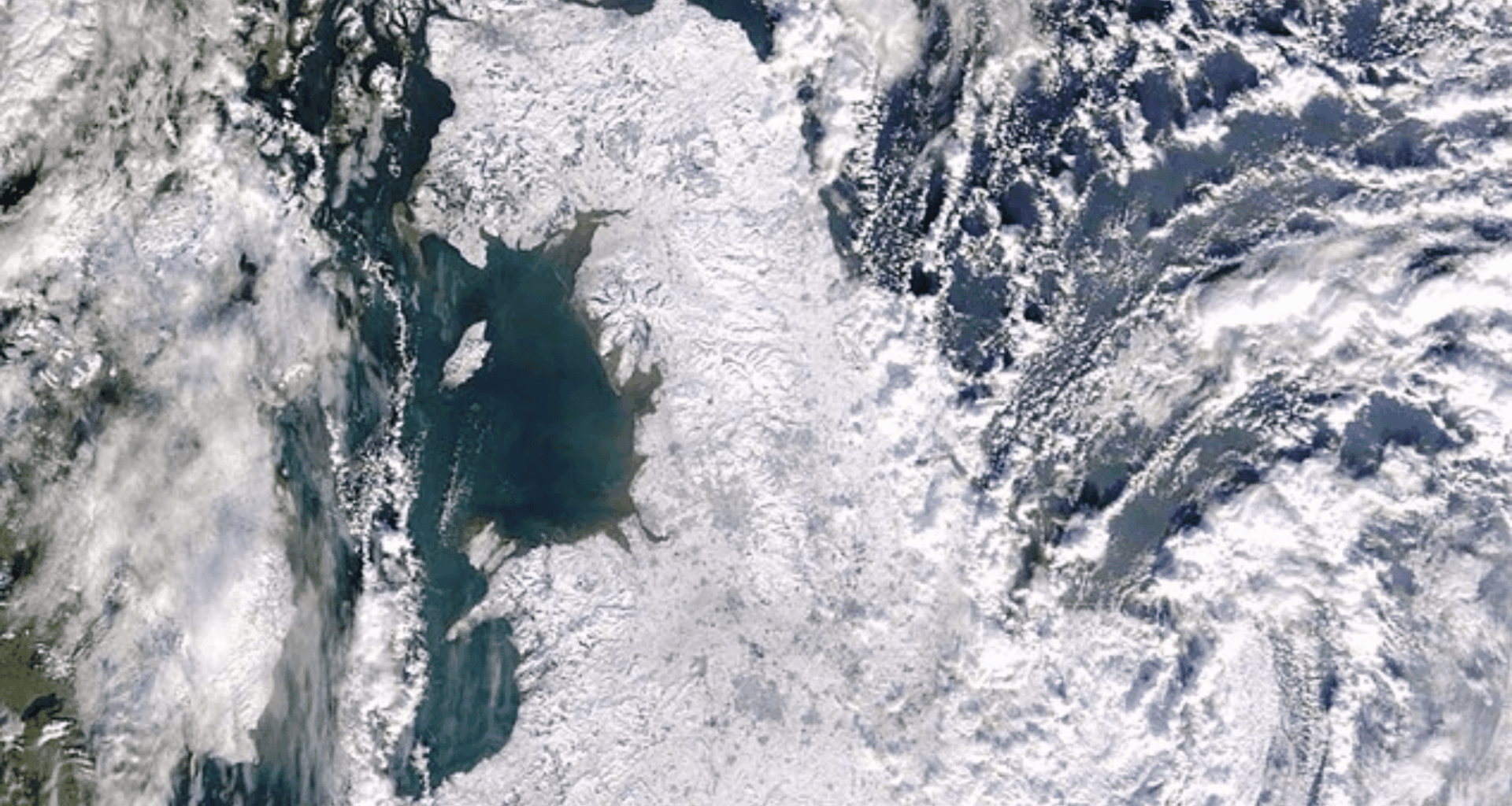
Iceland is facing an existential threat as climate scientists warn of the rapid weakening of the Atlantic Meridional Overturning Circulation (AMOC). This vital ocean current helps moderate temperatures and weather patterns across Northern Europe, including Iceland. If the AMOC collapses, it could trigger a new ice age and disrupt global climate systems. Iceland’s government is already preparing for this dire scenario, but the implications stretch far beyond its borders.
The AMOC: The Ocean Conveyor Under Threat
The Atlantic Meridional Overturning Circulation (AMOC) is a crucial component of Earth’s climate system, acting as a massive ocean conveyor that transports warm water from the tropics to the North Atlantic. This current plays a significant role in regulating the climate of the Northern Hemisphere, keeping places like Iceland and the UK warmer than they would otherwise be. If the AMOC were to collapse, it could cause significant cooling in Northern Europe, potentially leading to conditions similar to a modern-day ice age.
The potential collapse of this current is becoming increasingly likely due to the rise in global temperatures, which causes the Arctic and Greenland ice sheets to melt at an accelerated pace. This influx of fresh, cold water into the ocean is disrupting the delicate balance that drives the AMOC, weakening the current’s flow. Scientists like Hansen emphasize that if this process continues unchecked, it could have catastrophic consequences not just for Iceland but for the entire planet.
According to research published in Taylor & Francis Online, and further detailed by Inside Climate News scientists are urging immediate action to better understand the implications of AMOC’s potential collapse, as existing climate models often fail to account for the rapid ice melt and warming effects observed today. This calls into question whether current predictions of climate change are realistic and how unprepared the world is for these accelerating changes.
The Sleeping Giant: Why AMOC’s Collapse Is the Real Danger
The risk of AMOC’s collapse is often referred to as the “sleeping giant” of climate change. Unlike other more immediate impacts, such as heat waves or floods, the collapse of AMOC is a slow-moving threat that could have devastating long-term effects. As Hansen explains,
“We can adapt to more extreme heat waves, droughts, storms, and floods, and minimize their impact, but the main issue is the sleeping giant, the point of no return, the danger of an AMOC shutdown and large sea level rise.”
Unlike other climate risks, the AMOC collapse has the potential to cause irreversible changes, making it a priority for scientists to understand and address. If the current system shuts down, it would result in drastic temperature shifts and could lead to significant sea level rise, affecting millions of people worldwide. Given its global consequences, it is clear that the AMOC is not just an environmental issue for Iceland—it’s a planetary crisis that requires immediate attention.
Ice Melt Acceleration: The Feedback Loop That Could Accelerate AMOC’s Collapse
One of the driving forces behind the weakening of the AMOC is the accelerating melt of Arctic ice. As Hansen points out, “Now, surely, ice melt will accelerate.” This rapid ice melt isn’t just happening in Greenland; it’s a global issue. Warmer Pacific waters are flowing into the Arctic, and in the North Atlantic, warmer waters are infiltrating under the sea ice and Greenland’s ice shelves, further destabilizing the AMOC.
This feedback loop of warming and ice melt is making it increasingly difficult for the ocean current to function as it once did. When ice melts, it releases fresh water into the ocean, preventing the dense, salty water that drives the AMOC from sinking as it typically would. As Hansen adds, “Warmer water is invading under the sea ice and under Greenland ice shelves,” which could have disastrous effects on the AMOC and, consequently, global weather patterns.
Why The IPCC’s Models Fall Short: The Need for Real-Time Data
Despite the urgency of the situation, many climate models, including those used by the Intergovernmental Panel on Climate Change (IPCC), are not equipped to predict the rapid changes we’re currently observing in the Arctic. Hansen argues that “Models used by the IPCC are not realistic,” and that the IPCC’s assessments, which have cut-off dates for published data, may not fully capture the speed of climate changes like the weakening of AMOC.
This is a critical issue. If the models don’t account for the rapid ice melt and changes in ocean dynamics, they may underestimate the timeline and scale of the AMOC collapse. Hansen emphasizes the need for better data, stating, “We must understand this situation better.” This call for more real-time monitoring and advanced modeling is essential if we are to predict and prepare for the full scope of AMOC’s potential collapse.
Global Consequences: How AMOC’s Collapse Could Affect the World
While Iceland is directly in the path of potential climate disruption, the consequences of AMOC’s collapse would reverberate across the globe. Northern Europe, which relies on the warm waters brought by AMOC, could experience dramatic cooling. This could lead to harsher winters, longer snow seasons, and severe disruptions to agriculture and energy production.
Moreover, AMOC’s collapse could destabilize long-established weather patterns in tropical regions. As Hansen warns, “The main issue is the sleeping giant,” which could destabilize rainfall patterns crucial for subsistence farming across Africa, India, and South America. These disruptions could trigger food shortages, economic instability, and humanitarian crises, making the AMOC collapse a global emergency rather than a regional one.