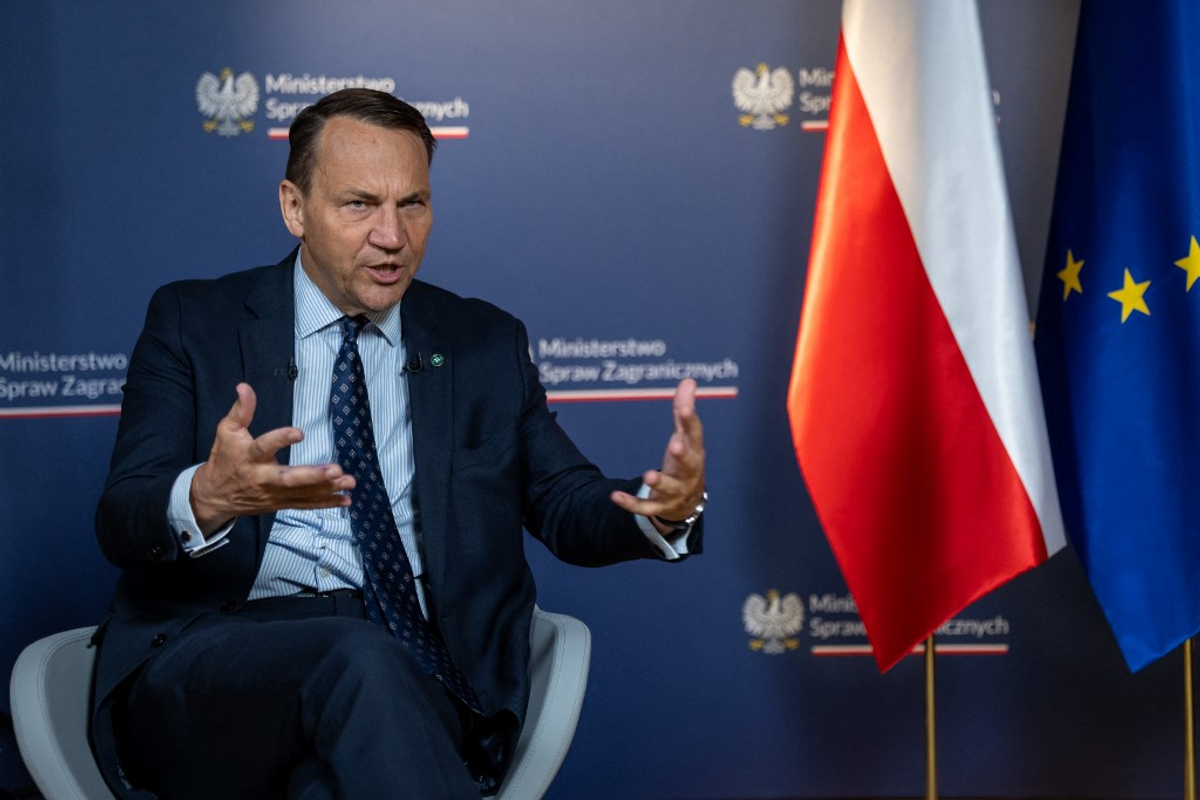
Poland will be exempt from EU plans for the compulsory relocation of asylum seekers for as long as the country hosts Ukrainian refugees, the foreign minister has said.
Radosław Sikorski told private TV station Polsat News that he expected that to be “a good couple of years.”
JOIN US ON TELEGRAM
Follow our coverage of the war on the @Kyivpost_official.
The EU is to introduce a program called the Migration Pact to reform the bloc’s asylum and migration management system as it struggles to cope with illegal arrivals.
The initiative involves a ‘Solidarity Pool’ of countries subject to ‘compulsory solidarity,’ which may take one of three forms: accepting migrants relocated from their original country of entry, making a financial contribution in lieu of taking in migrants, or providing operational assistance at the EU external borders.
But Poland is one of six countries that have been allowed to apply for a waiver from the pact’s obligations on the grounds they are experiencing heightened migratory pressure themselves.
The other countries are Austria, Bulgaria, the Czech Republic, Croatia and Estonia, all of which have taken in large numbers of Ukrainians fleeing war.
Not ‘once and for all’
Asked on Thursday whether Poland would be permanently exempt from obligations under the EU pact, Sikorski said it would not be “once and for all.”
Other Topics of Interest
Kyiv Under Air Attack Again: a Dozen Wounded So Far
At least 11 people were wounded in the latest Russian airstrikes: 5 hospitalized, including a pregnant woman and a man in “extremely serious condition,” Mayor Vitali Klitschko reported.
“While we have a huge number of refugees, Europe should show solidarity with us,” he said. “Today the EU recognizes that and this year, and for as long as Ukrainians are here, we are exempt from that mechanism—so, unfortunately, I suspect a good couple of years.”
Polish deputy interior minister Maciej Duszczyk announced earlier on Thursday that the European Commission had received Warsaw’s application for full exemption from the solidarity mechanism.
Application filed
Duszczyk also pointed out that a sitting of the EU Justice and Home Affairs Council on December 8–9 would consider the requests, but a response was not certain.
“We will see whether that process ends [then],” he said, adding that the Council is obliged to make a decision by the end of the year.
“We know the process is very dynamic,” he said. “The Commission is doing it for the first time, so there may be some sort of delay.”
Duszczyk added that he sees “no danger, no reason why that application should not be approved” and that he believed Poland would be granted exemption “for the coming years for sure.”