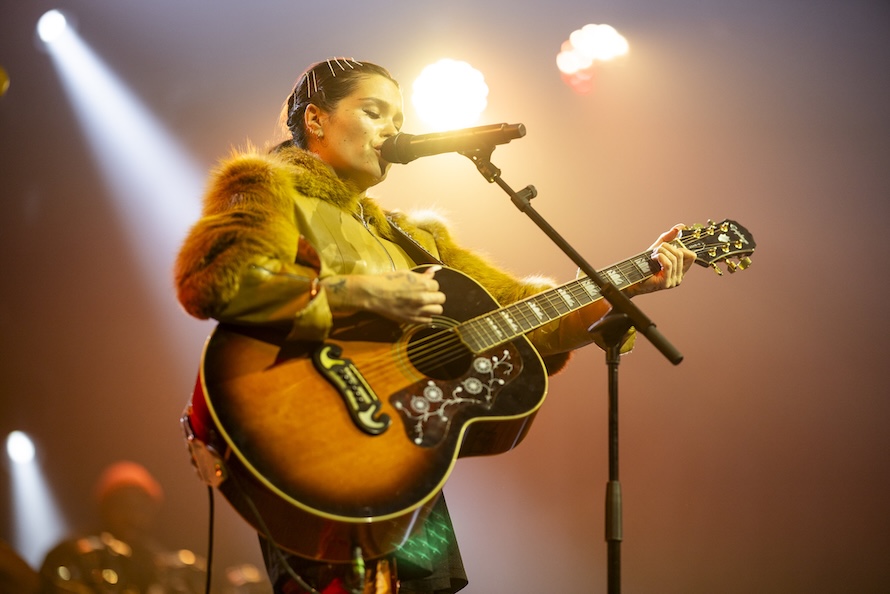
It’s Saturday night in Reykjavik, the final night of Iceland Airwaves festival, and Mexican singer-songwriter Silvana Estrada is playing to a stunned crowd at the Reykjavik Art Museum. Backed by a string quartet, her spirited guitar playing, combining with her towering voice — even more powerful in-person than on record — are making the huge venue’s domed, multi-level main hall feel tiny, its occupants visible and vulnerable.
I’m sobbing.
Many of Estrada’s songs, pulled mostly from her 2025 album Vendrán Suaves Lluvias, are about grief, but then, I can’t even understand the (entirely Spanish) lyrics; something else, something that was already shifting in me before her set, has reduced my hard exterior to rubble. My plates have shifted; hot tears, my molten interior, is oozing out the fissures. And I am not the only one: when I turn around, four of my group of six friends, all of whom have been here since Wednesday, are red-eyed and teary.
Four days in Iceland have cracked us open.
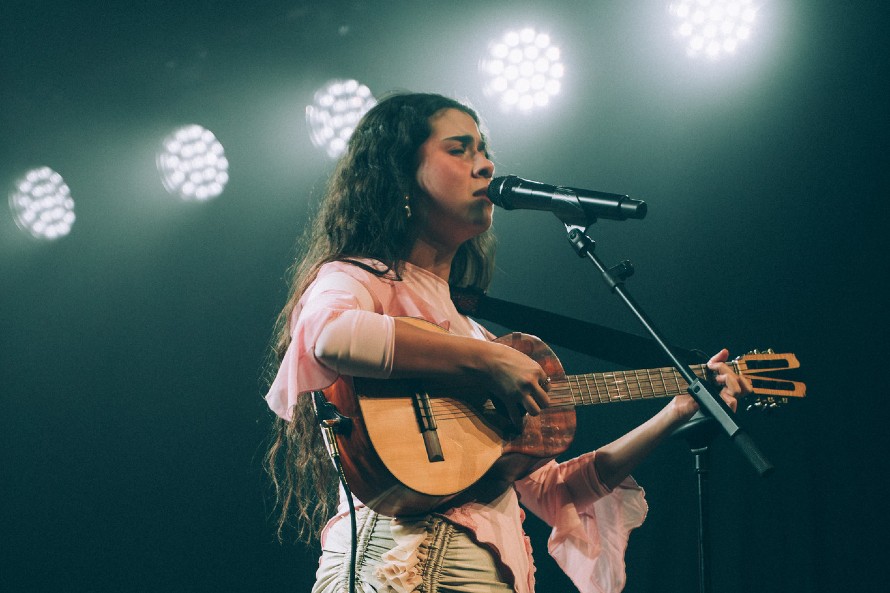 Photo: Silvana Estrada by Aron Gestsson
Since 1999, when founding sponsor Icelandair allowed a festival at one of its hangars, Iceland Airwaves has been bringing the world’s musicians to Iceland and Iceland’s music to the world. The list of international names that have played the festival is formidable — Björk, Sufjan Stevens, Robyn and TV on the Radio, just to name a few — but over the years, the festival’s focus has shifted to spotlighting local talent.
That’s not to say that international artists don’t still shine: Kenya Grace’s cover of La Roux’s “In for the Kill” and her own “Strangers” provide one of Friday’s most memorable moments; Toronto’s own Saya Gray (pictured above) is absolutely virtuosic on Saturday night, wielding a double guitar and bass as she breathes emphatic, electric life into hit after hit from this year’s SAYA; and I can’t say enough about Silvana Estrada, a must-see when she next comes to your city.
It’s Icelandic artists, though, who provide the central musical draw at this year’s festival. Smoky-voiced, electronica-inflected singer and guitarist RAKEL pops up several times throughout my festival experience, playing gorgeous renditions of “always” and “11:11”, songs that helped garner her Iceland Airwaves’ annual Plus Award (for artists deemed ready to make the international leap).
On Thursday night, electronic duo CYBER play a horny synthpop set at the Art Museum, while Ólôf Arnalds plays a host of meditative, Joanna Newsom-esque ballads for church venue Fríkirkjan’s captivated crowd. Iceland-based DJ knackered brings a heavy, hectic set of Richard D. James-esque drum & bass to a packed Gaukurinn in one of the festival’s best sets on Friday. Synth-rapper Alaska1867, Iceland’s answer to PinkPantheress, gets the room heaving again the next night with “ChatGPT”.
Iceland punches above its weight when it comes to cultural exports (the whole country’s population only recently edged past 400,000), and it’s tempting to cite some sort of ethereal Icelandic magic as the reason — but that would be lazy, and it would be untrue. Spend even a few days there, listening to the right people, and you’ll find that the source of Iceland’s incredible creativity isn’t really a secret at all: it’s just community, and you’ve been immersed in it all along.
We have been welcomed into the Reykjavik’s musical venues – eight of which houses this year’s festival – but we’ve been made to feel at home at dozens of places beyond: in local venue MENGI, who are hosting a middle-of-the-day rehearsal for Icelandic music scene stalwarts múm; in the recording studio of multi-instrumentalist Ólafur Arnalds to watch an impossibly intimate performance from RAKEL; into the home of Árni Hjörvar, bassist for the Vaccines, who hosts an afternoon’s worth of performances in his warmly lit apartment overlooking the city’s famous Rainbow Road. We have been welcomed into Reykjavík Art Museum Hafnar.Haus, a community workspace that provides a workspace for musicians, artists, sculptors, podcasters and more. (The host made us soup!)
Everywhere we go, we hear music wafting from open doors, before and after the official festival sets; everywhere we go, Icelandic musicians open their doors — for each other, certainly, but for strangers, too, to share their creative journey, their songs, their performances. (Their soup!)
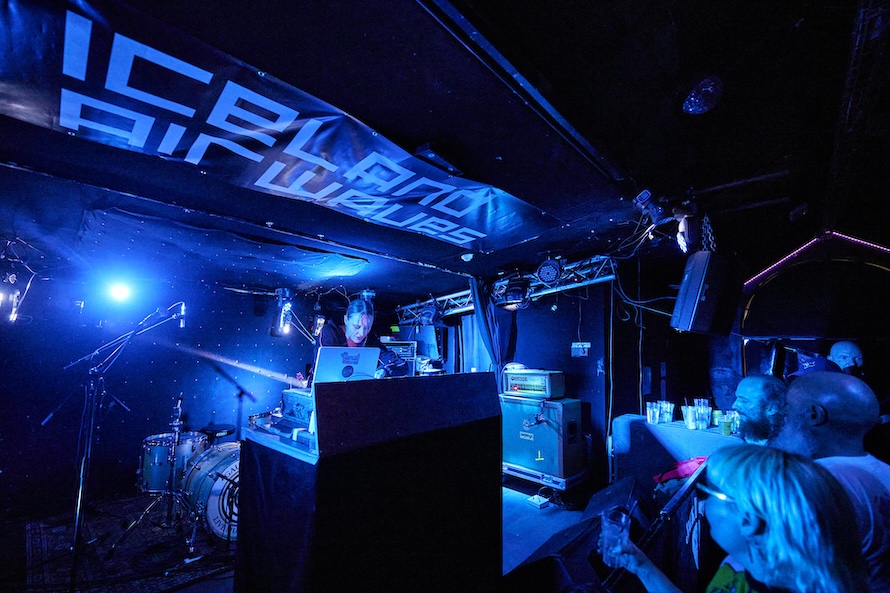 Photo: knackered by Florian Trykowski
On the festival’s first day, I am sitting to watch a panel titled “The Storm-Soaked Joy of Making Things.” My body is vibrating; I’ve come straight from one of Reykjavik’s sunds, outdoor baths whose ritualistic use — migrating between pools of varying temperatures, from the “cold plunge” (10°C) to the ‘hot pots’ (43°C) — is woven into Icelandic culture.
Onstage, Ísadóra Bjarkardóttir Barney — the daughter of American artist Matthew Barney and Björk, the latter of whom is sitting in the audience nearby — is remarking on the relationship between Icelandic artists and their country’s geology and climate: “In London or New York, I forget I’m on an island,” she says. Not like in Iceland: “The land here isn’t still.” When she watched a volcano erupt on the island, years ago, she could “picture my smallness.”
But while the sublime landscape is often cited as the inspiration for Icelandic artists, it becomes clear, as the chat wears on, that it’s community once again. The fierce cold and greyness of Iceland’s winter, the panel agrees, draws them indoors, close together, in camaraderie, to create. Local artist Lilja Birgisdóttir goes as far as saying the weather is “like a family member.”
It’s why, in just three days in Iceland, I’ve been in a room with Björk; with the siblings of Sigur Rós; with the mayor of Reykjavik, and the President of Iceland. There is no hierarchy here, no deep-set class stratification: go ahead and Google “Iceland president house” and you’ll see what I mean.
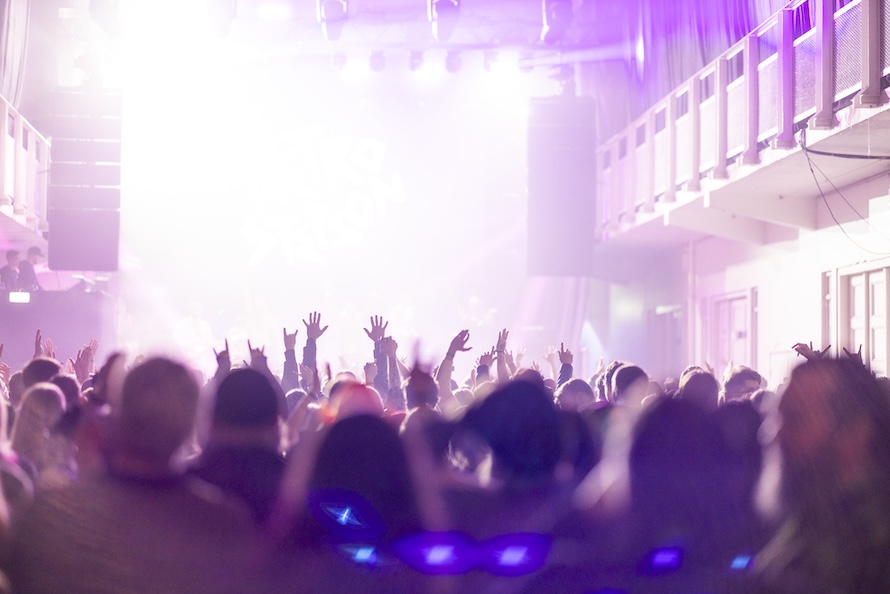 Photo: Cat Gundry Beck
So then, is Iceland imbued with some sort of “magic”? Well, yes, but there’s nothing supernatural about it; it’s just a cold, isolated place that reminds one, regularly, that we are small and that the Earth is big, and that community is all we have. It’s the message we receive each day of Iceland Airwaves, and it’s the feeling that Silvana Estrada taps into, that final night, with her heart-wrenching songs of home, loss, family – reminders, each, that community is everything, whether you’re from Mexico, Iceland, or Canada.
You don’t necessarily need to travel to Iceland Airwaves to find that — but we did, and you should, too.