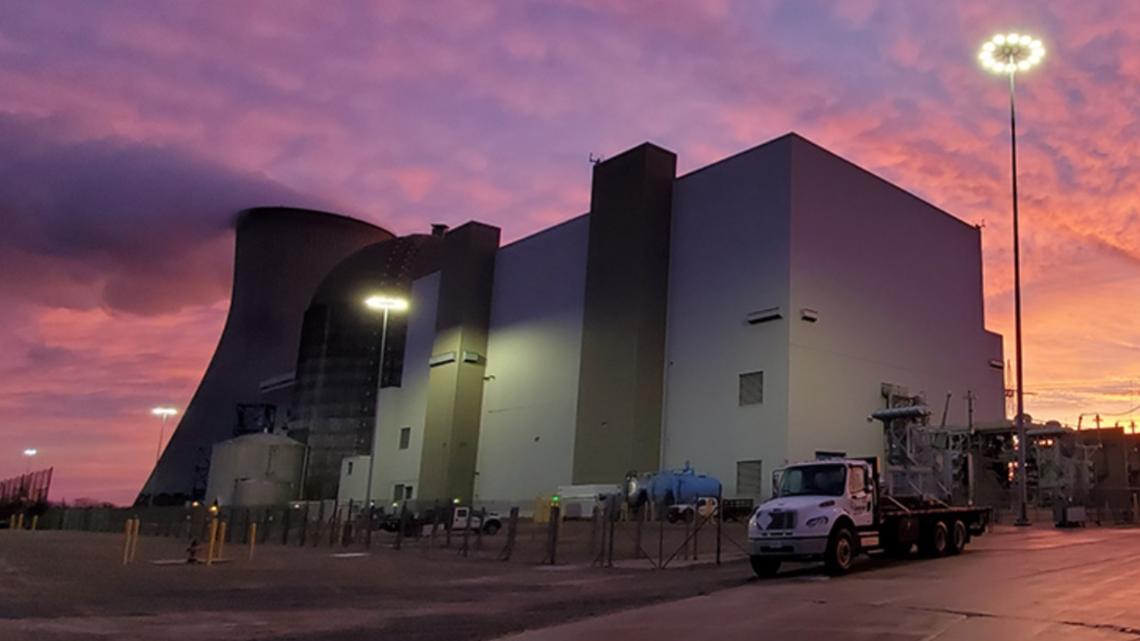
CALLAWAY COUNTY, Mo. — A federal inspector was at the scene of Callaway Energy Center, Missouri’s only nuclear power plant, after it shut down due to a water issue, according to the U.S. Nuclear Regulatory Commission.
The 41-year-old plant, operated by Ameren Missouri, generates around 26% of the utility’s total energy. The energy generated at the site is enough to power around 800,000 homes in the state. The plant has enough storage for spent fuel to operate through 2044.
The shutdown was triggered after an “unknown amount of water from the ultimate heat sink … entered the steam generators” on Wednesday, according to an event notification report released by the Commission. The water intrusion reportedly necessitated a plant shutdown due to exceeding water levels. High vibrations were also felt on the plant’s main turbine after the plant shutdown, which required a manual turbine trip.
The incident is currently considered a non-emergency by the Commission, which said there’s currently no risk to the public. The plant was shut down on Friday morning, with the Commission’s website showing it was producing no power.
Ameren told 5 On Your Side at 3:33 p.m. on Friday that the site’s investigation was completed and restoration of the affected systems on the non-nuclear side of the plant is underway. The utility said its focus now is on returning the facility to full power for the benefit of its customers and it remains committed to performing every step with safety as its highest priority.
It’s not the first time the plant has shut down unexpectedly. Three unplanned shutdowns hit the plant between July 22 and Sept. 18 in 2020, followed by an extensive shutdown on Dec. 24 after an electrical fault in its non-safety main generator, triggering oversight measures from the Commission. A plant shutdown was also triggered in 2014, caused by a turbine trip.
The average age of nuclear reactors across the nation is around 44 years old, according to the U.S. Energy Information Administration. The U.S. Department of Energy said these plants could operate for an additional 40 years or more, thanks to research performed over the last decade.