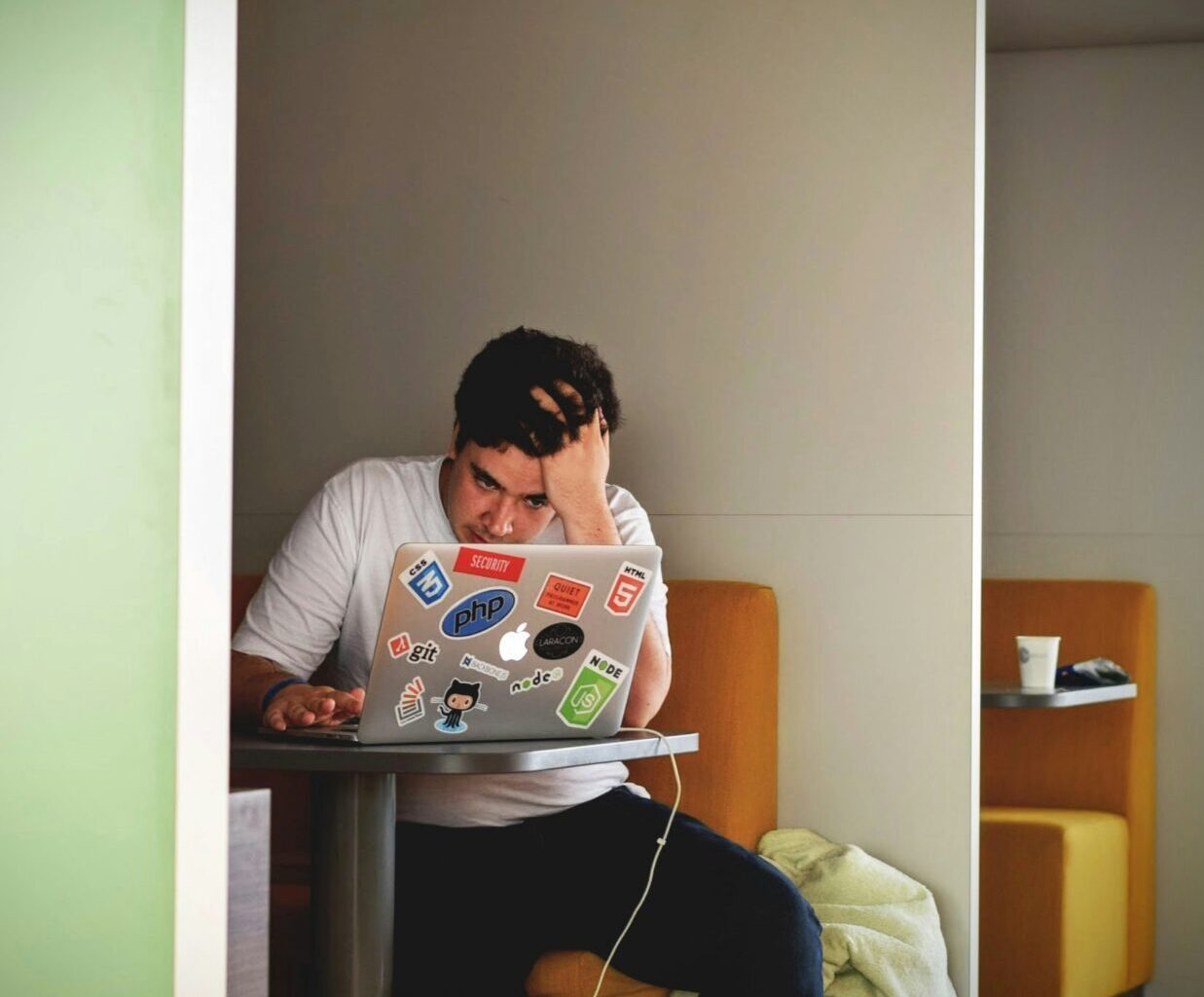
Research has shown that laptops and other devices are a distraction for students in all levels of education. Photo courtesy of Marquette University.
It’s the middle of class, and the professor’s lecture seems to drag on and on. At this point, many students begin web surfing on their laptops, scrolling through text message chats, online shopping deals, Pinterest boards or anything else to make the clock tick faster.
But soon, for students in one department at Marquette University, finding digital distraction during class will be impossible.
Starting next semester, Marquette’s political science department will implement a formal policy that prohibits the use of laptops, cell phones and other devices during class time unless explicitly permitted by the instructor for educational purposes. If a student is found to be in violation of this policy, instructors may issue warnings, with repeated violations potentially resulting in reduction of participation grades.
Philip Rocco, chair of the political science department, said the new policy was implemented after higher in class participation was noticed among classes where professors had enacted their own technology restrictions.
“We recognized that there did seem to be some real improvements or gains in classes where there was a policy that required technology to be used for a distinct reason rather than a blanket permission,” Rocco said.
Technology in the classroom has long been a subject of debate amongst educators. Conversations have primarily centered around cell phone distractions. Several states — including Wisconsin — have enacted statewide bans on cellphone use in classrooms.
In the aftermath of the COVID-19 digital learning period, some students have turned to laptops for note taking during lectures, finding it more efficient to organize and edit their notes that way. However, Marquette’s political science department feels students are better able to retain information when they take notes by hand.
“Handwritten notes have been demonstrated to improve course comprehension and retention of course material to promote active participation, minimize distractions and enhance learning outcomes,” Rocco said.
Rocco also talked about the distraction that laptops can pose to students and their peers in classrooms.
A study conducted by the United States Military Academy at West Point supports this sentiment. It found that students who had laptops and other devices out of sight during class scored 11% higher on their exams than those who were engaged in multitasking on their devices.
The same study also found that those who did not have their devices out, but were distracted by their peers’ multitasking, scored 17% lower than those who were not distracted.
Marquette students have mixed opinions about the new policy within the political science department.
Owen Ruby, a first-year in the College of Arts & Sciences, said he’s “cautiously optimistic” about the new policy.
“I’m a big believer in physical notetaking,” Ruby said. “I understand that technology can sometimes be a distraction.”
Another first-year in the College of Arts & Sciences, Ellis Lopez-Koch, expressed his concern about not being able to access readings to reference during in class discussions.
“As we move further into college, a lot more of the work we’re going to be doing will be heavy-reading based,” Lopez-Koch said. “As we take more political science classes, it’s going to be really important to have those resources to reference in class.”
The 18 professors in the political science department will continuously monitor student engagement and participation in class as it begins to implement the policy starting next semester. Faculty will be able to implement the policy as they see fit but won’t be discouraged from incorporating technology into their coursework.
During the early trial period, Rocco said faculty will assess the success of the new policy on their own terms.
“Part of what we do when we teach is we’re always assessing,” Rocco said. “We’re always taking stock of how well students engage and how well they perform.”
This story was written by Sahil Gupta. He can be reached at [email protected].