Facebook
Twitter
LinkedIn
Pinterest
Reddit
Email
Print
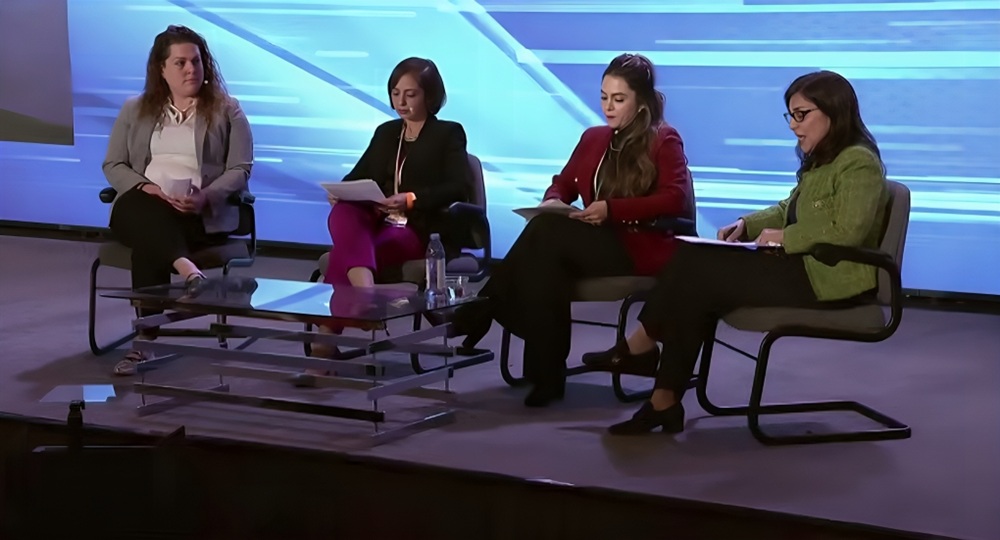
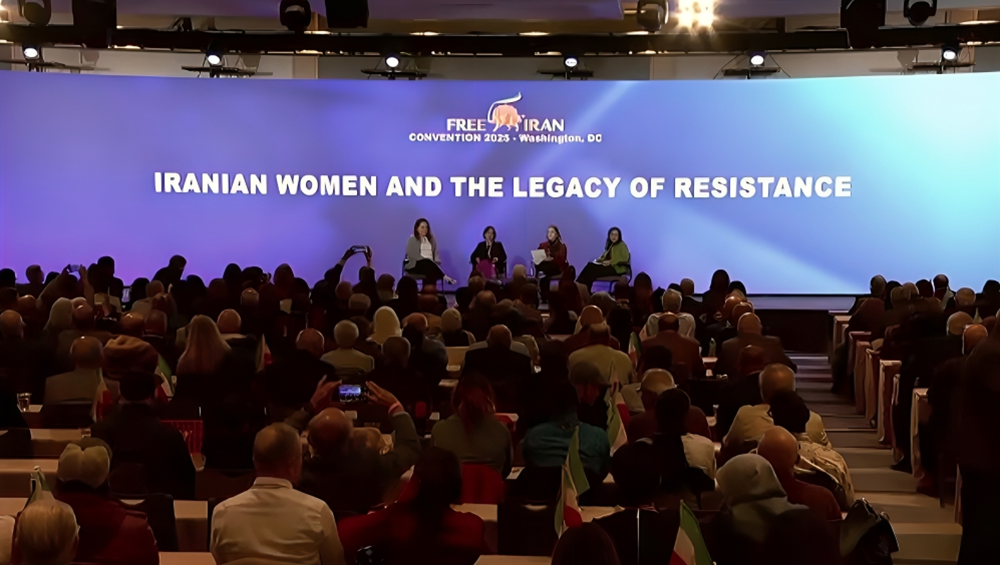 Panelists Hannane Amanpour, Dr. Azadeh Sami, Dr. Azadeh Zangeneh, and moderator Dr. Ramesh Sepehrrad discuss the leadership and legacy of Iranian women in the struggle for a free and democratic Iran— November 15, 2025
WASHINGTON, DC — The second major session of the Free Iran Convention 2025, titled “Iranian Women and the Legacy of Resistance,” examined how women have emerged as the decisive force shaping Iran’s democratic movement. Building on more than a century of struggle and four decades of organized resistance, the panel explored how Iranian women—long targeted by discrimination, repression, and state-sanctioned violence—have transformed themselves into architects of strategy, organization, and leadership within the opposition. Featuring accomplished professionals and human-rights advocates, the session focused on how women’s resilience, sacrifice, and vision have positioned them at the center of the fight for a democratic, secular, and non-nuclear Iran.
Panel moderator Dr. Ramesh Sepehrrad, a leading scholar-practitioner in cybersecurity, Iran policy, and democratic movements, opened the session by emphasizing that Iranian women’s rise to leadership is not spontaneous but the product of “more than a hundred years” of struggle. Praising the NCRI for hosting the convention, she rooted today’s women-led resistance in a long historical arc dating back to the 1906 Constitutional Revolution, when women were denied full citizenship under Article Two. “Iranian women have been at this fight for a long time,” she said, noting that under both the Pahlavi monarchy and the current theocracy, repression only “evolved,” becoming more sophisticated and more brutal.
Referencing the 2022 uprising sparked by the killing of Mahsa “Jina” Amini, Sepehrrad cautioned against viewing women’s participation as an overnight development. Instead, she described decades of groundwork that enabled women and youth to become a “decisive force for change—one that is truly inclusive.” She emphasized that women from every nationality—Azeri, Kurd, Baluchi, Lur, Turk—are represented in the resistance’s ranks.
Sepehrrad highlighted the MEK and the NCRI women’s leadership culture, stressing that discipline, strategy, and clarity have guided the movement despite severe repression. “No other country has executed more women than the Iranian regime,” she noted. “But Iranian women are not giving up—they are organized, resilient, and they have a leader.”
Dr. Azadeh Sami, a board-certified pediatrician with a background in public health and long-standing human-rights advocacy, traced the ascendance of Iranian women’s leadership to a century of systemic repression that ultimately produced an organized, resilient resistance. “Women’s leadership did not come without struggle, and it certainly did not come overnight,” she began, stressing that any serious analysis must start with the patterns of oppression that shaped Iranian women’s political awakening.
She explained that under the monarchy, elite women enjoyed selective visibility while politically engaged women were subjected to surveillance, arrest, torture, and exile. The clerical regime then institutionalized misogyny, establishing “compulsory hijab, discriminatory family laws, and gender apartheid” as instruments of political control. From the earliest years, she said, the theocracy “imprisoned, tortured, executed, and massacred women” precisely because it understood that “women’s emancipation means the end of tyranny.”
These pressures, Dr. Sami argued, pushed women toward the organized resistance—particularly the MEK—in large numbers beginning in the early 1980s. Despite cultural backlash at home, they persisted and gradually entered leadership ranks. The MEK, she noted, created a formal emancipatory leadership framework that placed qualified women in strategic and operational roles, producing “the longest-running women-led movement in the region.”
Today, she said, women form a decisive core of the Resistance Units inside Iran and a multigenerational force across the diaspora. “Systemic oppression allowed the leaders to emerge,” she concluded, adding that the MEK provided the structure to empower them—an egalitarian model practiced “not just in theory, but in reality.”
Attorney Hannane Amanpour, a specialist in family and domestic relations law and a long-time advocate for women’s rights, described Iran’s gender inequality as “completely by design,” rooted directly in the constitution under Velayat-e Faqih. She explained that the Islamic Republic is “founded on gender-segregated law,” denying women equal rights both privately and publicly. In personal matters—marriage, divorce, custody, inheritance—“women’s rights are denied to them,” she said. In public life, they are barred from the presidency, the judiciary, and positions of real power. None of this is accidental, she stressed: “The regime intended in its constitution to keep women from having any equal rights under the law.”
Yet, she added, women have continually pushed themselves to the front lines of resistance. Within the MEK, she noted, a “brilliant model” emerged in 1985 when women began assuming senior political and organizational roles, culminating in Maryam Rajavi becoming NCRI President-elect in 1993. This, she said, demonstrates the “potential for Iran after democratic transition.”
But such progress has come at great cost. Women MEK members are “routinely demonized” and singled out for attack. The regime’s most cynical tactic, she said, is portraying politically active women—especially mothers—as abandoning their families. This stands in stark contrast to how women in other anti-authoritarian movements, from South Africa to Ukraine, are celebrated. “There is absolutely a double standard,” she concluded, underscoring that women’s rights are not secondary but central to Iran’s freedom struggle.