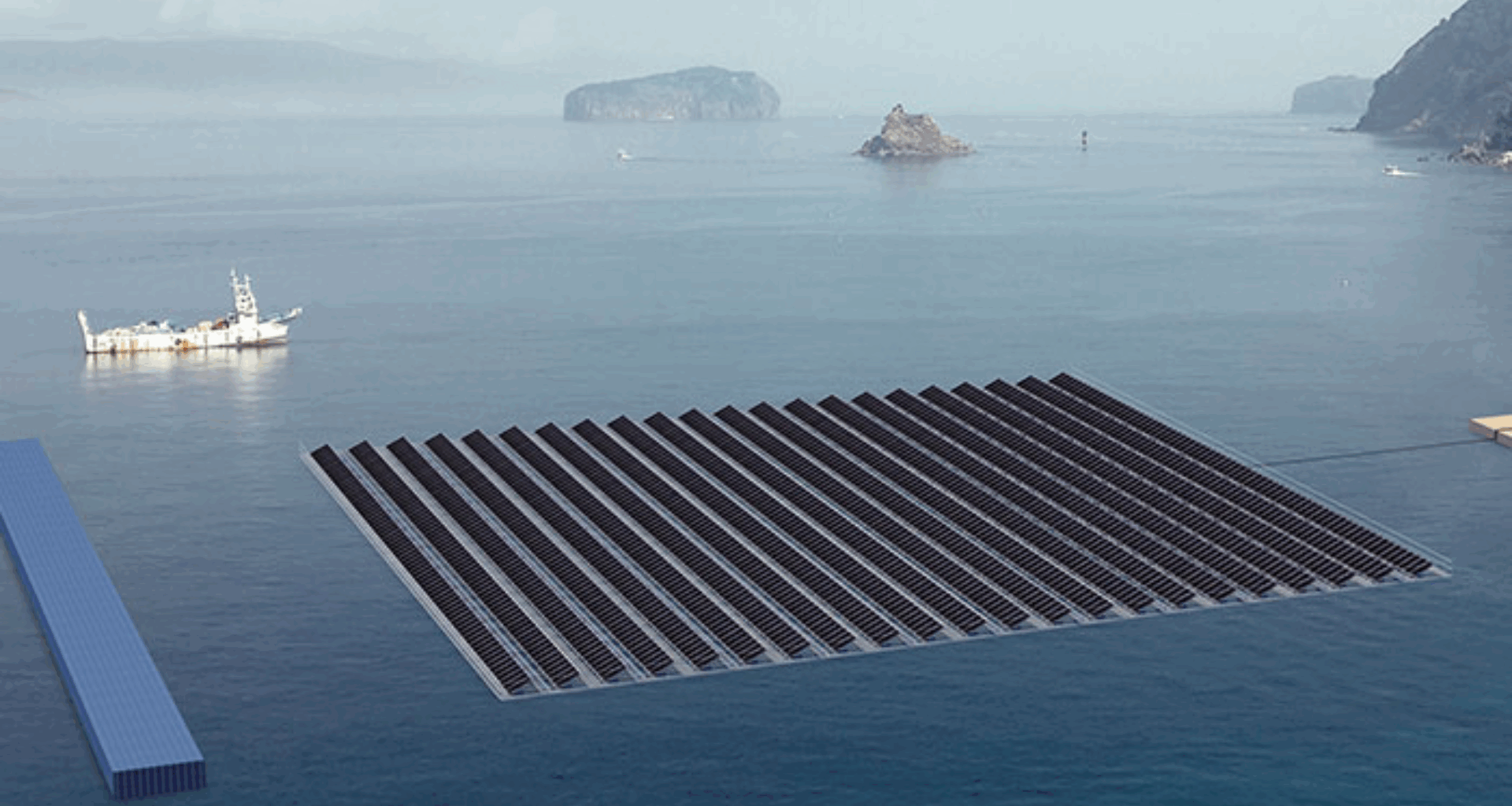
South Korea has advanced its floating renewable energy plans with the completion of a landmark solar project at Imha Dam, east of the city of Andong. The facility delivers 47 MW of capacity, which is the largest floating PV installation on a multipurpose dam in the country, the company said.
Imha Dam already hosts a 50 MW hydropower plant, and the combined setup allows the complex to send floating solar power to the grid during daylight hours and switch to hydropower generation overnight to maintain steady output.
The development was carried out jointly by Korea Hydro & Nuclear Power (KHNP), Korea Water Resources Corporation, Gyeongsangbuk-do Province and the City of Andong, while Top Solar served as the project’s engineering, procurement and construction contractor. A completion ceremony was held in late September, with total project costs coming in at roughly $50 million.
Local manufacturers with symbolic design for floating PV plant
South Korea’s latest floating solar project also carries a symbolic design element, thanks to contributions from local industry leaders. Scotra – a Seoul-based company specializing in the design, manufacture and installation of floating solar platforms – supplied the core technology that supports the array. On top of these floating structures, the solar modules from domestic manufacturer Shinsung E&G were mounted.
Rather than using a conventional grid-like layout, the system is composed of 16 interconnected floating platforms arranged to form patterns inspired by national symbols: the Taegeukgi, South Korea’s flag, and Mugunghwa, the national flower. The design gives the project both functional and cultural characteristics.
The project’s impact on South Korea’s clean energy supply is expected to be substantial. Once fully operational, the hybrid solar-hydro power plant is projected to generate roughly 61 GWh of renewable electricity each year. That level of output is enough to meet the annual power consumption of around 22,000 households – covering approximately 27% of all homes in the city of Andong.
4,500 residents to receive profit shares from clean energy project
One of the most distinctive features of the floating solar project is its resident-participation model, designed to ensure that the economic benefits of renewable energy remain in the community.
Under this scheme, roughly 4,500 people living within a 0.62-mile radius of the installation are eligible to receive a share of the profits generated from its power production. This approach not only supports local income but also strengthens public acceptance of large-scale renewable infrastructure by giving nearby residents a direct stake in its success.
The Asian country added around 2.5 gigawatts of new PV capacity last year, pushing its total installed solar base beyond 29.5 gigawatts, according to the Korean Energy Agency. Projects like the Imha Dam floating array highlight a growing trend toward hybrid energy systems and community-centered renewable development.