WASHINGTON DC – The Trump administration has quietly opened a narrow path for global energy players to negotiate the purchase of Lukoil’s foreign holdings, a move that underscores Washington’s increasingly calibrated approach to isolating Moscow’s oil sector while trying to contain collateral shocks to global markets.
The Treasury Department on Friday rolled out a bundle of updated Russia licenses allowing companies to enter discussions with the sanctioned Russian oil giant about buying its overseas assets, which represent roughly 0.5% of global oil production.
Follow our coverage of the war on the @Kyivpost_official.
The deals are contingent on two conditions: any agreement must sever Lukoil’s control entirely and funnel proceeds into a frozen escrow account that the company cannot access for as long as sanctions remain in force.
The most consequential license is General License 131, which gives companies the green light to negotiate – but not finalize – deals to buy Lukoil’s foreign assets.
Treasury also issued General License 128A, allowing continued business with Lukoil-branded gas stations outside Russia, and General License 130, which authorizes limited dealings with Lukoil’s operations in Bulgaria, including the Burgas refinery that Sofia is scrambling to take over.
Rounding out the package is General License 124B, which shields work tied to the Caspian Pipeline Consortium, Tengizchevroil, and the Karachaganak gas project – a sign Washington is trying to squeeze Russia without disrupting major non-Russian energy corridors.
Other Topics of Interest
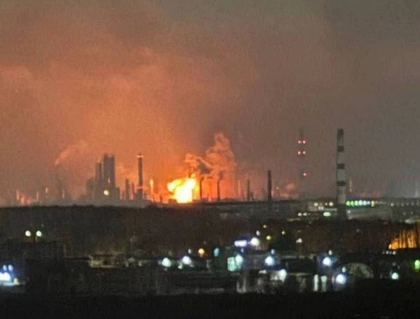
Ukraine Strikes Deep: Ryazan Oil Refinery Ablaze, Nebo-U Radar Destroyed, Echelon Hit
Ukraine launched coordinated strikes on Russia’s Ryazan oil refinery, a Nebo-U radar in Crimea, and a military echelon near Tokmak.
The authorization comes less than a month after the US imposed sweeping sanctions on Russia’s top two oil companies, Lukoil and Rosneft, targeting them for financing the Kremlin’s war in Ukraine.
But the administration’s handling of the two firms is beginning to diverge: Lukoil, a privately held company with extensive foreign assets, is being treated more as a divestment puzzle to be unwound, while Rosneft – tightly controlled by the Russian state – remains the more politically sensitive target.
Who’s circling Lukoil’s assets?
According to Western officials who spoke to Kyiv Post on condition of anonymity, early interest has emerged from US private equity giant Carlyle, Kazakhstan’s state-owned KazMunayGas, and European major Shell – a lineup that suggests global firms are weighing whether Washington’s limited opening is worth the geopolitical risk.
The Trump administration also moved this week to shield Bulgaria from energy turmoil, granting permission for certain business dealings with Lukoil’s Burgas refinery after Sofia initiated steps to seize the plant.
The Bulgarian Energy Ministry cast the US decision as a diplomatic win, saying it followed “intensive actions, negotiations, and diplomatic talks” aimed at ensuring stability for Bulgarian consumers and businesses.
Sanctions strategy: bark, bite – or both?
The carve-outs and extensions are fueling a familiar debate in Washington and European capitals about whether the US is tightening the screws on Russia’s oil sector or merely rearranging them.
Treasury’s choice to extend Lukoil’s sales deadline to December 13 adds to what some analysts describe as a growing list of carefully tailored exceptions – steps critics say risk diluting the impact of the sanctions rollout.
For now, there is still no clear sign that Washington intends to aggressively enforce restrictions on current Russian oil volumes, which remain relatively resilient despite price caps and shipping constraints.
The real test is expected on November 21, when secondary sanctions tied to Russia’s oil trade formally take effect. Those measures, if forcefully applied, could reshape global shipping and insurance markets – or, if not, signal that the administration is wary of triggering a fresh spike in global oil prices.
“Some will see this flurry of exemptions as a sign of more bark than bite,” one Western diplomat told Kyiv Post on Saturday. “But the secondary sanctions are the key. That’s where we’ll find out how far the US is really willing to go.”
For now, companies eyeing Lukoil’s assets have one clarity: Washington wants the Russian oil giant off the global stage – just not at the cost of destabilizing energy markets in the process.